
Fluids & under the hood
Is Battery Acid Toxic? What a Car Battery's SDS Actually Says
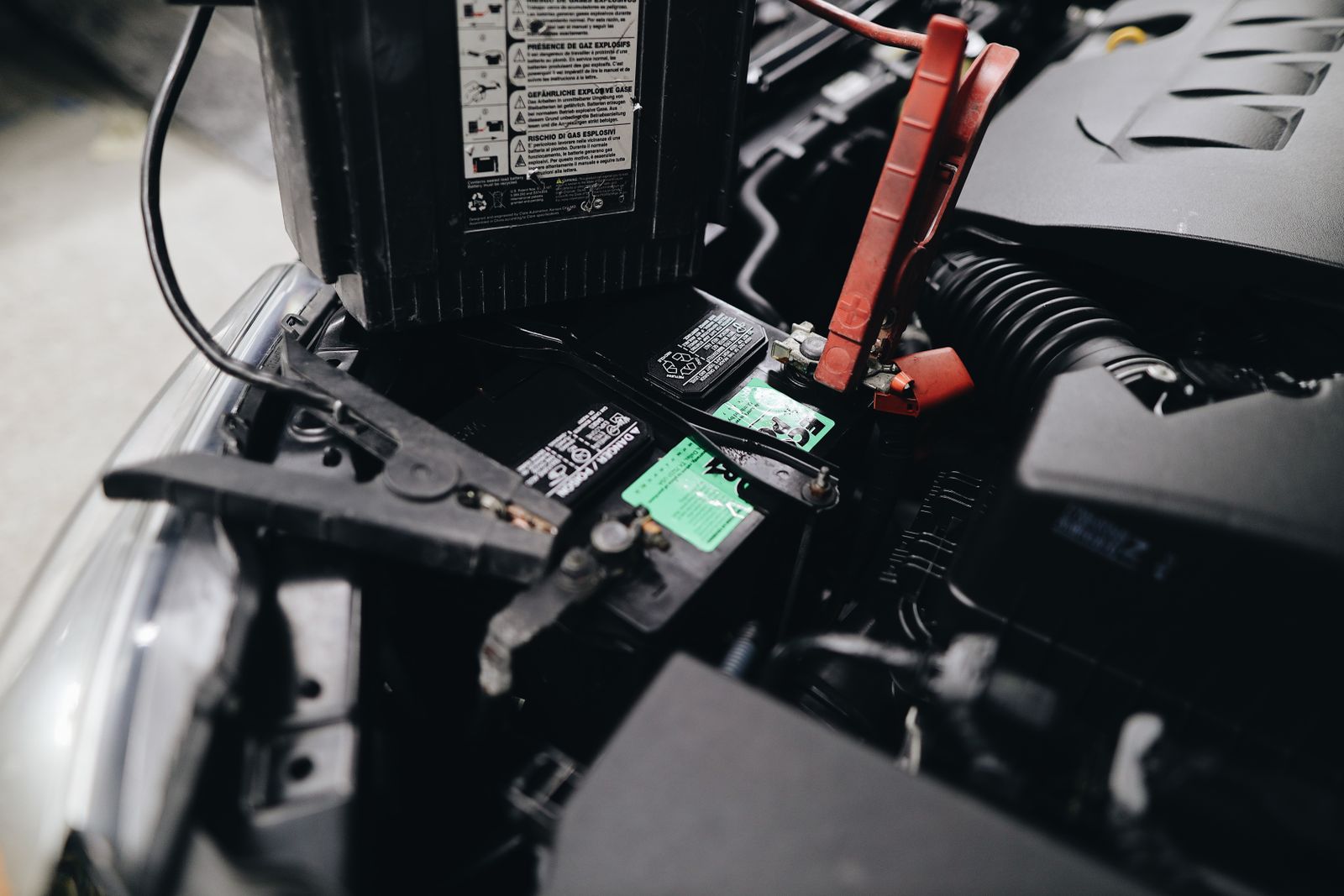
Battery acid is sulfuric acid, and it causes severe skin burns and eye damage on contact. A lead-acid battery's SDS carries a DANGER signal word and classifies the electrolyte as severely corrosive (H314). The part most people miss is that a sealed, intact battery keeps that acid contained, so the real danger shows up when a battery is cracked, overfilled, or overcharged, which is also when it vents flammable hydrogen gas. Wear eye protection and gloves any time you handle a leaking or charging battery.
What Is Battery Acid?
Battery acid is the electrolyte inside a conventional car battery: a strong solution of sulfuric acid in water, sitting between plates of lead. In a flooded lead-acid battery it is roughly 20 to 44 percent of the contents, with lead and lead compounds at 43 to 70 percent and a few percent antimony in the plates. That is the whole product a Safety Data Sheet describes, because in a real car the acid never travels alone.
The most important fact about battery acid comes straight off the SDS: under normal use, a sealed battery keeps all of it contained. The manufacturer states plainly that "under normal conditions of processing and use, exposure to the chemical constituents in this product is unlikely," and that the materials only represent a hazard "if the integrity of the cell or battery is compromised." So the honest answer to "is battery acid toxic" has two halves: the acid itself is genuinely dangerous, and an intact battery keeps you away from it. The risk is a cracked case, an overfilled or overcharged cell, or an old battery you are handling directly. Only older serviceable batteries have caps you can open to top up the water; most modern car batteries are sealed maintenance-free or AGM units you never open, though they still vent hydrogen if overcharged.
What the Safety Data Sheet Says
These verdicts come from the hazard codes in a manufacturer's Safety Data Sheet, not from CarCareTruth's opinion. The sheet here is the East Penn (Deka) SDS for a wet lead-acid battery, issued February 2024, and it carries a DANGER signal word, the higher GHS alert level.
GHS Hazard Classification
The classification is a stack of codes, each tracing to a specific part of the battery. H314, causes severe skin burns and eye damage, is the sulfuric acid electrolyte. H203, explosive with a fire, blast, or projection hazard, reflects the hydrogen gas a charging battery can build up in a sealed or confined space. H335, may cause respiratory irritation, is the acid mist a boiling or overcharged battery gives off. H350, may cause cancer, applies to two things: sulfuric acid mist (Category 1A) and lead (Category 1B). H360, may damage fertility or the unborn child, and H362, may cause harm to breast-fed children, are the lead. H372, causes damage to organs through prolonged or repeated exposure, names blood, the central nervous system, kidney, and lungs, and is again the lead. Four label pictograms appear: the exploding bomb, corrosion, health-hazard, and exclamation-mark symbols.
Key Ingredients
Three ingredients drive the whole profile. Sulfuric acid is the corrosive electrolyte behind the burn and eye-damage codes, and as an airborne mist it is the acid-mist carcinogen. Lead and its inorganic compounds are most of the battery by weight and the source of the cancer, reproductive, and organ-damage classifications. Antimony in the plates is a minor component with its own exposure limit. None of these reaches you through an intact case, which is why the SDS frames every hazard around a damaged or opened battery.
What Sections 4 and 8 Say About Exposure
Section 8 lists eye protection, chemically resistant gloves, and a face shield and apron for handling a leaking or opened battery, backed by the corrosivity of the acid rather than boilerplate. Its occupational exposure limits matter for someone breaking down batteries, not for a driver. Section 4 first aid is consistent across routes: flush skin and eyes with water for at least 15 minutes, rinse the mouth but do not induce vomiting if swallowed, and get to fresh air after inhalation.
Battery Acid: Severe Burns and Hydrogen Gas
The two hazards that define a car battery are the acid and the gas, and they work by separate mechanisms. The acid is corrosion: sulfuric acid dehydrates and denatures the proteins in skin and eye tissue on contact, which is why the SDS classifies it for severe skin burns and serious eye damage (H314) under DANGER. That is a real chemical burn from a direct splash, worst in the eye, not a delayed poisoning.
The gas is the explosion. A charging battery gives off hydrogen, which is flammable and lighter than air, so it can collect above the battery or in a closed space and ignite from a single spark. This is the hazard behind the explosive classification (H203), and the reason a battery can rupture and spray acid if you short the terminals or spark near it. The lead inside is the slow third hazard: not a splash or a spark, but a prolonged-exposure toxicant if you handle battery internals or breathe the dust and mist, classified for cancer, reproductive harm, and organ damage.
The Main Risk Pathways for Car Owners
For someone working on a car at home, the hazards line up in a clear order. Your eyes come first. Jump-starting or moving a battery that turns out to be cracked can throw a splash toward your face, and a product classified for serious eye damage (H314) makes eye protection the highest-value precaution here. Sparks and hydrogen are second. The classic battery injury is not a slow leak but a sudden rupture when a tool bridges the terminals or a spark meets vented hydrogen, so keep flames away and make the final jumper connection to a bare-metal engine ground on the dead vehicle, away from its battery, not to the dead battery itself. Skin is third. The electrolyte from a leaking battery burns bare skin (H314), which is why gloves belong on before you handle a damaged or corroded battery.
Pets and kids fold into this as a contained risk that turns real only when a battery is compromised. A cracked case, a spill, or a small loose lead-acid battery is the genuine hazard: the acid burns, and the lead is a reproductive and developmental toxicant, which is why the SDS says pregnant or nursing people should not handle a damaged battery. See also: Is Antifreeze Toxic to Dogs? for the under-hood fluid far more dangerous to pets than owners expect.
How to Handle It Safely
The SDS handling guidance translates directly into a short routine. Charge a battery only in a ventilated area with no sparks or flames nearby, because of the hydrogen, and switch a charger off before you clip its leads on. Put on eye protection and chemical-resistant gloves before you jump-start, service, or move a battery, per Section 8. When you remove or install a battery, disconnect the negative ground terminal first and reconnect it last, so a tool that slips onto the positive post cannot short against the body and spark the vented gas. If the case is cracked or acid has leaked, treat the whole thing as corrosive: gloves and eye protection on, avoid skin contact, and neutralize and clean the spill before disposal. For any acid contact, flush with water for a full 15 minutes and get medical attention, exactly as Section 4 directs. The same corrosive-splash logic drives Is Wheel Cleaner Toxic?, where a face-level splash is the main injury too.
The Bottom Line
Battery acid is sulfuric acid, and on the SDS it is unambiguous: severe skin burns and eye damage (H314) under a DANGER signal word, with lead adding cancer, reproductive, and organ-damage classifications and a hydrogen-gas explosion hazard on top. The reassurance that makes it manageable is built into the same sheet: a sealed, intact battery keeps all of that contained, and normal exposure is unlikely. The danger is the compromised battery, the charging spark, and the direct splash, so eye protection, gloves, ventilation, and keeping metal off the terminals are what turn a hazardous chemistry into a routine job.
Sources and SDS Reference
- East Penn Manufacturing Co. (Deka), Lead Acid Battery Wet, Filled With Acid, SDS US 967663, issued 06-February-2024, Sections 2, 3, 4, 5, 8, 11: SDS PDF (DANGER; H203, H314, H335, H350, H360, H362, H372; sulfuric acid 20 to 44 percent, lead 43 to 70 percent, antimony 3 to 5 percent).
- International Agency for Research on Cancer (IARC), Monograph on strong inorganic acid mists containing sulfuric acid (Group 1 carcinogen).
- California Office of Environmental Health Hazard Assessment, Proposition 65 list (lead: cancer and developmental/reproductive toxicity).
- CarCareTruth hazard-code pages and the SDS database for looking up a product's sheet.
Frequently asked questions
Is battery acid dangerous to touch?
Yes. Battery acid is sulfuric acid, and a lead-acid battery's SDS classifies it as causing severe skin burns and eye damage (H314) under a DANGER signal word. Bare skin contact with the electrolyte from a cracked or leaking battery is a true chemical burn, not just an irritation. The SDS first-aid guidance is to flush the skin with water for at least 15 minutes while removing any contaminated clothing, and to get medical attention if irritation develops. A sealed, undamaged battery keeps the acid inside, so the burn risk is tied to a compromised battery, not one sitting intact in your car.
What happens if battery acid gets in your eyes?
An eye splash is the injury most worth guarding against. Sulfuric acid electrolyte is classified as causing serious eye damage (H314), so a splash can injure the eye, not just sting it. This is a realistic risk when you jump-start a battery or move one that turns out to be cracked. The SDS Section 4 first aid is to remove contact lenses if present, flush the eye with water for at least 15 minutes while holding the eyelid open, then get medical attention. Do not rub the eye. Safety glasses or goggles are the reason this stays a near miss instead of an injury.
Are the fumes from a car battery harmful to breathe?
Two different things come off a battery, and they matter in different ways. A charging or overcharged battery vents hydrogen gas, which is flammable and explosive in a closed space rather than a breathing poison, so the real danger there is a spark near the battery. Sulfuric acid mist, which forms when a battery is overcharged or boils, is classified as a respiratory irritant (H335) and, as an acid mist, is on the SDS as a carcinogen for prolonged exposure. For a sealed battery under normal use the SDS says exposure to the contents is unlikely. Charge batteries in a ventilated area and keep sparks and flames away.
Is battery acid toxic if swallowed?
Swallowing battery acid causes a corrosive chemical burn of the mouth, throat, and stomach, because it is sulfuric acid classified as corrosive under H314. The SDS Section 4 guidance is specific and important: rinse the mouth with water and do NOT induce vomiting, because bringing a corrosive liquid back up can burn the throat again and be aspirated into the lungs. Get medical attention immediately and call Poison Control. This is a burn hazard, not a wait-and-see poisoning, so it is treated as an emergency from the first moment.
Is a car battery toxic to kids and pets?
The two hazards are the acid and the lead, and a sealed battery keeps both contained. A cracked or leaking battery is the real risk: the sulfuric acid causes corrosive burns (H314), and the lead inside is classified as a carcinogen and a reproductive and developmental toxicant. Children under 6 are especially vulnerable to lead, because hand-to-mouth contact with lead residue and a developing brain mean even small amounts can cause lasting harm, and there is no known safe blood lead level in children, so for a child the real concern is this developmental poisoning, not cancer. Lead is also why the SDS warns that pregnant or nursing people should not handle a damaged battery. Keep batteries, especially small sealed lead-acid and damaged units, out of reach, store them upright and sealed, and never let a child or pet near a battery that has leaked. If a child swallows a battery part or gets acid on skin, call Poison Control; for a pet, call your vet or the ASPCA Animal Poison Control Center at 888-426-4435, since the human Poison Control line does not handle animal cases.
Does a car battery cause cancer?
The SDS lists two carcinogen classifications, and both apply to the internal materials, not to an intact sealed battery. Sulfuric acid mist is classified as a carcinogen (Category 1A), matching the IARC finding that strong inorganic acid mists containing sulfuric acid cause cancer in occupational exposure. Lead is classified as a carcinogen (Category 1B) and is listed under California Proposition 65 for both cancer and reproductive and developmental harm. These are prolonged-exposure hazards for people who handle battery internals or breathe acid mist, which is why the label warns about opening or burning the battery, not a risk from a battery working normally in your car.
How do I handle and store a car battery safely?
Treat a car battery as sealed unless it is visibly damaged. When you charge one, do it in a ventilated area and keep sparks, cigarettes, and open flames away, because charging vents flammable hydrogen gas. When you jump-start, service, or move a battery, wear eye protection and gloves, which is what the SDS Section 8 specifies for handling the electrolyte. Do not lay tools across the terminals, since a short can spark hydrogen or cause the battery to rupture. Store batteries upright, sealed, and away from metal that could bridge the terminals, and take old batteries to a recycler rather than the trash.
Is the white or green corrosion on battery terminals toxic?
The crusty white, blue, or green powder around battery terminals is corrosion: metal-sulfate salts formed where small amounts of acid vapor react with the metal terminals. It is mildly acidic and can irritate skin and eyes, but it is not the same as a puddle of leaked acid and it is not a spill emergency. Wear gloves and eye protection, keep it off your skin and out of your eyes, and clean it with a paste of baking soda and water on an old brush, which neutralizes the acid residue, then wipe dry. If the corrosion keeps coming back heavily, the battery may be overcharging or leaking and is worth having checked.