CarCareTruth Score
Decent.
Opens Amazon in a new tab. No account needed to look.
Saved to your guest loadout. Sign up to also save to your Cabinet (consumables) or Kit (tools you own).
As an Amazon Associate I earn from qualifying purchases. Full disclosure
Prices may varyHealth score is for adult use as intended, per the manufacturer's SDS. It does not model child ingestion, accidental spill cleanup, or off-label use. See the safety panel below for full hazard classification, and /disclaimer for the full editorial scope.
GHS hazard codes are quoted from the manufacturer’s Safety Data Sheet. PPE tiers below translate those codes and the listed ingredient chemistry; they are not CarCareTruth recommendations.
Show details for all categories ▾Hide details ▴
Translated from the manufacturer’s Safety Data Sheet, Section 2
The SDS carries a Warning-level classification for eye irritation (GHS Category 2A, H319). The Flairosol pump-spray form factor creates a mist that meaningfully increases the probability of direct eye contact during application. Eye protection is appropriate for normal use.
U.S. regulatory standard
29 CFR 1910.133(a)(1)
“The employer shall ensure that each affected employee uses appropriate eye or face protection when exposed to eye or face hazards from… liquid chemicals…”
ANSI Z87.1 (incorporated via §1910.6)
OSHA standards apply to workplaces. Cited here as the U.S. reference threshold for the underlying hazard class.
CarCareTruth publishes the cited sources verbatim and does not advise what action a user should take. Consult the full SDS before use.
Only when: prolonged use
Translated from the manufacturer’s Safety Data Sheet, Section 8
SDS Section 8 lists gloves among the required PPE for handling this product (safety shoes, overalls, gloves, safety glasses) and notes that nitrile rubber gloves are suitable for intermittent contact. Section 2 carries no skin-hazard GHS code, and Section 11 states the mixture is not classified as corrosive or irritating to skin, so this is a repeated-handling precaution rather than a mixture-level skin hazard.
CarCareTruth publishes the cited sources verbatim and does not advise what action a user should take. Consult the full SDS before use.
No PPE specified in published sources for lungs. Absence does not imply “not needed” — consult the full Safety Data Sheet.
No PPE specified in published sources for ventilation. Absence does not imply “not needed” — consult the full Safety Data Sheet.
PPE tiers translate the manufacturer’s SDS and U.S. regulatory standards. Not professional safety advice. How we report safety.
Scope of these PPE tiers. The tiers on this page translate the product's Safety Data Sheet where one is published, plus its ingredient chemistry, into a comparable rating. They describe a formulation, not a situation: a tier is not a safety determination for any specific user, task, quantity, or environment. The manufacturer's label and use instructions govern how the product is handled. Where the product is used at work, the employer's PPE program and hazard assessment under 29 CFR 1910.132 decide what protection is selected, not this page.
No warranties. CarCareTruth makes no warranties, express or implied, and expressly disclaims the implied warranties of merchantability and fitness for a particular purpose.
This product ranks #7 of 15 in Leather Care.Three above it ↓
Last reviewed May 25, 2026
TL;DR Handles routine body oils and surface soiling on leather seats in a single pass; the Flairosol mist covers evenly without pooling. Conditioning is plausible from the neatsfoot oil and aloe vera actives, though community follow-up on how long the softening holds is still limited. Buffs off without widespread darkening reports on standard leather; do a spot test first on cream or beige seats. The SDS carries a Warning-level classification for eye irritation, so eye protection is appropriate when spraying.
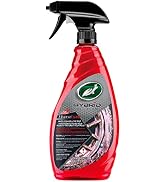
A water-based all-in-one spray that cleans and conditions leather in one application cycle. The Flairosol pump dispenses a fine, even mist across the seat surface without the pooling risk of a standard trigger sprayer. Spray a light coat onto a section, agitate with a microfiber, then wipe off. The surfactant phase lifts body oils and surface dust. After wiping, a thin conditioning film from the neatsfoot oil and aloe vera actives remains on the leather. The brand markets the formula as non-greasy, and reviews to date do not show persistent residue or tacky feel after buffing; over-application in seat perforations is the main first-timer risk. Community re-application interval data is not yet available; the label conditioning claim should be treated as a manufacturer claim until community follow-up confirms duration.
Best fit for owners doing routine maintenance on moderately clean dark or medium-tone leather who want a single product with no multi-step regimen. The Flairosol mechanism makes even coverage easier than a standard spray. Skip it if your leather is heavily soiled with set-in dye transfer · a dedicated leather cleaner will do that job more thoroughly. Skip it if your seats are light nappa or cream leather without a chance to test a hidden area first; the moderate review corpus does not have enough light-leather coverage to rule out subtle finish variation.
The SDS carries a Warning-level classification for eye irritation (GHS Category 2A from the ethoxylated alcohol surfactants). Eye protection is appropriate when using the misting spray to apply, given the fine-mist form factor. No skin hazard classification appears in the SDS, and no respiratory irritation classification is present. The formula contains no lanolin sensitizer and no PFAS. A CA Prop 65 disclosure is present on the product listing, consistent with trace manufacturing byproducts from the ethoxylated surfactant chemistry; a US SDS with a Section 15 statement was not available to specify the exact trigger. The formula is water-based with no petroleum solvents; the wipe-off application method means most of the product ends up on rags rather than the car. One of the two surfactants (C9-11 ethoxylated alcohol) carries confirmed ingredient-level aquatic toxicity, which is factored into the environment score.
No. A Flairosol is a pump-action misting dispenser that uses no propellant gas. You press the pump and it generates a fine, even mist through mechanical action alone. Unlike a pressurized aerosol can, there is no butane or compressed gas propellant, so it does not carry flammability or inhalation risks from propellants. The mist is finer and more even than a standard trigger sprayer, which makes coverage easier but also means eye protection is appropriate during application.
The CA Prop 65 listing is flagged in the product listing. The SDS (New Zealand format) identifies two ethoxylated alcohol surfactants below 1% each. Ethoxylated alcohol surfactants can contain trace manufacturing byproducts (1,4-dioxane, ethylene oxide) that trigger Prop 65 listings at very low concentrations. No US-format SDS with a Section 15 Prop 65 statement was available to clarify the exact trigger. The Prop 65 warning is a California disclosure requirement and reflects trace-level chemical presence, not a hazardous concentration in use.
The brand markets the formula as non-greasy, and owner reviews at the time of scoring do not show widespread darkening complaints. That said, the review corpus is moderate in size and light-leather-specific follow-up is limited. Spray the product onto a microfiber cloth rather than directly onto the seat, use a small amount, and test on a hidden area first if you have cream or beige leather.
The main difference is regulatory format. The New Zealand SDS identifies the same GHS hazard codes (H319) and the same hazardous ingredients. GHS is an internationally harmonized system, so the mixture-level H319 classification and ingredient identities are comparable to what a US OSHA HazCom 2012 SDS would show. The NZ SDS does not include a Section 15 regulatory section (US Prop 65 and TSCA), which is why the Prop 65 flag from the product listing cannot be overridden.
For routine quarterly maintenance on leather in good condition, this all-in-one is intended to be sufficient. The neatsfoot oil and aloe vera conditioning actives are substantiated by the brand and are established conditioning agents. If your leather is significantly dried out, cracked, or aged, a dedicated conditioner applied after cleaning will penetrate more deeply and last longer than an all-in-one formula. The dual-function format is the right tool for maintenance, not restoration.
Marketing copy from Turtle Wax, via Amazon. Not editorial.
Weekly pick
One product, one safety verdict, every week. No spam.

Leather Honey
Complete Leather Care Kit
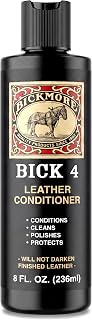
Bickmore
Bick 4 Leather Conditioner
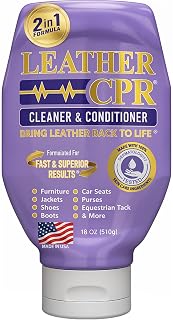
Leather CPR
Cleaner and Conditioner
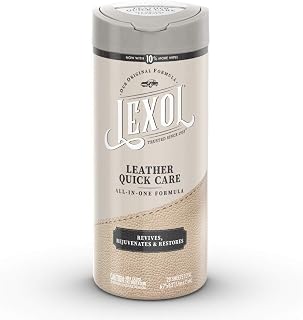
Lexol
All Leather Quick Care
As an Amazon Associate I earn from qualifying purchases. Full disclosure

Community
0 postsShare how you use this product
Drop a quick comment or post a full review with photos and a star rating.
Sign in to postNew here? Create a free account.