CarCareTruth Score
Decent, but wear gloves and ventilate.
Opens Amazon in a new tab. No account needed to look.
Saved to your guest loadout. Sign up to also save to your Cabinet (consumables) or Kit (tools you own).
As an Amazon Associate I earn from qualifying purchases. Full disclosure
Prices may varyHealth score is for adult use as intended, per the manufacturer's SDS. It does not model child ingestion, accidental spill cleanup, or off-label use. See the safety panel below for full hazard classification, and /disclaimer for the full editorial scope.
GHS hazard codes are quoted from the manufacturer’s Safety Data Sheet. PPE tiers below translate those codes and the listed ingredient chemistry; they are not CarCareTruth recommendations.
Show details for all categories ▾Hide details ▴
Translated from the manufacturer’s Safety Data Sheet, Section 2
H319 (eye irritation Cat 2A) per SDS §2 with GHS07 pictogram. SDS §8 specifies eye protection. Pump-spray application creates splash/mist risk; H319 in pump-spray format warrants recommended tier (not required · aerosol escalation does not apply to trigger bottles).
U.S. regulatory standard
29 CFR 1910.133(a)(1)
“The employer shall ensure that each affected employee uses appropriate eye or face protection when exposed to eye or face hazards from… liquid chemicals…”
ANSI Z87.1 (incorporated via §1910.6)
OSHA standards apply to workplaces. Cited here as the U.S. reference threshold for the underlying hazard class.
CarCareTruth publishes the cited sources verbatim and does not advise what action a user should take. Consult the full SDS before use.
Translated from the manufacturer’s Safety Data Sheet, Section 2
H315 (skin irritation Cat 2) per SDS §2. Petroleum-distillate solvent base; SDS §8 specifies protective gloves. Nitrile gloves appropriate for application.
U.S. regulatory standard
29 CFR 1910.138(a)
“appropriate hand protection when employees' hands are exposed to hazards such as those from… chemicals which produce an adverse effect on the skin or eyes…”
OSHA standards apply to workplaces. Cited here as the U.S. reference threshold for the underlying hazard class.
CarCareTruth publishes the cited sources verbatim and does not advise what action a user should take. Consult the full SDS before use.
Only when: in enclosed space · prolonged use
Translated from the manufacturer’s Safety Data Sheet, Section 2
H336 (drowsiness/dizziness · STOT SE Cat 3 narcotic effects) per SDS §2 indicates CNS effect from solvent vapor. SDS §7 directs use only outdoors or in a well-ventilated area. Outdoor or open-garage trigger-spray use is low-risk; enclosed-bay application or extended use creates vapor accumulation risk.
U.S. regulatory standard
29 CFR 1910.1000; 1910.1200
“Each employer shall assure that no employee is exposed [in excess of the PEL]…”
OSHA standards apply to workplaces. Cited here as the U.S. reference threshold for the underlying hazard class.
CarCareTruth publishes the cited sources verbatim and does not advise what action a user should take. Consult the full SDS before use.
The published Safety Data Sheet for this product does not specify ventilation protection for consumer use.
Workplace context
29 CFR 1910.134(a); 1910.1000
“the primary objective shall be to prevent atmospheric contamination [via] accepted engineering control measures (for example, enclosure or confinement of the operation, general and local ventilation…).”
Triggered by GHS H336 on the SDS.
OSHA standards apply to workplaces. Cited here as the U.S. reference threshold for the underlying hazard class.
PPE tiers translate the manufacturer’s SDS and U.S. regulatory standards. Not professional safety advice. How we report safety.
Scope of these PPE tiers. The tiers on this page translate the product's Safety Data Sheet where one is published, plus its ingredient chemistry, into a comparable rating. They describe a formulation, not a situation: a tier is not a safety determination for any specific user, task, quantity, or environment. The manufacturer's label and use instructions govern how the product is handled. Where the product is used at work, the employer's PPE program and hazard assessment under 29 CFR 1910.132 decide what protection is selected, not this page.
No warranties. CarCareTruth makes no warranties, express or implied, and expressly disclaims the implied warranties of merchantability and fitness for a particular purpose.
This product ranks #9 of 9 in Bug & Tar Remover.Three above it ↓
Last reviewed June 14, 2026
TL;DR A competent retail-tier petroleum-solvent bug and tar remover in a trigger bottle · handles fresh bug residue and light-to-medium tar reliably at labeled dwell. The WARNING classification is real chemistry: the SDS lists H351 (suspected carcinogen Cat 2) and carries a Prop 65 warning, which means outdoor use and gloves are the correct default.
Spray it on bug residue, tar splatter, asphalt overspray, or sap while the surface is dry, let it dwell briefly per the label, then wipe off with a microfiber. The petroleum-solvent formula breaks down the contamination chemically before you wipe. Trigger-spray application is convenient · no aerosol propellant, no cling-foam workflow · but doesn't adhere to vertical surfaces as well as aerosol products, so rocker panels and bumpers may need more dwell attention. Community on r/AutoDetailing broadly confirms single-pass cleaning on fresh residue at labeled dwell, well-reviewed by a large owner base and backed by consistent forum threads from 2010 through 2026. The honest limits: baked-on residue may need repeated application, and the solvent base leaves a thin oily film that clears with a follow-up wash. Apply on dry surfaces only · water dilutes the formula and kills efficacy.
Buy it if you want a widely available, non-aerosol bug and tar remover for fresh residue cleanup after highway driving or bug season. Skip it if you regularly deal with hardened, multi-day residue · aerosol cling-foam products grip vertical surfaces better and dissolve baked-on contamination faster. Skip it if you prefer to avoid petroleum-solvent chemistry entirely · aqueous wash-style alternatives (Chemical Guys Bug & Tar Wash) carry no H351 classification and no flammability.
The SDS assigns a WARNING signal word with H226 (flammable liquid Cat 3), H315 and H319 (skin and eye irritation), H336 (may cause drowsiness or dizziness from solvent vapor · STOT SE Cat 3), and H351 (suspected of causing cancer · GHS Cat 2). The product listing carries a Prop 65 warning. The dominant ingredient is a petroleum-derived solvent at less than 35% with alcohol and glycol-ether co-solvents; VOC content per SDS §9 is 27%. SDS §7 directs use only outdoors or in a well-ventilated area, backed by the solvent vapor and flammability classifications. Flash point 43°C means this product should not be used near open flames or heat sources. For environmental pathway: the product is drain-destined via driveway runoff after the follow-up wash; petroleum-derived solvents carry aquatic toxicity in storm-drain systems. No EPA Safer Choice certification.
T-520A uses the same petroleum-distillate solvent family as aerosol-based competitors, but in a non-aerosol trigger bottle. The advantage: no hydrocarbon propellant in the VOC stack, slightly lower total VOC (27% vs. 40-60% for aerosols). The trade-off: trigger spray doesn't cling to vertical surfaces as well as aerosol cling-foam, so dwell time on rocker panels and bumpers may need more attention.
The SDS lists H351 (suspected of causing cancer, GHS Cat 2) · a precautionary classification typically driven by trace aromatic content in the petroleum distillate fraction or by the cumulative ingredient mix. Cat 2 means limited evidence rather than known (Cat 1A/1B), but the classification means the product warrants gloves, eye protection, and outdoor use. The SDS also carries a Prop 65 warning per the Amazon product listing.
Solvent-based formulas can degrade some wax layers in the application area; community on r/AutoDetailing recommends rewaxing the treated panel after use. On cured factory clear coat at the labeled dwell time, community confirms no etching or paint damage. For matte or satin finishes, test on a hidden area first · solvent products are documented to affect some matte coatings.
Stoner Tarminator (aerosol cling-foam) clears baked-on residue faster due to vertical-surface adhesion and slightly higher solvent concentration. T-520A is gentler in application (no aerosol mist), more available at retail, and lower in total VOC due to lack of hydrocarbon propellant · but works less aggressively on hardened tar. Both are petroleum-solvent products.
Petroleum-solvent products can dehydrate rubber seals and may blanch some plastic trim with extended dwell. Community guidance on r/AutoDetailing recommends keeping the spray off trim and rubber where possible, applying to a microfiber and wiping rather than spraying directly onto trim, and rinsing promptly. For headlight polycarbonate lenses, brief contact is generally safe but extended dwell can affect the clear coat.
Marketing copy from Turtle Wax, via Amazon. Not editorial.
Weekly pick
One product, one safety verdict, every week. No spam.
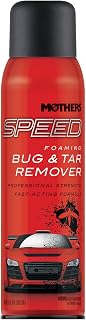
Mothers
Speed Foaming Bug & Tar Remover
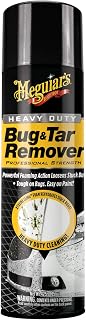
Meguiar's
Heavy Duty Bug & Tar Remover (G180515, 15 oz Aerosol)
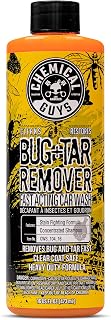
Chemical Guys
Bug and Tar Heavy Duty Car Wash (CWS104)
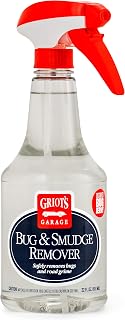
Griot's Garage
Bug & Smudge Remover
As an Amazon Associate I earn from qualifying purchases. Full disclosure

Community
0 postsShare how you use this product
Drop a quick comment or post a full review with photos and a star rating.
Sign in to postNew here? Create a free account.