CarCareTruth Score
Recommended.
Opens Amazon in a new tab. No account needed to look.
Saved to your guest loadout. Sign up to also save to your Cabinet (consumables) or Kit (tools you own).
As an Amazon Associate I earn from qualifying purchases. Full disclosure
Prices may varyHealth score is for adult use as intended, per the manufacturer's SDS. It does not model child ingestion, accidental spill cleanup, or off-label use. See the safety panel below for full hazard classification, and /disclaimer for the full editorial scope.
GHS hazard codes are quoted from the manufacturer’s Safety Data Sheet. PPE tiers below translate those codes and the listed ingredient chemistry; they are not CarCareTruth recommendations.
Show details for all categories ▾Hide details ▴
Only when: splash risk
Translated from the manufacturer’s Safety Data Sheet, Section 8
SDS Section 8 states eye/face protection is 'not required in normal cases.' Section 2 carries no eye-hazard GHS code (mixture not classified), so safety glasses are a splash precaution for the liquid application rather than a mixture-level eye hazard.
CarCareTruth publishes the cited sources verbatim and does not advise what action a user should take. Consult the full SDS before use.
Only when: prolonged use · splash risk
Translated from the manufacturer’s Safety Data Sheet, Section 8
SDS Section 8 states hand protection is 'not required in normal cases,' and Section 4 notes the product generally does not irritate skin. The white mineral oil carrier (15-20%, Section 3) still makes gloves a reasonable precaution for prolonged or repeated contact during sponge-tip application.
CarCareTruth publishes the cited sources verbatim and does not advise what action a user should take. Consult the full SDS before use.
Only when: in enclosed space
Translated from the manufacturer’s Safety Data Sheet, Section 8
SDS Section 8 states respiratory protection is 'not required in normal cases.' The mixture is not classified for inhalation hazard and the mineral oil carrier has very low vapor pressure at ambient temperature, so this is only a precaution for working in an unventilated garage, not a mixture-level inhalation hazard.
CarCareTruth publishes the cited sources verbatim and does not advise what action a user should take. Consult the full SDS before use.
No PPE specified in published sources for ventilation. Absence does not imply “not needed” — consult the full Safety Data Sheet.
PPE tiers translate the manufacturer’s SDS and U.S. regulatory standards. Not professional safety advice. How we report safety.
Scope of these PPE tiers. The tiers on this page translate the product's Safety Data Sheet where one is published, plus its ingredient chemistry, into a comparable rating. They describe a formulation, not a situation: a tier is not a safety determination for any specific user, task, quantity, or environment. The manufacturer's label and use instructions govern how the product is handled. Where the product is used at work, the employer's PPE program and hazard assessment under 29 CFR 1910.132 decide what protection is selected, not this page.
No warranties. CarCareTruth makes no warranties, express or implied, and expressly disclaims the implied warranties of merchantability and fitness for a particular purpose.
This product ranks #3 of 6 in Weatherstrip Conditioner.
Last reviewed August 1, 2026
TL;DR No inhalation concern: the SDS classifies this formula as not hazardous at mixture level. That's unusual in a category dominated by spray cans with VOC warnings. It restores flexibility to stiff or creaking door seals, and AutoGeek owners report winter creak and wind noise eliminated after a single application on German vehicles. Note the bottle is small: 100 ml / 3.4 fl oz, enough to cover a full set of weatherstrips with margin, but not a 16 oz jug. No independent long-term data confirms how long a treatment holds; budget for re-application every 6-10 weeks.
Draw the sponge-tip applicator along each seal, let it absorb a few minutes, wipe any excess with a microfiber, and leave the door open before closing. The silicone-based formula coats and softens the seal surface; the most documented benefit is wind noise reduction and creak removal on BMW, Mercedes, Audi, and VW door seals in cold weather. The sponge tip limits paint contact, though SONAX still recommends wiping any overflow. The honest gap: SONAX claims the product prolongs rubber life but gives no re-application interval, and no multi-month follow-up reviews were found to fill it in.
Best fit for owners dealing with door seal creaking, wind noise, or early stiffness, particularly German vehicles where community evidence is concentrated. Skip it if weatherstripping has visible tearing or has separated from the frame; conditioning won't substitute for replacement at that stage.
The SDS (UK REACH, version 5.00, December 2025) classifies the mixture as not hazardous: no signal word, no H-codes. The mineral oil carrier at 15-20% has a vapor pressure below 0.01 kPa and does not volatilize during sponge-tip outdoor application. Aquatic toxicity and biodegradability are not addressed in SDS §12 · both recorded as unknown. No PFAS, no Prop 65-listed ingredients.
Community evidence on AutoGeek, concentrated on German vehicles (BMW, Mercedes, Audi, VW), confirms it treats EPDM door seals without issues. The SDS §3 describes an aqueous silicone oil emulsion at neutral pH (6-7), which is chemically compatible with EPDM rubber. No community reports of seal swelling, accelerated cracking, or adhesive migration have been found in available evidence.
SONAX claims it 'prolongs rubber's life' but does not specify a re-application interval on the product page. The rubric's evidence base does not include long-term community reviews confirming a specific interval. Based on comparable silicone-emulsion weatherstrip conditioners, a 6-10 week re-application cycle is a reasonable starting expectation, though your specific climate and seal condition will vary.
The sponge-tip applicator is designed to deliver product directly to the seal, limiting paint contact. SONAX directions say to wipe any excess with a cloth and leave doors open for 5 minutes before closing. No community reports of paint staining or chemical spotting were found in available evidence. A microfiber wipe-off after application is recommended practice.
Yes · Sonax markets the Gummi Pfleger for all rubber parts on the car, including door, window, trunk, and hood weatherstrips. Draw the sponge-tip applicator along each seal, let it absorb a few minutes, then wipe any excess. AutoGeek community evidence, concentrated on German vehicles, confirms it restores flexibility to EPDM weatherstripping without seal swelling or adhesive migration.
The silicone-emulsion film coats the weatherstrip surface, which reduces the rubber's tendency to stick and creak in cold weather · AutoGeek owners report winter creak and wind noise eliminated after a single application. A silicone seal coating also helps limit a frozen door seal, though no independent long-term data confirms how many freeze cycles one treatment holds; budget for re-application every 6 to 10 weeks in winter conditions.
SONAX markets this for 'all rubber parts on the car' including door, window, trunk, and hood seals. The product is not specifically tested or marketed for convertible-top seals, which face sustained UV and outdoor exposure. Community evidence is limited to interior door and window seals. For convertible-top rubber, verify compatibility with the seal manufacturer before applying.
Marketing copy from SONAX, via Amazon. Not editorial.
Weekly pick
One product, one safety verdict, every week. No spam.


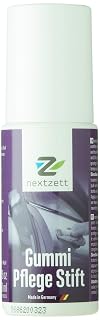
nextzett
Gummi Pflege Rubber Care Stick
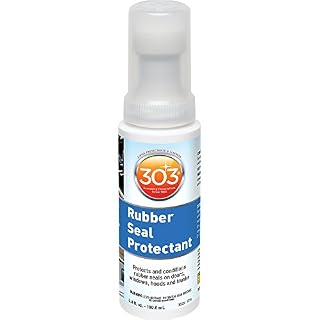
303 Products
Rubber Seal Protectant
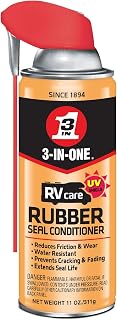
3-IN-ONE
RVcare Rubber Seal Conditioner with Smart Straw (11 oz)
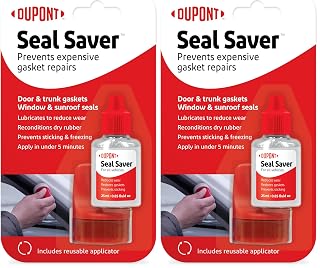
DuPont
Seal Saver
As an Amazon Associate I earn from qualifying purchases. Full disclosure

Community
0 postsShare how you use this product
Drop a quick comment or post a full review with photos and a star rating.
Sign in to postNew here? Create a free account.