CarCareTruth Score
Decent.
Opens Amazon in a new tab. No account needed to look.
Saved to your guest loadout. Sign up to also save to your Cabinet (consumables) or Kit (tools you own).
As an Amazon Associate I earn from qualifying purchases. Full disclosure
Prices may varyThe manufacturer's Safety Data Sheet classifies this product with one or more GHS Category 1 health hazards — the most severe tier. The hazard statements in quotes below are the verbatim GHS language from the SDS, as required by OSHA's Hazard Communication Standard. The line under each statement translates the GHS classification into plain language.
GHS Category 1 aspiration toxicity — thin, oily liquids can slip into the lungs if swallowed, causing chemical pneumonia.
If swallowed:
The aspiration hazard (H304) is about the liquid being swallowed and reaching the airway, not about breathing fumes during normal use.
Call Poison Control immediately at 1-800-222-1222 (US, 24/7, free) and have the product container with you. Poison Control's standing guidance is to not induce vomiting after chemical exposure; they will direct first-aid steps based on the specific product.
About this product's hazards. This product's Safety Data Sheet uses signal word DANGER.Read the manufacturer's SDS and follow all safety instructions before use. CarCareTruth ratings translate the manufacturer's safety sheet. They do not replace the SDS or substitute for a hazard assessment specific to your task.
Health score is for adult use as intended, per the manufacturer's SDS. It does not model child ingestion, accidental spill cleanup, or off-label use. See the safety panel below for full hazard classification, and /disclaimer for the full editorial scope.
GHS hazard codes are quoted from the manufacturer’s Safety Data Sheet. PPE tiers below translate those codes and the listed ingredient chemistry; they are not CarCareTruth recommendations.
Show details for all categories ▾Hide details ▴
Only when: when spraying
Translated from the manufacturer’s Safety Data Sheet, Section 2
No eye hazard codes (H319, H318) at SDS §2 mixture level. The aerosol Smart Straw spray format creates an incidental eye exposure pathway if directed toward the face.
CarCareTruth publishes the cited sources verbatim and does not advise what action a user should take. Consult the full SDS before use.
Only when: prolonged use
Translated from the manufacturer’s Safety Data Sheet, Section 2
No skin hazard codes (H315, H317) at SDS §2 mixture level. The petroleum-distillate carrier (85-95%) warrants standard glove precaution for extended application sessions.
CarCareTruth publishes the cited sources verbatim and does not advise what action a user should take. Consult the full SDS before use.
Only when: in enclosed space
Beyond SDS: translated from the ingredient chemistry
SDS §8 affirmatively states no respiratory protection is needed. No H334 or H335 at SDS §2 mixture level. Aerosol format in an enclosed garage warrants ventilation consistent with the petroleum-carrier chemistry, even without a mixture-level inhalation classification.
U.S. regulatory standard
29 CFR 1910.134; 1910.138; 1910.1000
“the primary objective shall be to prevent atmospheric contamination…”
OSHA standards apply to workplaces. Cited here as the U.S. reference threshold for the underlying hazard class.
UN GHS hazard statement
H373“May cause damage to organs through prolonged or repeated exposure”
UN GHS Rev. 9 (2021)
CarCareTruth publishes the cited sources verbatim and does not advise what action a user should take. Consult the full SDS before use.
No PPE specified in published sources for ventilation. Absence does not imply “not needed” — consult the full Safety Data Sheet.
PPE tiers translate the manufacturer’s SDS and U.S. regulatory standards. Not professional safety advice. How we report safety.
California Prop 65 warning
This product's Amazon listing carries a California Prop 65 warning. The manufacturer's Safety Data Sheet (§15) does not list a Prop 65 substance for this product — we show the warning for transparency and flag the discrepancy rather than silently picking a side.
Scope of these PPE tiers. The tiers on this page translate the product's Safety Data Sheet where one is published, plus its ingredient chemistry, into a comparable rating. They describe a formulation, not a situation: a tier is not a safety determination for any specific user, task, quantity, or environment. The manufacturer's label and use instructions govern how the product is handled. Where the product is used at work, the employer's PPE program and hazard assessment under 29 CFR 1910.132 decide what protection is selected, not this page.
No warranties. CarCareTruth makes no warranties, express or implied, and expressly disclaims the implied warranties of merchantability and fitness for a particular purpose.
This product ranks #4 of 6 in Weatherstrip Conditioner.Three above it ↓
Last reviewed June 14, 2026
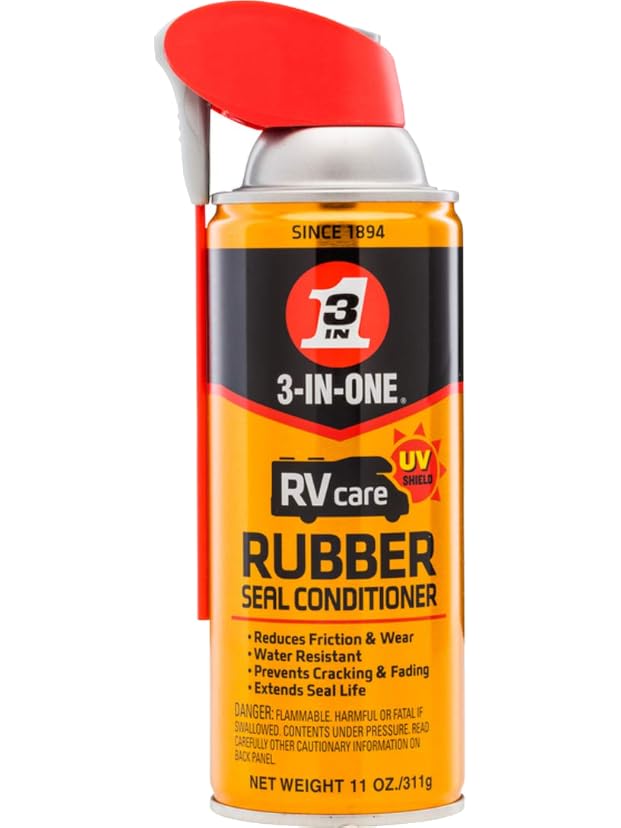
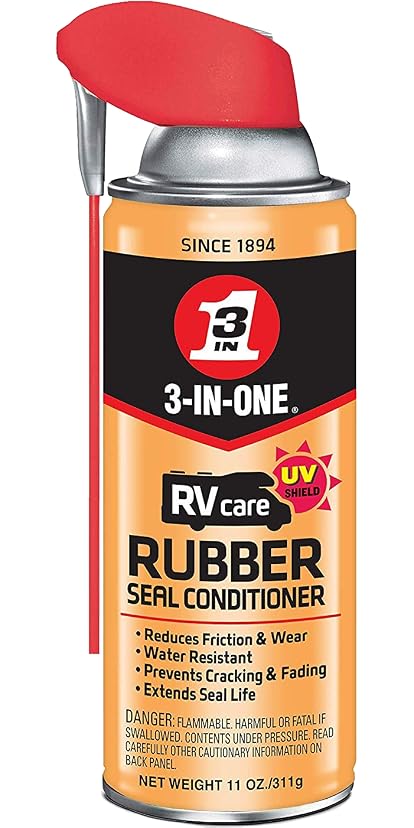
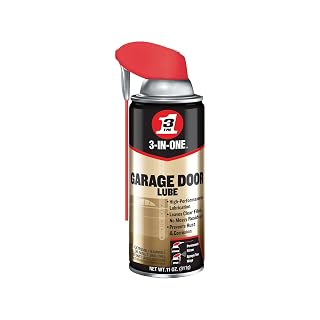
TL;DR Broad community support, well-earned across a large owner base, for keeping RV slide-out and door seals flexible and water-tight. The aerosol Smart Straw format reaches deep into slide-out track seals where a squeeze bottle can't. The brand's "long lasting formula" claim isn't tied to a specific re-application interval; community use patterns suggest seasonal application. Note that the petroleum-distillate carrier is not confirmed compatible with all EPDM formulations · community feedback warns against use on TPO or EPDM roofing rubber.
Point the Smart Straw at the seal, press the nozzle, and the petroleum-based formula reaches into recessed slide-out grooves and door channels that are awkward to access with a small applicator. Reviews on RV forums and Amazon consistently describe seals staying softer and slide-outs cycling more smoothly after application. The aerosol format covers large RV slide seals quickly · one can goes a long way on a full-size fifth wheel · but requires a steady hand to avoid overspray on adjacent painted panels. The carrier is a petroleum-distillate solvent with a PDMS secondary agent; it coats the rubber surface and slows drying and cracking rather than deeply penetrating the rubber structure.
Best fit for RV owners maintaining slide-out seals, door gaskets, hatch seals, and compartment edges · the aerosol format is the right tool for large, recessed RV seals that are impractical to apply by hand. Also works for car door and trunk seals per community reports. Skip it if your seals are already severely cracked, torn, or separated from the frame · at that point seal replacement is the fix, not conditioning. Also skip it for TPO or EPDM roofing applications · community feedback documented problems with those materials.
The SDS carries a DANGER signal word from two hazard classifications: H304 (aspiration toxicity from the petroleum-distillate carrier · if swallowed, do not induce vomiting) and H222 (flammable aerosol · keep away from flame and heat sources). H373 (STOT RE Cat 2) is also listed at mixture level. Importantly, the SDS §8 states no respiratory protection is required, and no respiratory irritation classification (H335) appears at the mixture level · the aerosol format warrants using the product in a ventilated area consistent with petroleum-carrier chemistry, but this is a practical measure, not a required-PPE call from the hazard data. No Prop 65 required per SDS §15 (Amazon's Prop 65 flag is a documented false positive). CARB-compliant; estimated VOC ~5 g/L. No PFAS confirmed in SDS §3.
Compatibility with standard door and window EPDM seals is widely reported by owners on Amazon, with no widespread complaints of seal swelling. However, early owner feedback explicitly warns against use on TPO or EPDM roofing material, and the petroleum-distillate carrier (85-95% hydrotreated light distillate) can interact with some EPDM compounds depending on aromatic content. The SDS does not provide a specific EPDM compatibility statement. For standard RV slide-out seals and car door seals, the community record is positive. For high-exposure EPDM roofing applications, use a silicone-only product instead.
The SDS Section 15 (rev 2018-07-19) states verbatim: 'This product does not require a California Proposition 65 warning.' That is the authoritative source. Amazon's Prop 65 flag is a false positive · a documented pattern for WD-40 Company consumer aerosols on Amazon that does not reflect the SDS chemistry. The hydrotreated light distillate carrier has low aromatic content and the PDMS secondary agent is not a Prop 65 substance.
SDS Section 8 states no respiratory protection is required. No H334 (respiratory sensitizer) or H335 (respiratory irritant) appears at the SDS §2 mixture level. The aerosol format in an enclosed garage warrants good ventilation · the SDS petroleum-carrier chemistry supports keeping the garage door open during application · but this is a practical measure consistent with the chemistry, not a required-PPE call.
The brand describes a 'long lasting formula' without specifying a re-application interval. Community reviews focus on annual maintenance routines (applying before and after RV season storage). No community evidence documents a specific interval beyond the general seasonal-use pattern. The notes.md longevity cap was applied at 6.0 · label durability claims alone do not justify a higher score per the rubric.
DANGER is the GHS signal word for the aspiration hazard classification (H304) · if swallowed, the petroleum distillate carrier could cause lung damage, so do not induce vomiting and seek medical help immediately. This is the same hazard class carried by many petroleum-based products including WD-40. In normal external use on rubber seals, the aspiration pathway is not relevant. The DANGER signal word here reflects ingestion risk, not topical use risk.
Marketing copy from 3-IN-ONE, via Amazon. Not editorial.
Weekly pick
One product, one safety verdict, every week. No spam.



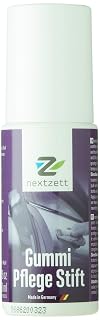
nextzett
Gummi Pflege Rubber Care Stick
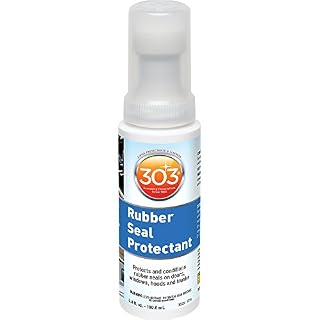
303 Products
Rubber Seal Protectant
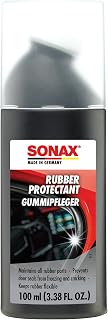
SONAX
Rubber Protectant (GummiPfleger)
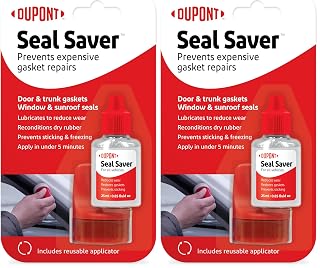
DuPont
Seal Saver
As an Amazon Associate I earn from qualifying purchases. Full disclosure

Community
0 postsShare how you use this product
Drop a quick comment or post a full review with photos and a star rating.
Sign in to postNew here? Create a free account.