CarCareTruth Score
Decent.
Opens Amazon in a new tab. No account needed to look.
Saved to your guest loadout. Sign up to also save to your Cabinet (consumables) or Kit (tools you own).
As an Amazon Associate I earn from qualifying purchases. Full disclosure
Prices may varyHealth score is for adult use as intended, per the manufacturer's SDS. It does not model child ingestion, accidental spill cleanup, or off-label use. See the safety panel below for full hazard classification, and /disclaimer for the full editorial scope.
GHS hazard codes are quoted from the manufacturer’s Safety Data Sheet. PPE tiers below translate those codes and the listed ingredient chemistry; they are not CarCareTruth recommendations.
Show details for all categories ▾Hide details ▴
Only when: prolonged use
Translated from the manufacturer’s Safety Data Sheet, Section 8
No eye-irritation H-codes in §2 of the EU SDS (H318/H319/H320 absent). SDS §8 lists chemical splash goggles as protective equipment. The paste format does not generate aerosol or spray exposure under normal use; the situational tier applies for prolonged sessions or overhead application.
CarCareTruth publishes the cited sources verbatim and does not advise what action a user should take. Consult the full SDS before use.
Translated from the manufacturer’s Safety Data Sheet, Section 8
SDS §8 specifies blue nitrile gloves (Category 3, EN374). The petroleum-carrier concentration (60-100% isoalkane in EU formulation) involves sustained hand contact during paste application. No H317 skin sensitizer classification is present in §2, but the high carrier volume and application method support gloves.
CarCareTruth publishes the cited sources verbatim and does not advise what action a user should take. Consult the full SDS before use.
Only when: in enclosed space · prolonged use
Translated from the manufacturer’s Safety Data Sheet, Section 2
SDS §2 lists H336 (narcotic vapors from petroleum carrier) but the paste format limits vapor generation compared to spray products. No H334 or H335 at mixture level. SDS §8 states 'No specific recommendations' for respiratory protection at normal use concentrations; respiratory protection is specified if airborne contamination exceeds the OEL.
CarCareTruth publishes the cited sources verbatim and does not advise what action a user should take. Consult the full SDS before use.
The published Safety Data Sheet for this product does not specify ventilation protection for consumer use.
Workplace context
29 CFR 1910.134(a); 1910.1000
“the primary objective shall be to prevent atmospheric contamination [via] accepted engineering control measures (for example, enclosure or confinement of the operation, general and local ventilation…).”
Triggered by GHS H336 on the SDS.
OSHA standards apply to workplaces. Cited here as the U.S. reference threshold for the underlying hazard class.
PPE tiers translate the manufacturer’s SDS and U.S. regulatory standards. Not professional safety advice. How we report safety.
This product ranks #10 of 12 in Paste Wax.Three above it ↓
Last reviewed June 14, 2026
TL;DR An American classic since 1911: warm carnauba-and-paraffin finish, traditional wipe-off-immediately technique, and a Prop 65 warning (Naphthalene and Ethylbenzene) on the US label. The 7 oz tin covers one car per application. Community durability data is thin; expect 2-4 months on a daily driver.
Carnauba and paraffin in a petroleum-solvent carrier. Apply by rotating a damp cloth in the can, spread over a 2-by-2-foot section, wipe off immediately with a dry cloth (no haze time), then buff to a shine. Enthusiasts describe a warm, satisfying finish. The brand's "longest lasting" claim is not confirmed by independent community sources, and the 7 oz tin covers one mid-size car per application.
Buy this for authentic traditional carnauba chemistry and the warm glow on dark paint. Skip it if protection time is your priority: Collinite 476s offers better-documented durability at a similar price. Skip it if the Prop 65 warning matters to you, as the US label lists Naphthalene and Ethylbenzene from the petroleum carrier.
SDS §2 signal word WARNING from H228 (Flammable Solid, physical hazard) and H336 (narcotic vapors from the petroleum carrier). No US GHS SDS was located; the EU-market SDS (Holt Lloyd, 2020) is the proxy. The US product label carries a Prop 65 warning for Naphthalene and Ethylbenzene, below the GHS mixture threshold but above the Prop 65 reporting threshold. SDS §8 specifies nitrile gloves and chemical splash goggles. SDS §12.2 states the product is expected to be readily biodegradable.
Community evidence is thinner than for modern premium waxes, but owner reports and long-term users generally describe the wax holding up for a few months on a daily driver. The brand describes it as 'one of the longest lasting car wax products on the market,' which is a marketing claim the current community data does not independently confirm. The 7 oz tin is also notably small: multiple owners note that a single can covers one mid-size car with little left over, which limits real-world long-term testing. Treat the label claim with skepticism and plan to reapply every 2-4 months on a regularly washed daily driver.
Yes. The US product label displays a California Proposition 65 warning listing Naphthalene and Ethylbenzene as chemicals known to cause cancer. Both are trace constituents of the petroleum-solvent carrier used in the formula. The concentrations are below the thresholds that trigger a GHS mixture-level classification (which is why the SDS signal word is WARNING rather than DANGER), but they exceed the Prop 65 reporting threshold, which is a lower bar. If you are in California or prefer to avoid Prop 65-listed chemicals, this is relevant to your purchase decision.
The manufacturer markets it as Brazilian carnauba wax and the brand website describes it as 'pure Brazilian carnauba wax, which is the hardest natural wax known to man.' However, the SDS for the EU-market version lists C9-C11 hydrocarbon (isoalkane) as the dominant ingredient at 60-100% of the formula, with Paraffin wax at 10-30%. Carnauba wax itself carries no GHS classification and does not appear in the SDS §3 hazardous ingredients section. The formula is best described as a carnauba-and-paraffin blend in a petroleum-solvent carrier, not a pure carnauba product.
Multiple community owners note that the 7 oz tin covers roughly one average-size car with little to spare. Simoniz originally sold this wax in much larger quantities, but the current retail packaging is 7 oz only. If you want to wax multiple vehicles or do multiple applications per season, you will need more than one can. The small size is a real practical limitation that affects value for regular use.
The Simoniz formula uses traditional chemistry (petroleum carrier, paraffin, carnauba) that predates modern isoalkane-based synthetic waxes. Modern products like Collinite 476s or Meguiar's Ultimate Paste Wax use more refined carriers with cleaner chemistry profiles and offer better-documented community durability data. Simoniz Original Paste Wax carries a Prop 65 warning that most modern alternatives do not. Its case is primarily nostalgic and historical: for buyers who used it decades ago or want an authentic traditional car wax experience, it delivers. For buyers focused on maximum protection time and chemistry transparency, newer formulations compare favorably.
Marketing copy from Simoniz, via Amazon. Not editorial.
Weekly pick
One product, one safety verdict, every week. No spam.
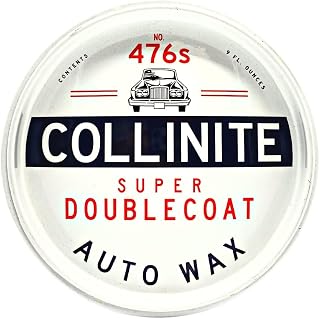
Collinite
No. 476s Super Doublecoat Wax
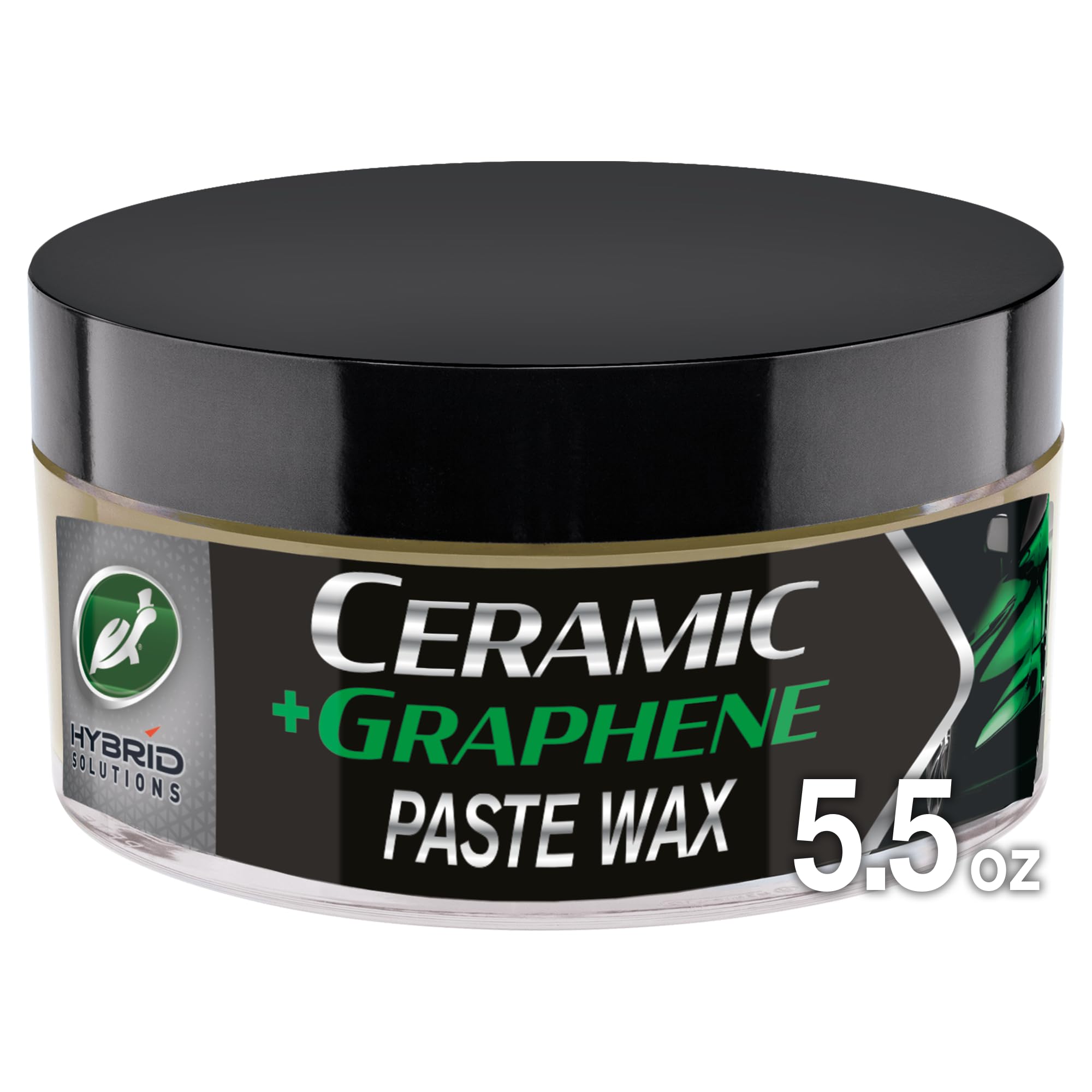
Turtle Wax
Hybrid Solutions Ceramic + Graphene Paste Wax
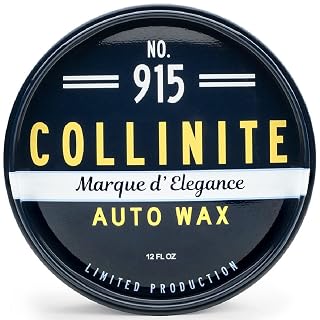
Collinite
No. 915 Marque D'Elegance Wax
Chemical Guys
XXX Hardcore Carnauba Paste Wax (8 oz)
As an Amazon Associate I earn from qualifying purchases. Full disclosure

Community
0 postsShare how you use this product
Drop a quick comment or post a full review with photos and a star rating.
Sign in to postNew here? Create a free account.