CarCareTruth Score
Decent, but it's tough on the environment.
Opens Amazon in a new tab. No account needed to look.
Saved to your guest loadout. Sign up to also save to your Cabinet (consumables) or Kit (tools you own).
As an Amazon Associate I earn from qualifying purchases. Full disclosure
Prices may varyThe manufacturer's Safety Data Sheet classifies this product with one or more GHS Category 1 health hazards — the most severe tier. The hazard statements in quotes below are the verbatim GHS language from the SDS, as required by OSHA's Hazard Communication Standard. The line under each statement translates the GHS classification into plain language.
GHS Category 1 aspiration toxicity — thin, oily liquids can slip into the lungs if swallowed, causing chemical pneumonia.
If swallowed:
The aspiration hazard (H304) is about the liquid being swallowed and reaching the airway, not about breathing fumes during normal use.
Call Poison Control immediately at 1-800-222-1222 (US, 24/7, free) and have the product container with you. Poison Control's standing guidance is to not induce vomiting after chemical exposure; they will direct first-aid steps based on the specific product.
About this product's hazards. This product's Safety Data Sheet uses signal word DANGER.Read the manufacturer's SDS and follow all safety instructions before use. CarCareTruth ratings translate the manufacturer's safety sheet. They do not replace the SDS or substitute for a hazard assessment specific to your task.
Health score is for adult use as intended, per the manufacturer's SDS. It does not model child ingestion, accidental spill cleanup, or off-label use. See the safety panel below for full hazard classification, and /disclaimer for the full editorial scope.
GHS hazard codes are quoted from the manufacturer’s Safety Data Sheet. PPE tiers below translate those codes and the listed ingredient chemistry; they are not CarCareTruth recommendations.
Show details for all categories ▾Hide details ▴
Only when: when spraying
Translated from the manufacturer’s Safety Data Sheet, Section 8
SDS §2 classifies Serious Eye Irritation Cat 2A (H319). SDS §8 directs safety glasses or goggles.
U.S. regulatory standard
29 CFR 1910.133(a)(1)
“The employer shall ensure that each affected employee uses appropriate eye or face protection when exposed to eye or face hazards from… liquid chemicals…”
ANSI Z87.1 (incorporated via §1910.6)
OSHA standards apply to workplaces. Cited here as the U.S. reference threshold for the underlying hazard class.
CarCareTruth publishes the cited sources verbatim and does not advise what action a user should take. Consult the full SDS before use.
Translated from the manufacturer’s Safety Data Sheet, Section 8
SDS §2 classifies Skin Irritation Cat 2 (H315). SDS §8 lists protective gloves (material selection per exposure conditions).
U.S. regulatory standard
29 CFR 1910.138(a)
“appropriate hand protection when employees' hands are exposed to hazards such as those from… chemicals which produce an adverse effect on the skin or eyes…”
OSHA standards apply to workplaces. Cited here as the U.S. reference threshold for the underlying hazard class.
CarCareTruth publishes the cited sources verbatim and does not advise what action a user should take. Consult the full SDS before use.
Translated from the manufacturer’s Safety Data Sheet, Section 8
DANGER signal word with health-tier H-codes (H336 narcotic effects, H304 aspiration hazard) and aerosol form factor. SDS §8 directs use in a well-ventilated area and specifies an organic-vapor cartridge respirator when adequate ventilation cannot be achieved.
U.S. regulatory standard
29 CFR 1910.1200(f); 1910.132(d)
“The employer shall assess the workplace to determine if hazards are present, or are likely to be present, which necessitate the use of personal protective equipment.”
OSHA standards apply to workplaces. Cited here as the U.S. reference threshold for the underlying hazard class.
CarCareTruth publishes the cited sources verbatim and does not advise what action a user should take. Consult the full SDS before use.
The published Safety Data Sheet for this product does not specify ventilation protection for consumer use.
Workplace context
29 CFR 1910.134(a); 1910.1000
“the primary objective shall be to prevent atmospheric contamination [via] accepted engineering control measures (for example, enclosure or confinement of the operation, general and local ventilation…).”
Triggered by GHS H336 on the SDS.
OSHA standards apply to workplaces. Cited here as the U.S. reference threshold for the underlying hazard class.
PPE tiers translate the manufacturer’s SDS and U.S. regulatory standards. Not professional safety advice. How we report safety.
California Prop 65 warning
This product's Amazon listing carries a California Prop 65 warning. The manufacturer's Safety Data Sheet (§15) does not list a Prop 65 substance for this product — we show the warning for transparency and flag the discrepancy rather than silently picking a side.
Scope of these PPE tiers. The tiers on this page translate the product's Safety Data Sheet where one is published, plus its ingredient chemistry, into a comparable rating. They describe a formulation, not a situation: a tier is not a safety determination for any specific user, task, quantity, or environment. The manufacturer's label and use instructions govern how the product is handled. Where the product is used at work, the employer's PPE program and hazard assessment under 29 CFR 1910.132 decide what protection is selected, not this page.
No warranties. CarCareTruth makes no warranties, express or implied, and expressly disclaims the implied warranties of merchantability and fitness for a particular purpose.
This product ranks #4 of 13 in Carburetor Cleaner.Three above it ↓
Last reviewed June 12, 2026
TL;DR Sea Foam SS14 is a proven induction cleaner with an 80+ year brand track record, used by small-engine mechanics and enthusiasts for cleaning carburetor throats, throttle bodies, and GDI intake valves. The formula handles moderate gum and carbon deposits with a hot-soak technique · spray into the passage, let it sit 10-15 minutes, then run the engine hard to blast out the dissolved deposits. The DANGER signal word is driven by extreme flammability (H222), compressed gas under pressure (H280), and aspiration toxicity (H304 · fatal if swallowed and enters airways): SDS §8 directs eye protection and gloves as the chemistry-forced minimum, and the aerosol form means lung protection is recommended in poorly ventilated spaces. No O2-sensor-safe or catalytic-converter-safe claim is on the label · if that guarantee matters, choose a product that makes it explicitly.
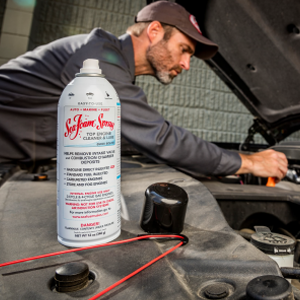
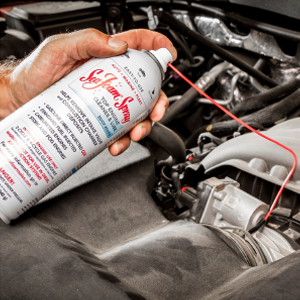
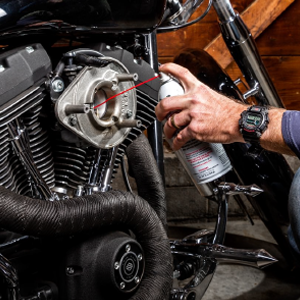
Shake the can, insert the straw into the throttle body or carburetor throat, and spray in short bursts while the engine runs · or use the hot-soak method (spray into a warm engine and let it sit before restarting). The petroleum-solvent formula dissolves fuel-bowl gum, intake-valve carbon, and varnish deposits from upper-engine passages without requiring component disassembly for routine maintenance. Community owners report the hot-soak technique is the most effective usage pattern, with owners citing CA smog-test prep as an application. Small-engine mechanics endorse the Sea Foam brand across forum communities as effective for seasonal-storage carb issues. The formula's lubricating component (per the "Lube" in the product name) leaves upper-engine surfaces with a protective residue after cleaning · a differentiator from pure-solvent carb cleaners that leave passages completely dry.
The right buy for owners dealing with a fuel-injected car or truck that needs upper-engine carbon cleaning, or small-engine equipment with a gummed-up carburetor from seasonal storage. The Sea Foam brand's long track record makes it a reliable choice for this maintenance category across auto, marine, and fleet applications. Skip it if you specifically need an O2-sensor-safe or catalytic-converter-safe certified formula · the manufacturer does not make that claim. Skip it if heavy brown-lacquer varnish from multi-year fuel storage is the problem · that level of deposit typically calls for a dedicated carb-dip soak or ultrasonic cleaning rather than aerosol spray.
The product carries the DANGER signal word, driven by extremely flammable aerosol chemistry (H222, H229, H280 · compressed gas under pressure) and aspiration toxicity (H304 · may be fatal if swallowed and enters airways). The 2018 SDS classifies skin irritation (H315), serious eye irritation (H319), and narcotic-effect inhalation (H336 · may cause drowsiness or dizziness). SDS §8 specifies eye protection and gloves for spray application; the aerosol form factor and H336 narcotic classification make the SDS §8 directive to use in a well-ventilated area meaningful · in an enclosed garage, aerosol mist can accumulate quickly. An organic-vapor cartridge respirator is specified by SDS §8 when adequate ventilation cannot be achieved. Do NOT induce vomiting if ingested · H304 aspiration toxicity means stomach contents entering the airways is a serious medical hazard; seek immediate medical attention per SDS first-aid guidance. SDS Section 15 explicitly confirms no Proposition 65 chemicals are present. The product is not classified as environmentally hazardous under GHS (no H411/H412 in SDS §2), but the SDS §12 note that "large or frequent spills can have a harmful or damaging effect on the environment" applies · dispose of excess product and contaminated solvent as hazardous waste, not down the drain. VOC is 367 g/L (SDS §9), above the 250 g/L high-VOC threshold, and there is no CARB compliance claim on the label or SDS.
The label lists fuel injection throttle bodies as a primary application alongside carburetor throats. However, the manufacturer makes no affirmative O2-sensor-safe or catalytic-converter-safe claim on the label, SDS, or product page. Most throttle-body-safe cleaners carry an explicit 'safe for oxygen sensors and catalytic converters' statement · Sea Foam SS14 does not. If sensor safety is a requirement, look for a product that makes that claim explicitly.
No. SDS Section 15 (revision 2018-11-09) explicitly states 'This material is not known to contain any chemicals currently listed as carcinogens or reproductive toxins.' The SDS ingredients (a proprietary hydrocarbon blend, isopropanol, and carbon dioxide) do not carry disclosed Prop 65 chemical identities. No Prop 65 warning appears on the product label.
Two categorization gates were evaluated. First, the front label explicitly lists 'Carburetor Throat' as a primary application · per CarCareTruth's O-3 rule, dual-marketed products with carburetor use belong in carb-cleaner. Second, the manufacturer makes no affirmative O2-sensor-safe or catalytic-converter-safe claim, which is a required gate for throttle-body-cleaner placement on this site. The product is a capable induction cleaner for both use cases, but the category assignment reflects these distinctions.
Run the engine to operating temperature, then spray Sea Foam SS14 through the throttle body or carburetor throat with the engine running (or just shut off). Let it soak for 10-15 minutes, then restart the engine and run at higher RPM to clear the dissolved deposits. Community owners cite this hot-soak method · including a California smog-prep application · as the most effective usage pattern. Follow the can directions and SDS safety guidance during application.
Yes. Sea Foam publishes a complete SDS index at seafoamworks.com/sds/ with direct PDF links for all products. The SS14 SDS is accessible at the permanent URL on file. The revision date is November 2018 · the document is approximately 7.5 years old. Sea Foam formulas are stable petroleum-based products, but a fresh SDS check is warranted on the next improvement pass.
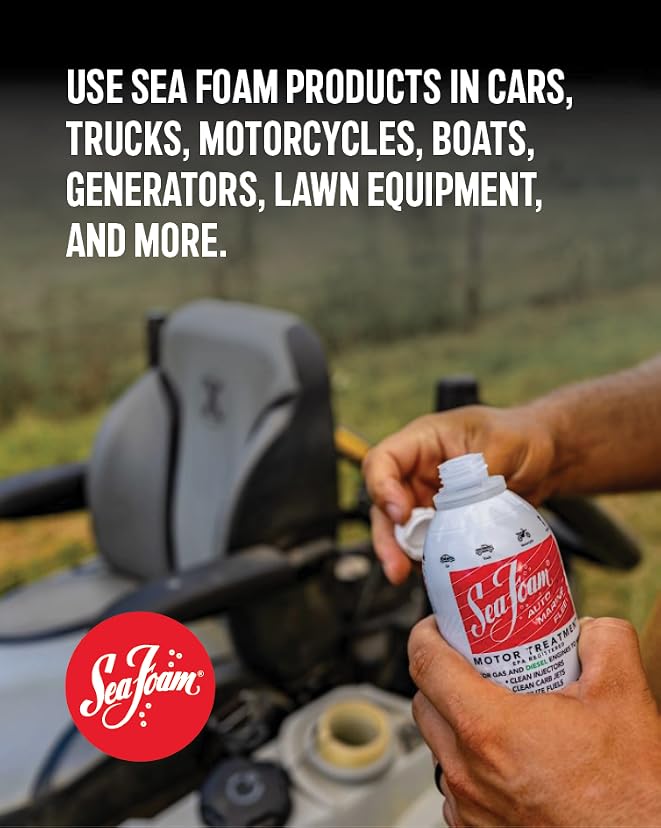
Marketing copy from Sea Foam, via Amazon. Not editorial.
Weekly pick
One product, one safety verdict, every week. No spam.






Berryman
B-12 Carburetor, Choke and Throttle Body Cleaner
Berryman
B-12 Chemtool Carburetor, Choke & Throttle Body Cleaner
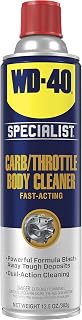
WD-40
Specialist Carb/Throttle Body & Parts Cleaner
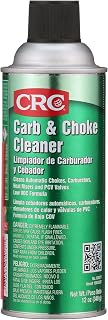
CRC
Carb & Choke Cleaner (12 oz aerosol)
As an Amazon Associate I earn from qualifying purchases. Full disclosure

Community
0 postsShare how you use this product
Drop a quick comment or post a full review with photos and a star rating.
Sign in to postNew here? Create a free account.