CarCareTruth Score
Decent.
Opens Amazon in a new tab. No account needed to look.
Saved to your guest loadout. Sign up to also save to your Cabinet (consumables) or Kit (tools you own).
As an Amazon Associate I earn from qualifying purchases. Full disclosure
Prices may varyHealth score is for adult use as intended, per the manufacturer's SDS. It does not model child ingestion, accidental spill cleanup, or off-label use. See the safety panel below for full hazard classification, and /disclaimer for the full editorial scope.
GHS hazard codes are quoted from the manufacturer’s Safety Data Sheet. PPE tiers below translate those codes and the listed ingredient chemistry; they are not CarCareTruth recommendations.
Show details for all categories ▾Hide details ▴
Translated from the manufacturer’s Safety Data Sheet, Section 2
H319 (Eye Irritation Cat 2A) in SDS §2 at the mixture level. Wheel-height pump-spray application puts the nozzle at face level, creating a direct exposure pathway; this is a confirmed chemistry basis, not SDS boilerplate.
U.S. regulatory standard
29 CFR 1910.133(a)(1)
“The employer shall ensure that each affected employee uses appropriate eye or face protection when exposed to eye or face hazards from… liquid chemicals…”
ANSI Z87.1 (incorporated via §1910.6)
OSHA standards apply to workplaces. Cited here as the U.S. reference threshold for the underlying hazard class.
CarCareTruth publishes the cited sources verbatim and does not advise what action a user should take. Consult the full SDS before use.
Especially relevant: prolonged use
Translated from the manufacturer’s Safety Data Sheet, Section 2
H315 (Skin Irritation Cat 2) in SDS §2 at the mixture level. Brief incidental contact from spray drips is low-risk, but the mixture-level classification itself sets the recommended floor for skin protection during regular handling, not just prolonged exposure.
U.S. regulatory standard
29 CFR 1910.138(a)
“appropriate hand protection when employees' hands are exposed to hazards such as those from… chemicals which produce an adverse effect on the skin or eyes…”
OSHA standards apply to workplaces. Cited here as the U.S. reference threshold for the underlying hazard class.
CarCareTruth publishes the cited sources verbatim and does not advise what action a user should take. Consult the full SDS before use.
Only when: when spraying · in enclosed space
Translated from the manufacturer’s Safety Data Sheet, Section 8
SDS §8 states no respiratory protection is needed under normal use, but if exposure limits are exceeded or irritation is experienced, NIOSH/MSHA-approved respiratory protection should be worn. SDS §2 carries no H330, H331, or H334 code, so this is a boilerplate-level precaution for spray application in a poorly ventilated space, not a mixture-level inhalation hazard.
CarCareTruth publishes the cited sources verbatim and does not advise what action a user should take. Consult the full SDS before use.
No PPE specified in published sources for ventilation. Absence does not imply “not needed” — consult the full Safety Data Sheet.
PPE tiers translate the manufacturer’s SDS and U.S. regulatory standards. Not professional safety advice. How we report safety.
Scope of these PPE tiers. The tiers on this page translate the product's Safety Data Sheet where one is published, plus its ingredient chemistry, into a comparable rating. They describe a formulation, not a situation: a tier is not a safety determination for any specific user, task, quantity, or environment. The manufacturer's label and use instructions govern how the product is handled. Where the product is used at work, the employer's PPE program and hazard assessment under 29 CFR 1910.132 decide what protection is selected, not this page.
No warranties. CarCareTruth makes no warranties, express or implied, and expressly disclaims the implied warranties of merchantability and fitness for a particular purpose.
This product ranks #13 of 20 in Wheel Cleaner.Three above it ↓
Last reviewed August 2, 2026
TL;DR WARNING-level SDS: eye and skin irritation codes, plus a Prop 65 flag, pull the health score to 4.5 of 10; wear gloves and goggles at wheel height. It still clears everyday brake dust and road film in one pass on clearcoated, painted, chrome, and PVD wheels.
Spray on, let the foam dwell a few minutes, then rinse. Lifts brake dust, grease, and road grime from the wheel face and tire in one pass. The brand confirms clearcoated, painted, chrome, PVD, and OEM hubcaps; polished aluminum, anodized, ceramic-coated, and PPF finishes have no documented compatibility yet. The rinse is spot-free, so hand-drying isn't needed. There's no color-change reaction, so judge dwell time by the clock, not the foam.
Good fit for owners with everyday painted alloy, chrome, or PVD wheels on a weekly or biweekly maintenance routine. Skip it if you need iron-reactive chemistry for heavy tracked-car brake dust, or if you run polished aluminum, anodized, or ceramic-coated wheels the brand hasn't confirmed as safe.
SDS §2 carries a WARNING signal word for skin and eye irritation at the mixture level; at wheel height, with the nozzle close to your face, that's the basis for gloves and goggles rather than a boilerplate caution. Isopropyl alcohol in the formula is the source of the Prop 65 warning. The formula is drain-destined, with a modest environmental deduction for one ingredient's aquatic-toxicity language; no Safer Choice or biodegradable credit applies.
Yes · the product listing explicitly lists chrome as a safe surface alongside clearcoated, painted, PVD, and OEM hubcaps. The SDS carries a WARNING signal word with no corrosive H-codes, consistent with safe use on chrome at labeled dwell times.
No. This is an alkaline surfactant formula, not an iron-reactive one. The SDS ingredient list contains no thioglycolate or mercaptoacetate, so no color-change reaction occurs. Use the clock to judge dwell time.
The brand does not document compatibility with ceramic coatings or PPF · only factory clearcoated, painted, chrome, and PVD finishes are confirmed in the product listing. If you have coated wheels, test on a small hidden area first and rinse promptly.
Yes. Isopropyl alcohol (IPA) appears in SDS §3 at 1-5% and is on the California Prop 65 list. The SDS itself (2015 revision) predates the current Prop 65 enforcement update and does not flag it in §15, but the ingredient crosscheck confirms the warning is warranted.
The brand markets it as 'non-acidic.' SDS §9 does not disclose pH ('No data available'), but sodium metasilicate at 1-5% places the formula in the moderate alkaline range (estimated pH 9-11), not pH-neutral. This is important for sensitive wheel surfaces · test on polished aluminum or anodized finishes before full application.
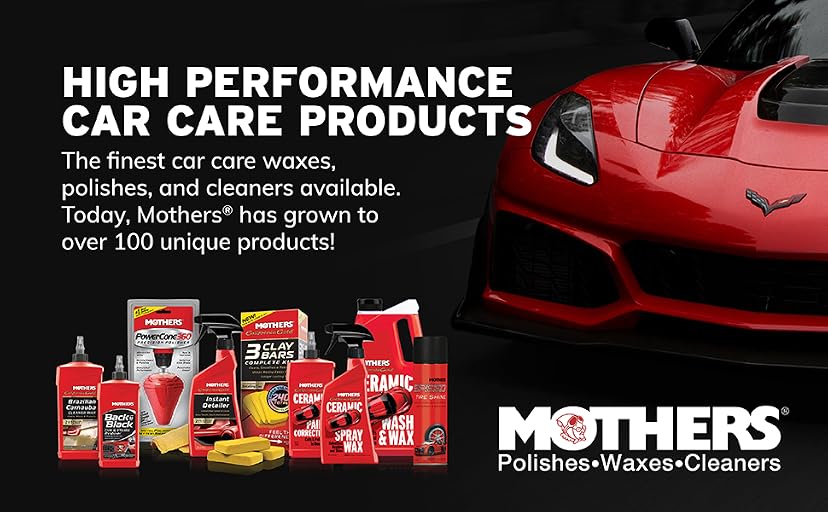
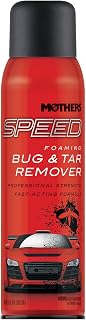
Marketing copy from Mothers, via Amazon. Not editorial.
Weekly pick
One product, one safety verdict, every week. No spam.





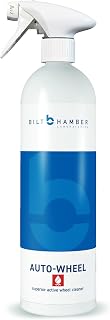
Bilt Hamber
Auto-Wheel Active Wheel Cleaner
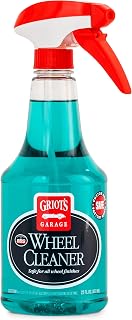
Griot's Garage
Wheel Cleaner
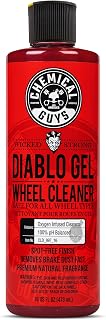
Chemical Guys
Diablo Gel Wheel & Rim Cleaner
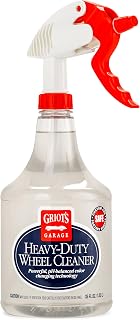
Griot's Garage
Heavy-Duty Wheel Cleaner
As an Amazon Associate I earn from qualifying purchases. Full disclosure

Community
0 postsShare how you use this product
Drop a quick comment or post a full review with photos and a star rating.
Sign in to postNew here? Create a free account.