CarCareTruth Score
Recommended.
Opens Amazon in a new tab. No account needed to look.
Saved to your guest loadout. Sign up to also save to your Cabinet (consumables) or Kit (tools you own).
As an Amazon Associate I earn from qualifying purchases. Full disclosure
Prices may varyThis product ranks #4 of 5 in Rotary Polisher.Three above it ↓
Last reviewed August 13, 2026
TL;DR Variable speed 600-3,000 RPM (electronic governor, no independent under-load RPM measurement in community); UL listing claimed via authorized retailer, independent database verification pending; rubberized ABS housing with wire mesh intake protection · professional detailers report 10+ year service life on the 9237/9227C motor family. Not for beginners · single-axis rotation burns clear coat when technique is poor.
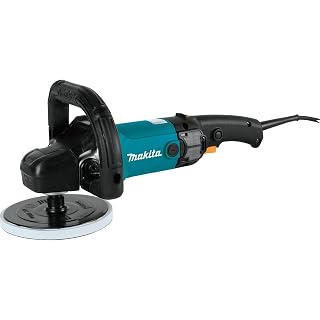
The 9237CX3 is Makita's kit version of the 9237C, a 10-amp 120V corded rotary polisher running 600 to 3,000 RPM no-load. The motor uses an electronic constant-speed governor that adjusts power output to hold the set speed when pad-to-panel pressure is applied. Community detailing forums consistently note the Makita's smooth dial control favorably against competitors · no documented creep or dead zones, and owners specifically contrast its RPM stability against the DeWalt DWP849X. No independent tachometer-under-load measurements were found; speed stability is inferred from community correction results. Wire mesh intake covers block wool bonnet fibers from entering the motor, directly extending service life. The CX3 kit includes two wool bonnets, dual handles, and a contractor bag.
Best for experienced detailers and professional correction technicians who already know how to work a rotary polisher. The 9237CX3's electronic governor and 600-3,000 RPM range give seasoned hands precise, repeatable control for single-step compounding, heavy oxidation removal, and production correction work where a DA polisher's gentler cut rate would require too many passes. Skip it if you haven't established technique on a dual-action (DA) polisher first · a DA's random orbital motion is forgiving of uneven pressure and pad dwells that would burn clear coat on a rotary at 2,000+ RPM.
UL listing is claimed via authorized retailer listings; direct verification from UL Product iQ was not completed as of 2026-05-09 (database returned 403 · the certification has not been independently confirmed from the official NRTL database). No active CPSC recall on record. Standard corded AC operation · no battery thermal-runaway risk. Carries a California Prop 65 warning, typical for corded power tools due to lead in motor brushes or cord materials. Makita's documented US authorized service center network supports product repair and extends useful life; the 9237C motor family's 10+ year field lifespan reduces total disposal rate relative to shorter-lived alternatives. Manufacturer documentation: 9237C Instruction Manual (PDF) · official Makita manual covering assembly, operation, maintenance, carbon brush replacement, and accessory specifications.
The 9237CX3 is a professional-grade rotary polisher · not appropriate for first-time paint correction. Single-axis rotation at 3,000 RPM will burn through clear coat if technique is poor or pad pressure is uneven. Detailers new to paint correction belong in the dual-action (DA) polisher category first; the random orbital movement of a DA is forgiving of technique errors in ways a rotary is not.
Both are kit versions of the same 9237C polisher. The CX3 adds a 21-inch contractor bag to the bundle (CX2 comes with pads but no bag). The polisher itself · motor, speed control, housing · is identical between CX2 and CX3.
Speed selection depends on the compound, pad, and paint system being worked. Most professional correction work with a cutting compound starts at a lower speed (1,500-2,000 RPM) to confirm pad saturation and technique before increasing. The electronic governor maintains whatever speed is set under load, so the dial setting is accurate.
Yes · the 9237CX3 uses a standard 5/8-11 thread spindle, compatible with the full range of aftermarket backing plates and pads on the market.
Both are established 10-amp 7-inch rotary polishers. Community detailing forums consistently note the Makita has smoother speed-dial control and does not exhibit the RPM overshoot sometimes reported with the DeWalt. The DeWalt is CSA certified; the Makita's UL listing is reported but has not been verified directly from the UL Product iQ database. Either is a capable professional machine; the Makita is generally preferred where speed-control smoothness is a priority.
The Amazon listing for Makita 9237CX3 7-Inch Electronic Polisher-Sander carries a California Prop 65 warning. California requires this warning on a very wide range of manufactured goods — including electronics with wiring, solder joints, or plastic/metal housings — whenever trace exposure to any of roughly 900 listed substances (commonly phthalates or heavy metals) is possible, regardless of whether the specific product poses a meaningful health risk. As a passive electronics product, Makita 9237CX3 7-Inch Electronic Polisher-Sander has no Safety Data Sheet, so there's no chemistry breakdown to translate beyond that.
Marketing copy from Makita, via Amazon. Not editorial.
Weekly pick
One product, one safety verdict, every week. No spam.
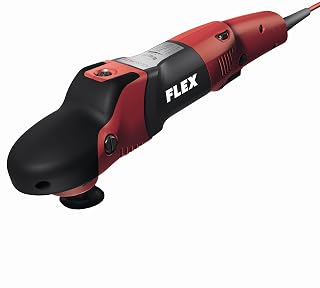
Flex
PE 14-2 150 Rotary Polisher
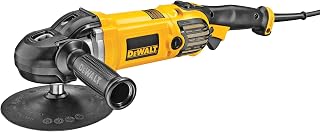
DEWALT
DWP849X 7-Inch/9-Inch Variable Speed Polisher with Soft Start
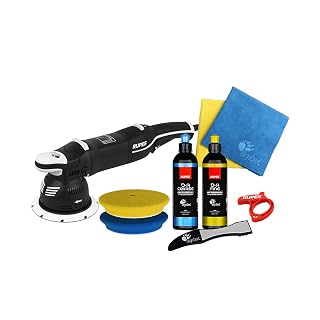
RUPES
LK900E Mille Gear-Driven Rotary Polisher (Starter Kit)
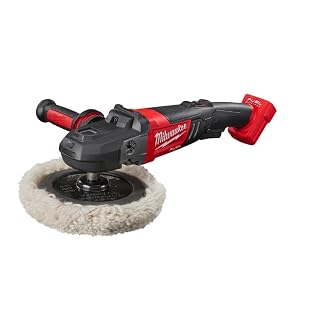
Milwaukee
M18 FUEL 7" Variable Speed Polisher (2738-20)
As an Amazon Associate I earn from qualifying purchases. Full disclosure

Community
0 postsShare how you use this product
Drop a quick comment or post a full review with photos and a star rating.
Sign in to postNew here? Create a free account.