CarCareTruth Score
Decent.
Opens Amazon in a new tab. No account needed to look.
Saved to your guest loadout. Sign up to also save to your Cabinet (consumables) or Kit (tools you own).
As an Amazon Associate I earn from qualifying purchases. Full disclosure
Prices may varyHealth score is for adult use as intended, per the manufacturer's SDS. It does not model child ingestion, accidental spill cleanup, or off-label use. See the safety panel below for full hazard classification, and /disclaimer for the full editorial scope.
GHS hazard codes are quoted from the manufacturer’s Safety Data Sheet. PPE tiers below translate those codes and the listed ingredient chemistry; they are not CarCareTruth recommendations.
Show details for all categories ▾Hide details ▴
Translated from the manufacturer’s Safety Data Sheet, Section 2
The H319 (eye irritation, Category 2) classification from ammonium chloride, confirmed in SDS Section 2, is the chemistry basis for eye protection being appropriate when handling or applying this product near the face. Section 8 also directly instructs wearing eye/face protection.
U.S. regulatory standard
29 CFR 1910.133(a)(1)
“The employer shall ensure that each affected employee uses appropriate eye or face protection when exposed to eye or face hazards from… liquid chemicals…”
ANSI Z87.1 (incorporated via §1910.6)
OSHA standards apply to workplaces. Cited here as the U.S. reference threshold for the underlying hazard class.
CarCareTruth publishes the cited sources verbatim and does not advise what action a user should take. Consult the full SDS before use.
Translated from the manufacturer’s Safety Data Sheet, Section 8
SDS Section 8 directly instructs wearing suitable chemical-resistant gloves (tested to EN 374) and recommends barrier cream during handling. Section 2 carries no skin corrosion/irritation classification for the mixture (Section 11 confirms the product is not classified as a skin irritant), so this is a hygiene-level hand-protection step tied to a directly stated Section 8 instruction, not a mixture-level skin hazard.
U.S. regulatory standard
29 CFR 1910.132(d); 1910.1200(f)
“The employer shall assess the workplace to determine if hazards are present, or are likely to be present, which necessitate the use of personal protective equipment.”
OSHA standards apply to workplaces. Cited here as the U.S. reference threshold for the underlying hazard class.
CarCareTruth publishes the cited sources verbatim and does not advise what action a user should take. Consult the full SDS before use.
Only when: in enclosed space
Translated from the manufacturer’s Safety Data Sheet, Section 8
SDS Section 8 says to wear respiratory protection 'in case of inadequate ventilation,' a ventilation-dependent trigger rather than a standing requirement. Section 2 carries no inhalation hazard code (no H330/H331/H334/H335), and the squeeze-bottle liquid is applied to a cloth rather than sprayed or misted, so normal well-ventilated use does not call for a respirator.
CarCareTruth publishes the cited sources verbatim and does not advise what action a user should take. Consult the full SDS before use.
No PPE specified in published sources for ventilation. Absence does not imply “not needed” — consult the full Safety Data Sheet.
PPE tiers translate the manufacturer’s SDS and U.S. regulatory standards. Not professional safety advice. How we report safety.
Scope of these PPE tiers. The tiers on this page translate the product's Safety Data Sheet where one is published, plus its ingredient chemistry, into a comparable rating. They describe a formulation, not a situation: a tier is not a safety determination for any specific user, task, quantity, or environment. The manufacturer's label and use instructions govern how the product is handled. Where the product is used at work, the employer's PPE program and hazard assessment under 29 CFR 1910.132 decide what protection is selected, not this page.
No warranties. CarCareTruth makes no warranties, express or implied, and expressly disclaims the implied warranties of merchantability and fitness for a particular purpose.
This product ranks #7 of 10 in Leather Cleaner.Three above it ↓
Last reviewed June 14, 2026
TL;DR Handles routine leather maintenance reliably; body oils on the steering wheel and seat bolsters lift in a single pass, but set-in denim transfer sitting for weeks is out of scope, bring a dedicated foaming cleaner for that. The health score is held back by a California Prop 65 warning tied to a formaldehyde-releasing preservative (DMDM hydantoin) named in the SDS, plus an H319 (eye irritation) classification that makes eye protection appropriate near the face. The cleaning is mild and water-based, but those SDS-listed substances are the reason it does not score as cleanly as a Prop-65-free competitor.
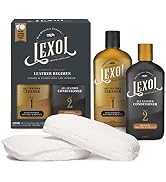
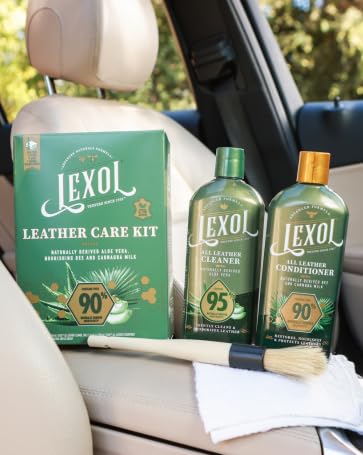
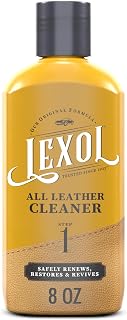
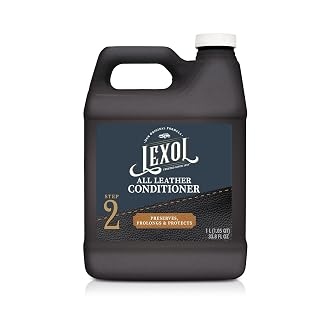
Squeeze onto a microfiber cloth, work into the leather with light agitation, and wipe clean; a full interior takes 15-20 minutes. Body oils, steering wheel grime, and surface dust lift in a single pass without stripping or drying standard OEM leather in monthly use. Community threads from 2020-2025 name Lexol the default-safe maintenance choice, with no widespread color-lift or cracking reports after years of use on factory-dyed leather. Heavy staining and set-in dye transfer are out of scope; follow with Lexol Conditioner (Step 2) if conditioning is part of the routine.
Buy it for monthly maintenance on a well-kept interior; Lexol's long track record makes it a safe first choice for leather, vinyl, and door panels. Skip it if you are removing months-old denim staining from light-colored nappa, where a dedicated foaming leather cleaner delivers more cleaning power per pass. Buyers sensitive to California-listed substances should note the Prop 65 warning.
WARNING signal word; the H319 (eye irritation Cat 2A) classification from ammonium chloride is the chemistry basis for eye protection being appropriate during application near the face. The bigger health-score driver is the California Prop 65 warning: SDS §15 names formaldehyde and methanol, released by the DMDM hydantoin preservative (a formaldehyde donor), which is why the score sits in the mid-6 range rather than the high single digits typical of a clean water-based cleaner. No skin or inhalation classification appears in SDS §2, and the squeeze-bottle format applied to cloth keeps any mist exposure negligible. Aqueous formula, no volatile co-solvents, no aquatic toxicity classification in the product GHS profile, no PFAS.
The SDS §15 lists formaldehyde and methanol under California's Prop 65 regulation. The source is DMDM hydantoin, a preservative that releases formaldehyde at low concentrations as part of its antimicrobial function. These are trace-level compounds regulated under California's broad disclosure threshold, which is far lower than federal hazard-classification limits. The product's SDS §2 classification remains only WARNING (eye irritation and oral toxicity).
Lexol's original formula has a long community track record on standard OEM leather. For perforated seats, squeeze the product onto a microfiber cloth first and then apply to the seat to prevent pooling in the perforations. The squeezable format makes amount control easier than trigger-spray products. Community evidence consistently confirms safe use on perforated automotive leather when applied via cloth.
For light denim transfer on relatively fresh staining, Lexol handles it with moderate agitation. Set-in denim transfer that has been sitting for weeks is outside the reliable scope of this product; multiple passes may be required, and community threads document that a dedicated foaming leather cleaner is more effective for that task. Use Lexol for regular maintenance cleaning to prevent buildup before it becomes set-in.
Lexol's original directions include rinsing with water. In automotive use, most detailers skip the water rinse and wipe the surface dry with a clean microfiber instead; this is the standard practice cited in community threads and does not affect cleaning results. Follow with Lexol All Leather Conditioner (Step 2) for complete care.
Long-term community evidence supports use on standard OEM automotive leather without drying or color lift. The SDS confirms pH 6-8, which is within the acceptable working range for finished leather (natural leather pH around 4.5-5.0). The upper bound of pH 8 is at the edge of the ideal range; this is one reason the formula should be used as directed and not allowed to sit on the surface for extended dwell times. No widespread reports of damage on premium OEM leather types in the community record.
Marketing copy from Lexol, via Amazon. Not editorial.
Weekly pick
One product, one safety verdict, every week. No spam.


Leather Honey
Leather Cleaner Spray with Protectant
Adam's Polishes
Leather & Interior Cleaner
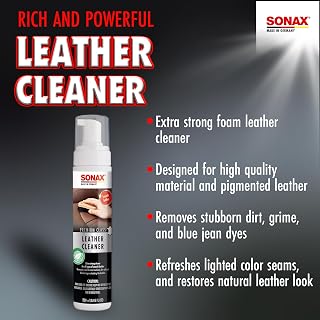
SONAX
Premium Class Leather Cleaner
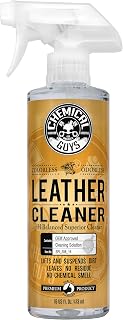
Chemical Guys
Colorless and Odorless Leather Cleaner
As an Amazon Associate I earn from qualifying purchases. Full disclosure

Community
0 postsShare how you use this product
Drop a quick comment or post a full review with photos and a star rating.
Sign in to postNew here? Create a free account.