CarCareTruth Score
Decent.
Opens Amazon in a new tab. No account needed to look.
Saved to your guest loadout. Sign up to also save to your Cabinet (consumables) or Kit (tools you own).
As an Amazon Associate I earn from qualifying purchases. Full disclosure
Prices may varyHealth score is for adult use as intended, per the manufacturer's SDS. It does not model child ingestion, accidental spill cleanup, or off-label use. See the safety panel below for full hazard classification, and /disclaimer for the full editorial scope.
GHS hazard codes are quoted from the manufacturer’s Safety Data Sheet. PPE tiers below translate those codes and the listed ingredient chemistry; they are not CarCareTruth recommendations.
Show details for all categories ▾Hide details ▴
Only when: splash risk
Translated from the manufacturer’s Safety Data Sheet, Section 8
SDS Section 8 calls for eye/face protection during handling. Section 11 states the product is not classified as seriously damaging to the eye or an eye irritant, and Section 2 carries no eye-hazard GHS code, so this is a splash precaution for pouring/dispensing, not a mixture-level eye hazard.
CarCareTruth publishes the cited sources verbatim and does not advise what action a user should take. Consult the full SDS before use.
Only when: splash risk
Beyond SDS: translated from the ingredient chemistry
SDS §2 carries no product-level skin classification (the Cat 3 skin irritation note in §2.3 is below the H315 Cat 2 threshold). Neatsfoot oil can be messy during dispensing; nitrile gloves are appropriate when pouring to prevent irritation during repeated skin contact.
CarCareTruth publishes the cited sources verbatim and does not advise what action a user should take. Consult the full SDS before use.
Only when: in enclosed space
Translated from the manufacturer’s Safety Data Sheet, Section 8
SDS Section 8 calls for respiratory protection only in case of inadequate ventilation, and Section 7 recommends general/local ventilation during handling. Section 2 assigns no signal word or pictogram and the mixture doesn't meet OSHA classification criteria, so this is a ventilation precaution, not a mixture-level inhalation hazard. Use in a well-ventilated garage rather than a closed room.
CarCareTruth publishes the cited sources verbatim and does not advise what action a user should take. Consult the full SDS before use.
No PPE specified in published sources for ventilation. Absence does not imply “not needed” — consult the full Safety Data Sheet.
PPE tiers translate the manufacturer’s SDS and U.S. regulatory standards. Not professional safety advice. How we report safety.
Scope of these PPE tiers. The tiers on this page translate the product's Safety Data Sheet where one is published, plus its ingredient chemistry, into a comparable rating. They describe a formulation, not a situation: a tier is not a safety determination for any specific user, task, quantity, or environment. The manufacturer's label and use instructions govern how the product is handled. Where the product is used at work, the employer's PPE program and hazard assessment under 29 CFR 1910.132 decide what protection is selected, not this page.
No warranties. CarCareTruth makes no warranties, express or implied, and expressly disclaims the implied warranties of merchantability and fitness for a particular purpose.
This product ranks #6 of 15 in Leather Conditioner.Three above it ↓
Last reviewed June 2, 2026
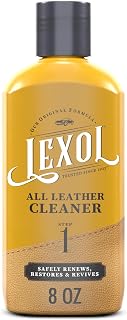
TL;DR Lexol softens dry leather noticeably after a single application, and decades of community use confirm the effect holds for months on garaged vehicles. Safe on light-colored leather with no darkening or residue. Carries a Prop 65 warning from a trace preservative, not from the conditioning formula itself.
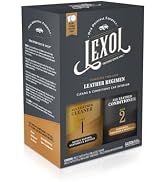
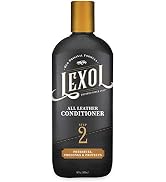
Lexol uses a neatsfoot oil base that absorbs into leather fiber without leaving a waxy film. Seats feel softer and more supple after buffing, especially leather dried out by sun or age. Apply a small amount to a microfiber cloth, spread evenly, let absorb a few minutes, then buff dry. Use less than you think · excess creates temporary slickness. The label suggests conditioning every six months with touch-ups every two months; daily drivers in hot climates typically need more frequent reapplication.
Best fit for owners who want a proven conditioner on standard finished leather, including light colors. The neatsfoot oil formula avoids the sensitizer concern found in lanolin-based conditioners. Skip it for suede, nubuck, or extremely soft aniline leather, or if UV protection is a priority, as this formula contains no UV-blocking ingredients.
The SDS carries no GHS signal word and no hazard codes at the mixture level. The Prop 65 warning comes from trace formaldehyde and methanol released by the DMDM hydantoin preservative at concentrations far below federal hazard thresholds. The environment score reflects two ingredient-level aquatic toxicity flags: a fragrance component and a phenolic preservative, both classified as toxic to aquatic life. The leave-on pathway reduces practical environmental exposure versus rinse-off products, but the ingredient-level aquatic classifications apply regardless.
The SDS §15 lists formaldehyde and methanol under California Prop 65 regulation. The source is DMDM hydantoin, a preservative that releases formaldehyde at trace concentrations as part of its antimicrobial function. These are not active conditioning ingredients · they are trace-level compounds regulated under California's broad disclosure threshold, which is far lower than federal hazard-classification limits. The SDS §2 product-level classification carries no GHS signal word or hazard codes.
Community evidence across decades of use and a large base of owner reviews supports safe use on standard finished leather including light colors. The neatsfoot oil base absorbs without leaving visible residue or darkening when applied as directed. The back label notes the product is not recommended for suede or extremely soft leather. For light Nappa seats, apply a small test area first and buff dry within a few minutes.
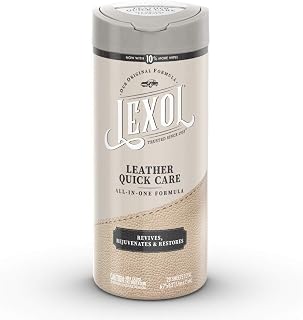
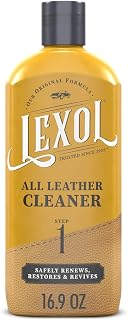
The back label suggests using Lexol Deep Conditioner every 6 months, with Lexol Quick Care for touch-ups every 2 months. Community experience on daily drivers suggests the conditioning effect may need refreshing more frequently in hot climates or vehicles with heavy sun exposure. Re-application interval depends on leather condition, climate, and whether the vehicle is garaged.
No. Lexol uses sulfated neatsfoot oil as the primary conditioning agent, not lanolin. The SDS §2 carries no skin-sensitizer classification, so users with lanolin sensitivity can use this product without the sensitizer concern associated with lanolin-based conditioners.
Marketing copy from Lexol, via Amazon. Not editorial.
Weekly pick
One product, one safety verdict, every week. No spam.





Leather Honey
Leather Conditioner
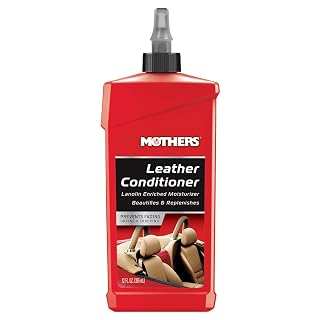
Mothers
Leather Conditioner
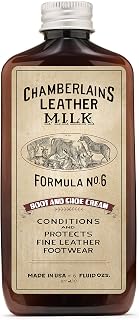
Chamberlain's Leather Milk
Leather Milk Boot and Shoe Cream No. 6
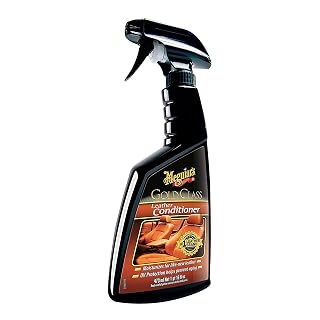
Meguiar's
Gold Class Leather Conditioner
As an Amazon Associate I earn from qualifying purchases. Full disclosure

Community
0 postsShare how you use this product
Drop a quick comment or post a full review with photos and a star rating.
Sign in to postNew here? Create a free account.