CarCareTruth Score
Decent, but wear gloves and ventilate.
Opens Amazon in a new tab. No account needed to look.
Saved to your guest loadout. Sign up to also save to your Cabinet (consumables) or Kit (tools you own).
As an Amazon Associate I earn from qualifying purchases. Full disclosure
Prices may varyThe manufacturer's Safety Data Sheet classifies this product with one or more GHS Category 1 health hazards — the most severe tier. The hazard statements in quotes below are the verbatim GHS language from the SDS, as required by OSHA's Hazard Communication Standard. The line under each statement translates the GHS classification into plain language.
GHS Category 1 aspiration toxicity — thin, oily liquids can slip into the lungs if swallowed, causing chemical pneumonia.
GHS Category 1 skin corrosion — classified as causing irreversible skin damage on contact.
GHS Category 1 eye damage — classified as causing irreversible eye damage on contact.
If swallowed, on skin or splashed in eyes:
The aspiration hazard (H304) is about the liquid being swallowed and reaching the airway, not about breathing fumes during normal use.
Call Poison Control immediately at 1-800-222-1222 (US, 24/7, free) and have the product container with you. Poison Control's standing guidance is to not induce vomiting after chemical exposure; they will direct first-aid steps based on the specific product.
About this product's hazards. This product's Safety Data Sheet uses signal word DANGER.Read the manufacturer's SDS and follow all safety instructions before use. CarCareTruth ratings translate the manufacturer's safety sheet. They do not replace the SDS or substitute for a hazard assessment specific to your task.
Health score is for adult use as intended, per the manufacturer's SDS. It does not model child ingestion, accidental spill cleanup, or off-label use. See the safety panel below for full hazard classification, and /disclaimer for the full editorial scope.
GHS hazard codes are quoted from the manufacturer’s Safety Data Sheet. PPE tiers below translate those codes and the listed ingredient chemistry; they are not CarCareTruth recommendations.
Show details for all categories ▾Hide details ▴
Translated from the manufacturer’s Safety Data Sheet, Section 2
H318 (serious eye damage, Cat 1) in SDS Section 2 forces the eyes required tier; no downgrade is possible under GHS classification. SDS Section 8 specifies safety glasses or chemical goggles if splashing is possible.
U.S. regulatory standard
29 CFR 1910.133(a)(1); 1910.151(c)
“The employer shall ensure that each affected employee uses appropriate eye or face protection when exposed to eye or face hazards from… liquid chemicals, acids or caustic liquids…”
ANSI Z87.1 (chemical splash protection — incorporated via §1910.6)
OSHA standards apply to workplaces. Cited here as the U.S. reference threshold for the underlying hazard class.
CarCareTruth publishes the cited sources verbatim and does not advise what action a user should take. Consult the full SDS before use.
Translated from the manufacturer’s Safety Data Sheet, Section 2
H314 (severe skin burns and eye damage, Skin Corrosion Cat 1B) in SDS Section 2 forces the skin required tier. SDS Section 8 specifies protective clothing and butyl rubber gloves (0.5 mm thickness, breakthrough time at least 480 minutes).
U.S. regulatory standard
29 CFR 1910.132; 1910.133; 1910.138; 1910.151(c)
“Where the eyes or body of any person may be exposed to injurious corrosive materials, suitable facilities for quick drenching or flushing of the eyes and body shall be provided within the work area for immediate emergency use.”
ANSI Z87.1 (eye/face — incorporated via §1910.6)
OSHA standards apply to workplaces. Cited here as the U.S. reference threshold for the underlying hazard class.
CarCareTruth publishes the cited sources verbatim and does not advise what action a user should take. Consult the full SDS before use.
Only when: in enclosed space
Translated from the manufacturer’s Safety Data Sheet, Section 8
SDS Section 8 states breathing protection is 'not required' under correct, normal use, but also names respiratory protection as necessary when exposure limit values are exceeded, specifying a half-mask with an EN 149 (or 29 CFR 1910.134) filter. No H335, H334, H331, or H330 in SDS Section 2 mixture classification. The coating is applied inside the vehicle cabin, one seat panel at a time · a naturally enclosed space where the naphtha/distillate carrier vapor (55 to 100% of the formula) can concentrate if windows and doors stay closed during application.
U.S. regulatory standard
29 CFR 1910.1200(f); 1910.132(d)
“The employer shall assess the workplace to determine if hazards are present, or are likely to be present, which necessitate the use of personal protective equipment.”
OSHA standards apply to workplaces. Cited here as the U.S. reference threshold for the underlying hazard class.
CarCareTruth publishes the cited sources verbatim and does not advise what action a user should take. Consult the full SDS before use.
No PPE specified in published sources for ventilation. Absence does not imply “not needed” — consult the full Safety Data Sheet.
PPE tiers translate the manufacturer’s SDS and U.S. regulatory standards. Not professional safety advice. How we report safety.
Scope of these PPE tiers. The tiers on this page translate the product's Safety Data Sheet where one is published, plus its ingredient chemistry, into a comparable rating. They describe a formulation, not a situation: a tier is not a safety determination for any specific user, task, quantity, or environment. The manufacturer's label and use instructions govern how the product is handled. Where the product is used at work, the employer's PPE program and hazard assessment under 29 CFR 1910.132 decide what protection is selected, not this page.
No warranties. CarCareTruth makes no warranties, express or implied, and expressly disclaims the implied warranties of merchantability and fitness for a particular purpose.
This product ranks #6 of 9 in Fabric Protectant.Three above it ↓
Last reviewed July 31, 2026
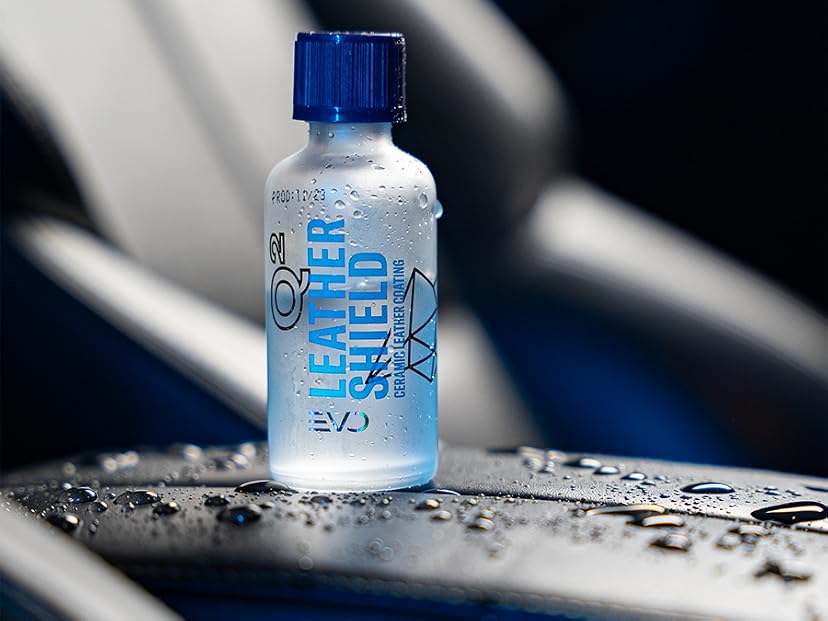
TL;DR A wipe-on ceramic-style coating for leather and vegan leather, applied with a suede applicator pad rather than sprayed. Community testing shows 11 to 14 months of dye-transfer and dirt protection with no darkening, but forum threads also document real streaking and discoloration on some seats. Non-PFAS silane chemistry. DANGER signal word from severe skin burns and serious eye damage; gloves and eye protection are called for during application.
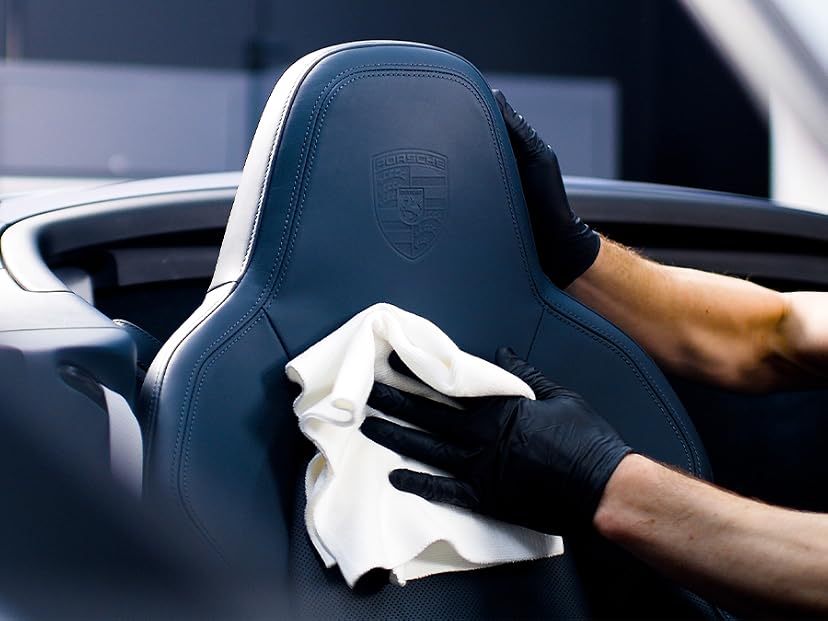
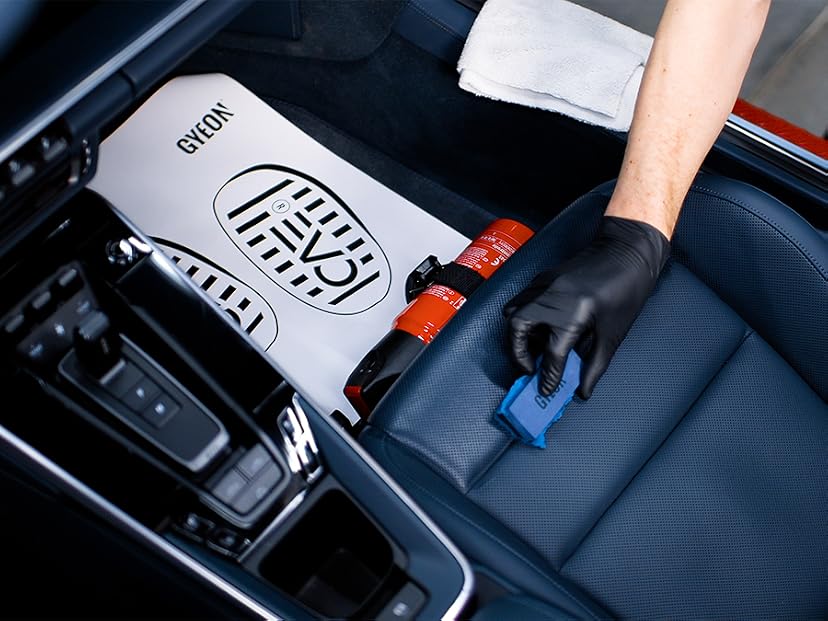
Applied by hand with a suede applicator pad: clean the leather first, apply to one panel at a time, let the product absorb without wiping, then remove excess after about 20 minutes. An Auto Geek Online field test documented the coating still holding at 11 to 14 months with no darkening effect, confirming the product's core dye-transfer and dirt-resistance claim. The wipe-off step matters: Tesla Motors Club threads document streaking on black seats and discoloration on white vegan-leather seats when over-applied or not wiped off promptly, while owners using a thin, even coat and prompt wipe-off report clean results on the same seat colors.
A reasonable fit for owners of natural or vegan leather seats who want longer-lasting dye-transfer protection than a basic conditioner and who will follow the timed wipe-off step exactly. Test a hidden panel first, especially on white or light-colored leather, given the documented streaking reports; buyers who want a lower-risk, more forgiving product should look at a simpler leave-on conditioner instead. Not evaluated for Alcantara or suede.
The PPE tiers below translate the GHS classifications and ingredient chemistry, not generic SDS Section 8 boilerplate. DANGER is driven by H314 (severe skin burns and eye damage) and H318 (serious eye damage); both force the skin and eyes tiers to required, and the SDS specifies butyl rubber gloves and chemical goggles. H304 (aspiration hazard if swallowed) contributes to the DANGER classification but does not create an inhalation requirement, and the SDS states breathing protection is not required under normal use. Respiratory protection is still a situational, not required, precaution · SDS Section 8 names a half-mask respirator for the enclosed vehicle-cabin application space. H227 (combustible liquid) is a physical hazard only. SDS Section 2 confirms the cyclosilazane active is non-PFAS. Environment reflects high estimated VOC from the carrier solvents and documented aquatic toxicity data for one of them, offset only by the leave-on pathway.
Yes. SDS Section 2 (Rev 4.0/4.1, dated 30.04.2024) states directly that the formula's components do not meet the criteria for classification as PBT or vPvB, and Section 3 discloses no fluorinated, fluoropolymer, or perfluoroalkyl compound. The active is a cyclosilazane crosslinker, the same non-fluorinated chemistry family used in Gyeon's Q2 Mohs EVO and Q2 PPF EVO coatings.
Three GHS classifications drive the DANGER signal word: H304 (may be fatal if swallowed and enters the airways, an aspiration hazard rather than an inhalation risk from normal use), H314 (causes severe skin burns and eye damage), and H318 (causes serious eye damage). H227 (combustible liquid) is a separate physical-hazard classification and does not affect the health score. The corrosive classification is why the SDS calls for gloves and eye protection during application.
Tesla Motors Club forum threads document real cases of streaking on black seats and tan or brown spotting on white vegan-leather seats after applying this product, while other owners in the same threads report clean results on the same seat colors using a thin, even coat and a prompt dry wipe-off. The pattern points to application technique (over-saturation or uneven wipe-off) as the likely differentiator rather than a universal formula defect, but it is a documented, real risk worth testing on a hidden panel first, especially on white or light-colored leather.
It is wipe-on, not sprayed. Clean the leather first with a dedicated leather cleaner, apply a moderate amount with the included suede applicator pad to one seat panel at a time, let the product absorb without wiping it off, then wipe away any excess after about 20 minutes. Gyeon's own instructions caution against wiping it off immediately, which is a common cause of streaking if skipped.
An Auto Geek Online forum owner documented 11 to 14 months of protection still holding on daily-driven seats, describing no darkening effect at the end of the test window. Gyeon's current EVO marketing claims up to 18 months, up from roughly 12 months for the pre-EVO formula; the independent durability data available predates that specific EVO claim, so treat the 18-month figure as a manufacturer claim pending further independent confirmation.
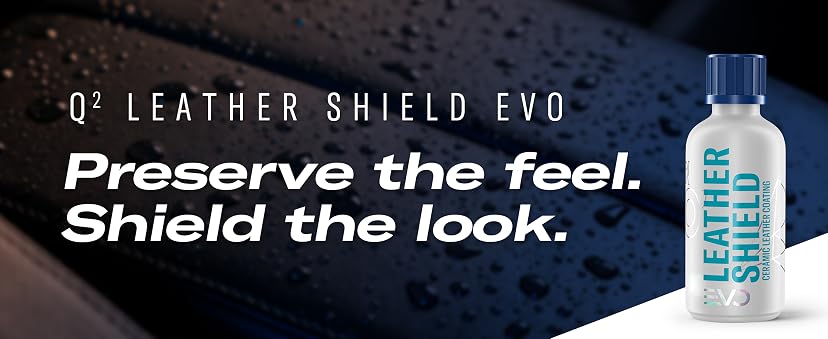
Marketing copy from Gyeon, via Amazon. Not editorial.
Weekly pick
One product, one safety verdict, every week. No spam.

Chemical Guys
HydroThread Ceramic Fabric Protectant & Stain Repellent
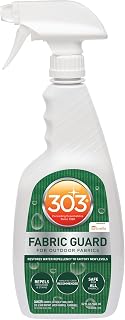
303 Products
303 Fabric Guard (32 oz)
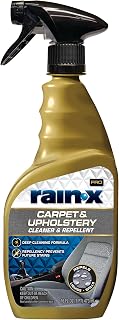
Rain-X
Pro Carpet & Upholstery Cleaner & Repellent
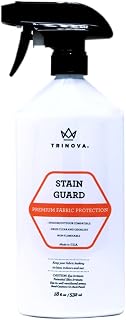
TriNova
Stain Guard Premium Fabric Protection
As an Amazon Associate I earn from qualifying purchases. Full disclosure

Community
0 postsShare how you use this product
Drop a quick comment or post a full review with photos and a star rating.
Sign in to postNew here? Create a free account.