CarCareTruth Score
Decent.
Opens Amazon in a new tab. No account needed to look.
Saved to your guest loadout. Sign up to also save to your Cabinet (consumables) or Kit (tools you own).
As an Amazon Associate I earn from qualifying purchases. Full disclosure
Prices may varyThe manufacturer's Safety Data Sheet classifies this product with one or more GHS Category 1 health hazards — the most severe tier. The hazard statements in quotes below are the verbatim GHS language from the SDS, as required by OSHA's Hazard Communication Standard. The line under each statement translates the GHS classification into plain language.
GHS Category 1 aspiration toxicity — thin, oily liquids can slip into the lungs if swallowed, causing chemical pneumonia.
GHS Category 1 germ-cell mutagenicity — classified as suspected of causing heritable genetic damage.
If swallowed:
The aspiration hazard (H304) is about the liquid being swallowed and reaching the airway, not about breathing fumes during normal use.
Call Poison Control immediately at 1-800-222-1222 (US, 24/7, free) and have the product container with you. Poison Control's standing guidance is to not induce vomiting after chemical exposure; they will direct first-aid steps based on the specific product.
About this product's hazards. This product's Safety Data Sheet uses signal word DANGER.Read the manufacturer's SDS and follow all safety instructions before use. CarCareTruth ratings translate the manufacturer's safety sheet. They do not replace the SDS or substitute for a hazard assessment specific to your task.
Health score is for adult use as intended, per the manufacturer's SDS. It does not model child ingestion, accidental spill cleanup, or off-label use. See the safety panel below for full hazard classification, and /disclaimer for the full editorial scope.
GHS hazard codes are quoted from the manufacturer’s Safety Data Sheet. PPE tiers below translate those codes and the listed ingredient chemistry; they are not CarCareTruth recommendations.
Show details for all categories ▾Hide details ▴
Translated from the manufacturer’s Safety Data Sheet, Section 2
SDS §2 classifies Eye Irritation Category 2A (H319) at the mixture level. Aerosol mist near face level is the primary exposure pathway.
U.S. regulatory standard
29 CFR 1910.133(a)(1)
“The employer shall ensure that each affected employee uses appropriate eye or face protection when exposed to eye or face hazards from… liquid chemicals…”
ANSI Z87.1 (incorporated via §1910.6)
OSHA standards apply to workplaces. Cited here as the U.S. reference threshold for the underlying hazard class.
CarCareTruth publishes the cited sources verbatim and does not advise what action a user should take. Consult the full SDS before use.
Only when: prolonged use
Translated from the manufacturer’s Safety Data Sheet, Section 2
SDS §2 classifies Skin Irritation Category 2 (H315) at the mixture level. Brief incidental contact during one-bolt application is low-stakes; prolonged or repeated handling escalates the trigger.
U.S. regulatory standard
29 CFR 1910.138(a)
“appropriate hand protection when employees' hands are exposed to hazards such as those from… chemicals which produce an adverse effect on the skin or eyes…”
OSHA standards apply to workplaces. Cited here as the U.S. reference threshold for the underlying hazard class.
CarCareTruth publishes the cited sources verbatim and does not advise what action a user should take. Consult the full SDS before use.
Only when: when spraying · in enclosed space
Translated from the manufacturer’s Safety Data Sheet, Section 2
Aerosol form factor creates fine mist near face level. H335 is absent from §2 mixture classification; the aerosol mist itself is the inhalation exposure trigger in enclosed or poorly ventilated spaces.
U.S. regulatory standard
29 CFR 1910.1000; 1910.1200
“Each employer shall assure that no employee is exposed to an inhalation concentration of any substance shown in Tables Z-1, Z-2, or Z-3 in excess of the limits in the tables.”
OSHA standards apply to workplaces. Cited here as the U.S. reference threshold for the underlying hazard class.
CarCareTruth publishes the cited sources verbatim and does not advise what action a user should take. Consult the full SDS before use.
No PPE specified in published sources for ventilation. Absence does not imply “not needed” — consult the full Safety Data Sheet.
PPE tiers translate the manufacturer’s SDS and U.S. regulatory standards. Not professional safety advice. How we report safety.
Scope of these PPE tiers. The tiers on this page translate the product's Safety Data Sheet where one is published, plus its ingredient chemistry, into a comparable rating. They describe a formulation, not a situation: a tier is not a safety determination for any specific user, task, quantity, or environment. The manufacturer's label and use instructions govern how the product is handled. Where the product is used at work, the employer's PPE program and hazard assessment under 29 CFR 1910.132 decide what protection is selected, not this page.
No warranties. CarCareTruth makes no warranties, express or implied, and expressly disclaims the implied warranties of merchantability and fitness for a particular purpose.
This product ranks #14 of 24 in Penetrating Oil / Multi-Purpose Lubricant.Three above it ↓
Last reviewed July 31, 2026
TL;DR DANGER-rated aerosol with a Prop 65 warning naming a listed carcinogen on the back-of-can label, plus a mutagen classification at the mixture level. Niche favorite among gunsmiths and antique-machinery restorers, with community-confirmed mid-pack penetration on light-to-moderate rust and an above-average protective residue. Aerosol mist in enclosed spaces is the primary inhalation concern.
Gibbs Brand wicks a thin solvent into corroded fasteners to break a rust grip and free the part. Community use describes mid-pack results on light-to-moderate rust; heavy rust may need a second coat. The mineral-oil base leaves a residue community owners describe as long-lasting protection against re-seizing. Founded in 1969, the brand earned its standing with gunsmiths and antique-machinery enthusiasts.
Strong fit for hobbyists on vintage motorcycles, antique tools, or firearms where a protective film after the bolt frees matters as much as initial penetration. The suspected-reproductive-toxin classification is a hazard pregnant users may want to weigh against alternatives in the pump-spray or biobased-carrier category that avoid that entry. Anyone applying penetrating oil frequently has lower-hazard alternatives. Cumulative aerosol exposure to a mixture carrying a mutagen classification and a Prop 65 carcinogen on the label is the chemistry trade-off.
DANGER driven by a mutagen classification at the mixture level, plus suspected-carcinogen and suspected-reproductive-toxin entries and an aspiration hazard. Eye and skin irritation are both classified at the mixture level. Do not induce vomiting if swallowed, seek medical attention. No respiratory irritation code at the mixture level; aerosol mist in enclosed spaces is the inhalation concern. Environmental: petroleum-distillate carrier with two aquatically toxic ingredients at the ingredient level, VOC in the 151-350 g/L band, biodegradability not established by the SDS.
The Safety Data Sheet for Gibbs Brand Lubricant Aerosol Penetrant carries a DANGER signal word, with classified hazards including H223 (flammable aerosol); H229 (pressurized container: may burst if heated); H304 (may be fatal if swallowed and enters airways). The Amazon listing also carries a California Prop 65 warning. See the PPE breakdown above for use-case-specific guidance translated from the SDS hazard codes.
CarCareTruth scores Gibbs Brand Lubricant Aerosol Penetrant at 6.0 out of 10 on the composite CCT score, with a health sub-score of 4.5/10. The CCT score blends real-world effectiveness, ingredient health impact pulled from the manufacturer's safety sheet, and environmental footprint against a published category rubric. See the methodology link on this page for the full scoring breakdown.
Per the Safety Data Sheet ingredient disclosure: SDS §3 (rev. 2017-06-12): Distillates, petroleum, hydrotreated light (CAS 64742-47-8) 15-30%; White mineral oil, petroleum (CAS 8042-47-5) 10-20%; Heptane (CAS 142-82-5) 15-30%; Carbon dioxide (CAS 124-38-9) <5%. Back-of-can label (2025-vintage, divergent): Distillates (petroleum), solvent-dewaxed heavy paraffinic (CAS 64742-65-0); Distillates (petroleum), hydrotreated light (CAS 64742-47-8); White mineral oil (CAS 8042-47-5); Naphtha (petroleum), hydrotre…
Marketing copy from Gibbs Brand, via Amazon. Not editorial.
Weekly pick
One product, one safety verdict, every week. No spam.
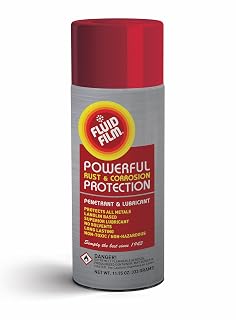
Fluid Film
NAS Aerosol Penetrant & Lubricant
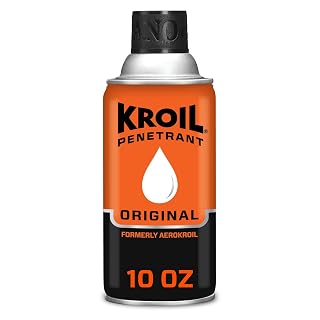
Kroil
Penetrant Original Aerosol
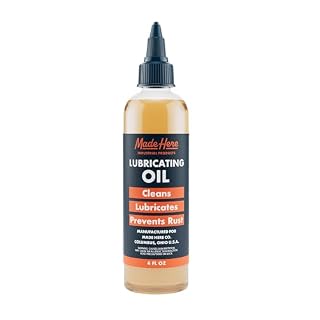
Made Here Co.
Multi-use Lubricating Penetrant Oil
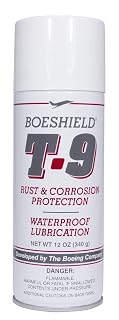
Boeshield
T-9 Rust & Corrosion Protection
As an Amazon Associate I earn from qualifying purchases. Full disclosure

Community
0 postsShare how you use this product
Drop a quick comment or post a full review with photos and a star rating.
Sign in to postNew here? Create a free account.