CarCareTruth Score
Decent.
Opens Amazon in a new tab. No account needed to look.
Saved to your guest loadout. Sign up to also save to your Cabinet (consumables) or Kit (tools you own).
As an Amazon Associate I earn from qualifying purchases. Full disclosure
Prices may varyHealth score is for adult use as intended, per the manufacturer's SDS. It does not model child ingestion, accidental spill cleanup, or off-label use. See the safety panel below for full hazard classification, and /disclaimer for the full editorial scope.
GHS hazard codes are quoted from the manufacturer’s Safety Data Sheet. PPE tiers below translate those codes and the listed ingredient chemistry; they are not CarCareTruth recommendations.
Show details for all categories ▾Hide details ▴
Translated from the manufacturer’s Safety Data Sheet, Section 2
The SDS classifies serious eye irritation (Cat 2A) from the cleaning surfactants. The pump-spray trigger on the cleaner bottle meaningfully increases eye-contact probability during application. Safety goggles are appropriate when spraying.
U.S. regulatory standard
29 CFR 1910.133(a)(1)
“The employer shall ensure that each affected employee uses appropriate eye or face protection when exposed to eye or face hazards from… liquid chemicals…”
ANSI Z87.1 (incorporated via §1910.6)
OSHA standards apply to workplaces. Cited here as the U.S. reference threshold for the underlying hazard class.
CarCareTruth publishes the cited sources verbatim and does not advise what action a user should take. Consult the full SDS before use.
Only when: prolonged use · splash risk
Beyond SDS: translated from the ingredient chemistry
SDS Section 3 lists Skin Irrit. 2 (H315) for one cleaning surfactant component at 2.5-10% concentration. Section 2's mixture-level classification covers eye irritation only, not skin, so this is a component-level precaution rather than a recommended tier. Nitrile gloves are a reasonable precaution for prolonged or repeated contact, or splash exposure from the spray trigger.
U.S. regulatory standard
29 CFR 1910.138(a)
“appropriate hand protection when employees' hands are exposed to hazards such as those from… chemicals which produce an adverse effect on the skin or eyes…”
OSHA standards apply to workplaces. Cited here as the U.S. reference threshold for the underlying hazard class.
CarCareTruth publishes the cited sources verbatim and does not advise what action a user should take. Consult the full SDS before use.
Only when: when spraying · in enclosed space
Translated from the manufacturer’s Safety Data Sheet, Section 8
SDS Section 8 states respiratory protection becomes necessary if a mist forms during application or if occupational exposure limits are exceeded. Section 2 carries no respiratory GHS code (no H335, H330, or H331), so this is a spray-mist precaution, not a mixture-level inhalation hazard. A dust/mist mask is a reasonable precaution when spraying in an enclosed space.
CarCareTruth publishes the cited sources verbatim and does not advise what action a user should take. Consult the full SDS before use.
No PPE specified in published sources for ventilation. Absence does not imply “not needed” — consult the full Safety Data Sheet.
PPE tiers translate the manufacturer’s SDS and U.S. regulatory standards. Not professional safety advice. How we report safety.
Scope of these PPE tiers. The tiers on this page translate the product's Safety Data Sheet where one is published, plus its ingredient chemistry, into a comparable rating. They describe a formulation, not a situation: a tier is not a safety determination for any specific user, task, quantity, or environment. The manufacturer's label and use instructions govern how the product is handled. Where the product is used at work, the employer's PPE program and hazard assessment under 29 CFR 1910.132 decide what protection is selected, not this page.
No warranties. CarCareTruth makes no warranties, express or implied, and expressly disclaims the implied warranties of merchantability and fitness for a particular purpose.
This product ranks #11 of 15 in Leather Care.Three above it ↓
Last reviewed August 2, 2026
TL;DR Lifts body oils and surface grime from leather seats reliably and leaves a noticeable softening result in one session. A CA Prop 65 disclosure is present from trace surfactant processing residues; wear safety goggles when using the pump-spray cleaner.
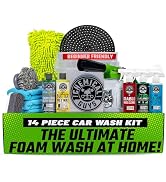
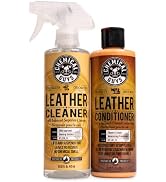
The kit combines a pH-balanced surfactant cleaner with a silicone-and-glycerin conditioner in a two-step system. The cleaner handles body oils, surface dust, and moderate seat grime well; owners with neglected bolsters report pulling significant embedded dirt on the first wipe. Dilute 3:1 for maintenance; use straight for heavy soiling. The conditioner goes on a separate pad; leather feels softer after buffing, with community follow-up placing re-application at monthly to quarterly. The finish buffs off cleanly on dark leather. Note: thoroughly buff the conditioner off the steering wheel or it will feel slippery. Not a substitute for a dedicated cleaner on set-in dye transfer.
Best fit for owners doing routine quarterly maintenance on factory leather who want one kit rather than sourcing separate products. Works equally well on furniture, boots, and bags. Skip it if the leather has heavy set-in dye transfer or if the seats are light-colored nappa; a dedicated two-product approach gives better per-step control.
The SDS carries a Warning-level classification for skin irritation and serious eye irritation typical of surfactant formulas. A CA Prop 65 disclosure is present from trace ethoxylated surfactant manufacturing residues, not active ingredients. The serious-eye-irritation classification (Category 2A) means the pump-spray cleaner warrants goggles during application. The surfactant cleaning agents carry ingredient-level aquatic toxicity; because the bulk is wiped off after cleaning, it ends up on rags and in the waste stream. No PFAS or petroleum-distillate solvents present.
The warning covers trace processing residues from the ethoxylated surfactant manufacturing · ethylene oxide, 1,4-dioxane, acetaldehyde, diethanolamine, and formaldehyde. These are parts-per-million byproduct contaminants in the cleaning surfactants, not active ingredients. The SDS §2 product classification carries only a WARNING signal word for eye and skin irritation, reflecting the actual product chemistry rather than the trace-residue Prop 65 listing.
Broad owner evidence confirms the cleaner does not strip color from normal dyed leather at full strength. Owners applying it to black and medium-brown leather consistently report no color removal. As with any product, testing on a small hidden area first is standard practice · especially on light, cream, or un-dyed aniline leather.
Yes, but fully buff the conditioner off the steering wheel surface before driving. Multiple owners note the conditioning film feels slippery if left without thorough buffing. On seat surfaces where friction is lower, under-buffing is less critical.
Yes. Chemical Guys videos suggest 6:1 (water-to-cleaner) for light maintenance cleaning, 3:1 for moderate soiling, and full-strength for heavily neglected surfaces. Community reviews confirm all three dilutions work without color removal or residue issues.
Yes. Owner feedback skews heavily toward non-automotive uses: sofas, leather boots, handbags, jackets, and even flip flops show up often. The two-step chemistry is substrate-agnostic for standard finished leather goods.
Marketing copy from Chemical Guys, via Amazon. Not editorial.
Weekly pick
One product, one safety verdict, every week. No spam.


Leather Honey
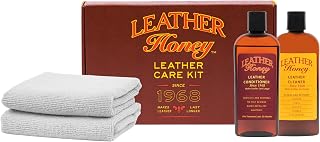
Complete Leather Care Kit
Bickmore
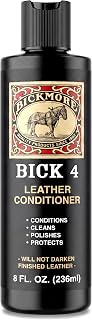
Bick 4 Leather Conditioner
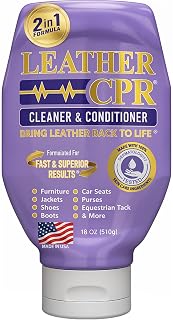
Leather CPR
Cleaner and Conditioner
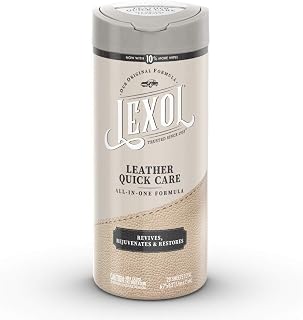
Lexol
All Leather Quick Care
As an Amazon Associate I earn from qualifying purchases. Full disclosure

Community
0 postsShare how you use this product
Drop a quick comment or post a full review with photos and a star rating.
Sign in to postNew here? Create a free account.