CarCareTruth Score
Decent.
Opens Amazon in a new tab. No account needed to look.
Saved to your guest loadout. Sign up to also save to your Cabinet (consumables) or Kit (tools you own).
As an Amazon Associate I earn from qualifying purchases. Full disclosure
Prices may varyHealth score is for adult use as intended, per the manufacturer's SDS. It does not model child ingestion, accidental spill cleanup, or off-label use. See the safety panel below for full hazard classification, and /disclaimer for the full editorial scope.
GHS hazard codes are quoted from the manufacturer’s Safety Data Sheet. PPE tiers below translate those codes and the listed ingredient chemistry; they are not CarCareTruth recommendations.
Show details for all categories ▾Hide details ▴
Translated from the manufacturer’s Safety Data Sheet, Section 2
H319 (Eye Irritation Cat 2A) is confirmed in the compound's SDS section 2 (GAP121 Headlight Compound).
U.S. regulatory standard
29 CFR 1910.133(a)(1)
“The employer shall ensure that each affected employee uses appropriate eye or face protection when exposed to eye or face hazards from… liquid chemicals…”
ANSI Z87.1 (incorporated via §1910.6)
OSHA standards apply to workplaces. Cited here as the U.S. reference threshold for the underlying hazard class.
CarCareTruth publishes the cited sources verbatim and does not advise what action a user should take. Consult the full SDS before use.
Translated from the manufacturer’s Safety Data Sheet, Section 2
H317 (Skin Sensitization Cat 1) is confirmed in the HydroCharge+ sealant's SDS section 2 (WAC230), driven by a single coco-amidopropyl quaternary siloxane ingredient disclosed at under 1 percent concentration.
U.S. regulatory standard
29 CFR 1910.138(a); 1910.132(d)
“appropriate hand protection when employees' hands are exposed to hazards such as those from skin absorption of harmful substances.”
OSHA standards apply to workplaces. Cited here as the U.S. reference threshold for the underlying hazard class.
CarCareTruth publishes the cited sources verbatim and does not advise what action a user should take. Consult the full SDS before use.
Only when: in enclosed space
Translated from the manufacturer’s Safety Data Sheet, Section 8
Neither component's SDS section 8 specifies a concrete respiratory trigger; both use conditional boilerplate ('if a mist forms,' 'if working conditions do not allow keeping concentration below limits'). No H331, H330, H334, or H335 is present in either component's section 2. Situational for enclosed-space use only.
CarCareTruth publishes the cited sources verbatim and does not advise what action a user should take. Consult the full SDS before use.
No PPE specified in published sources for ventilation. Absence does not imply “not needed” — consult the full Safety Data Sheet.
PPE tiers translate the manufacturer’s SDS and U.S. regulatory standards. Not professional safety advice. How we report safety.
Scope of these PPE tiers. The tiers on this page translate the product's Safety Data Sheet where one is published, plus its ingredient chemistry, into a comparable rating. They describe a formulation, not a situation: a tier is not a safety determination for any specific user, task, quantity, or environment. The manufacturer's label and use instructions govern how the product is handled. Where the product is used at work, the employer's PPE program and hazard assessment under 29 CFR 1910.132 decide what protection is selected, not this page.
No warranties. CarCareTruth makes no warranties, express or implied, and expressly disclaims the implied warranties of merchantability and fitness for a particular purpose.
This product ranks #8 of 12 in Headlight Restoration Kit.Three above it ↓
Last reviewed July 8, 2026
TL;DR This hand-applied kit pairs an abrasive compound with a real ceramic sealant, HydroCharge+, rather than just a polish, and needs no drill or power tool. It handles mild-to-moderate yellowing well by owner accounts, but is not positioned for heavy oxidation, and nobody has independently confirmed how long the ceramic protection actually holds.
The kit runs a three-step process: clean and restore with the included compound and Hex-Logic hand pad, wipe away with the microfiber towel, then seal with a coat of HydroCharge+ ceramic spray applied through the microsuede applicator. All of it is hand-only, no drill or DA polisher needed, which makes it approachable for a first-timer working on typical daily-driver haze. Owner feedback favors mild-to-moderate yellowing; it is not marketed or well suited for severely oxidized or pitted lenses. The ceramic sealant step is the differentiator versus a bare compound-only product, though independent long-term durability data does not yet exist for this specific kit.
Best for owners with mildly to moderately hazy headlights who want a fast, tool-free fix and like the idea of a proper ceramic sealant step rather than just a polish. Skip it if lenses are severely oxidized, cracked, or deeply pitted; multiple owner accounts confirm this kit is not built for that level of damage, and a multi-grit wet-sanding kit is the better answer there. Skip it too if long-term durability matters most; the protective window here is not yet independently confirmed past a few months for some users.
Both kit components carry a WARNING signal word, each from a single confirmed hazard code rather than a stack of them. The abrasive compound's safety data sheet lists eye irritation, so safety glasses make sense during application. The HydroCharge+ sealant's safety data sheet lists a skin sensitization hazard from one silicone ingredient present at under 1 percent, so gloves are a reasonable precaution. Neither safety data sheet calls for respiratory protection under normal use. Both components' safety data sheets separately name formaldehyde under California's Proposition 65 cancer listing, so the kit carries that warning. Neither component discloses PFAS, and both are low-VOC aqueous formulations.
It is built for mild-to-moderate yellowing rather than heavy oxidation. Owner feedback is mixed on tougher cases: some report clear improvement, while at least one account documents no visible change on a moderately hazy daily-driver lens. Severely pitted or deeply yellowed lenses are better handled by a kit with a multi-grit wet-sanding stage.
No. The kit is designed as a hand-only process using the included Hex-Logic pad, and Chemical Guys markets it specifically as requiring no power tools.
There is no independent long-term follow-up data yet for this specific kit. Some owners report the clarity holding for a few months in daily outdoor use before yellowing starts to return, which is shorter than the multi-year durability some standalone ceramic sealants claim.
Yes. Both the restoration compound and the HydroCharge+ sealant name formaldehyde in their safety data sheets under California's cancer listing, confirmed independently in each component.
Safety glasses are the compound's SDS section 2 classification for eye irritation. Gloves are the sealant's SDS section 2 classification for skin sensitization, traced to a single silicone ingredient present at under 1 percent. Neither safety data sheet calls for respiratory protection under normal use.
Marketing copy from Chemical Guys, via Amazon. Not editorial.
Weekly pick
One product, one safety verdict, every week. No spam.
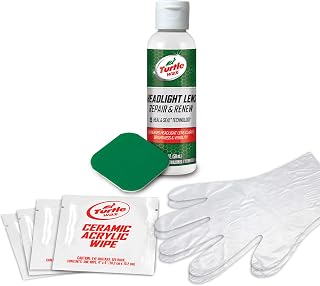
Turtle Wax
Speed Headlight Lens Restorer Kit (53435)
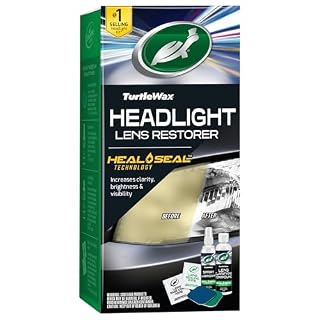
Turtle Wax
Headlight Lens Restorer Kit (T-240KT)
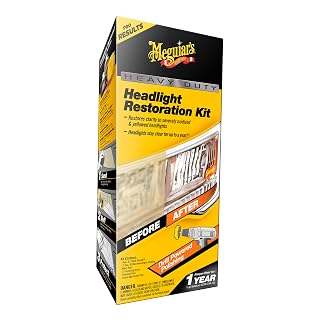
Meguiar's
Heavy Duty Headlight Restoration Kit
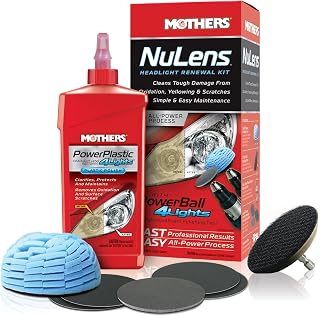
Mothers
NuLens Headlight Renewal Kit (07251)
As an Amazon Associate I earn from qualifying purchases. Full disclosure

Community
0 postsShare how you use this product
Drop a quick comment or post a full review with photos and a star rating.
Sign in to postNew here? Create a free account.