CarCareTruth Score
Decent.
Opens Amazon in a new tab. No account needed to look.
Saved to your guest loadout. Sign up to also save to your Cabinet (consumables) or Kit (tools you own).
As an Amazon Associate I earn from qualifying purchases. Full disclosure
Prices may varyThis product ranks #4 of 5 in Water Blade & Squeegee.Three above it ↓
Last reviewed June 14, 2026
TL;DR A 13-inch all-silicone V-blade that clears bulk water from flat panels effectively and reaches tight gaps with its shaped ends. No scratch or swirl reports are documented in the owner review corpus, though no independent forum corroboration of paint safety on dark vehicles has been found. The all-silicone one-piece handle twists under moderate pressure, which is the product's main documented limitation. A microfiber towel follow-up is still needed for edges and curves.
A 13-inch silicone water blade with a one-piece V-blade construction: handle and blade are the same continuous body of flexible silicone with no separate rigid component. The manufacturer claims medical-grade silicone; that grade has not been confirmed by third-party testing. The blade measures over 13 inches and includes a narrower Detailer end for reaching side mirrors and recessed body panels, plus a tapered Extender end for gaps and narrow spaces. No pivot or articulating joint exists between handle and blade. The blade performs well on flat panels (hoods, roofs, door faces) and confirms effective bulk water removal across a broad owner base; it is well-reviewed on Amazon. Owners consistently find that a microfiber towel follow-up is still needed on curves and panel edges. The all-silicone handle twists under moderate pressure and requires a specific technique to keep the blade in full contact with the surface, which some owners find frustrating compared to rigid-handle alternatives.
Right pick for a weekly-washing owner who wants to reduce total towel contact time on standard flat-paneled vehicles and does not mind adapting their stroke technique to the flexible handle. The shaped ends are genuinely useful for mirrors and tight gaps that a straight blade cannot reach. Skip it if you expect rigid-handle precision or work primarily on heavily sculpted modern bodywork where compound-curve panels dominate; the handle's malleability makes precise strokes on those surfaces harder, and a blade with a rigid handle handles wide flat strokes more efficiently.
Solid silicone construction with no chemical exposure pathway in normal use; no SDS applies. The all-silicone blade does not shed synthetic microplastics during use, which is a genuine distinction from microfiber drying towels that shed fibers into wash water. Construction is a single continuous piece of silicone; blade and handle cannot be separated for end-of-life recycling, and silicone is not accepted in standard municipal recycling programs. Any shampoo or chemical product used during the wash step carries its own hazard profile; the individual product reviews for those chemicals cover the relevant PPE guidance.
No documented pattern of scratch or swirl reports is present in the owner review corpus, including on dark-colored vehicles where marring would be most visible. The blade's silicone construction is confirmed soft and smooth in normal use on clean surfaces. The an owner-condition risk to note: running the blade over a vehicle that has not been fully rinsed free of grit traps debris under the blade and can cause scratches. That is a technique issue, not a material defect in the silicone itself. No independent community forum corroboration (r/AutoDetailing, Detailing World) has been documented yet, so the paint-safety verdict is based on the clean owner review record alone.
It is the product's most documented trade-off. The handle is the same continuous silicone as the blade, which makes it flexible but also malleable enough to twist under moderate pressure. Owners who prefer a rigid-handle blade find the Jelly Blade harder to control, especially on large panels where a quick, precise stroke is the goal. Owners who wash at a slower pace and adapt their pressure technique generally find it workable. The flexibility is a genuine asset for reaching tight body gaps via the Extender end, but it costs some precision on wide panel strokes.
It removes the bulk of standing water, not all of it. Owner experience consistently shows that a microfiber towel follow-up is still needed on curves, panel edges, door handles, and any areas where the blade cannot maintain full contact. The blade is most effective as a primary water-reduction pass before a lighter final towel wipe, which reduces total towel saturation and speeds up the overall dry.
The blade has two shaped ends for specific situations. The Detailer end is narrower, intended for recessed side mirrors and fog light housings. The Extender end tapers to a point for reaching into body gaps and narrow panel seams where the full blade width cannot fit. Both are part of the one-piece silicone body.
Marketing copy from California Car Duster, via Amazon. Not editorial.
Weekly pick
One product, one safety verdict, every week. No spam.


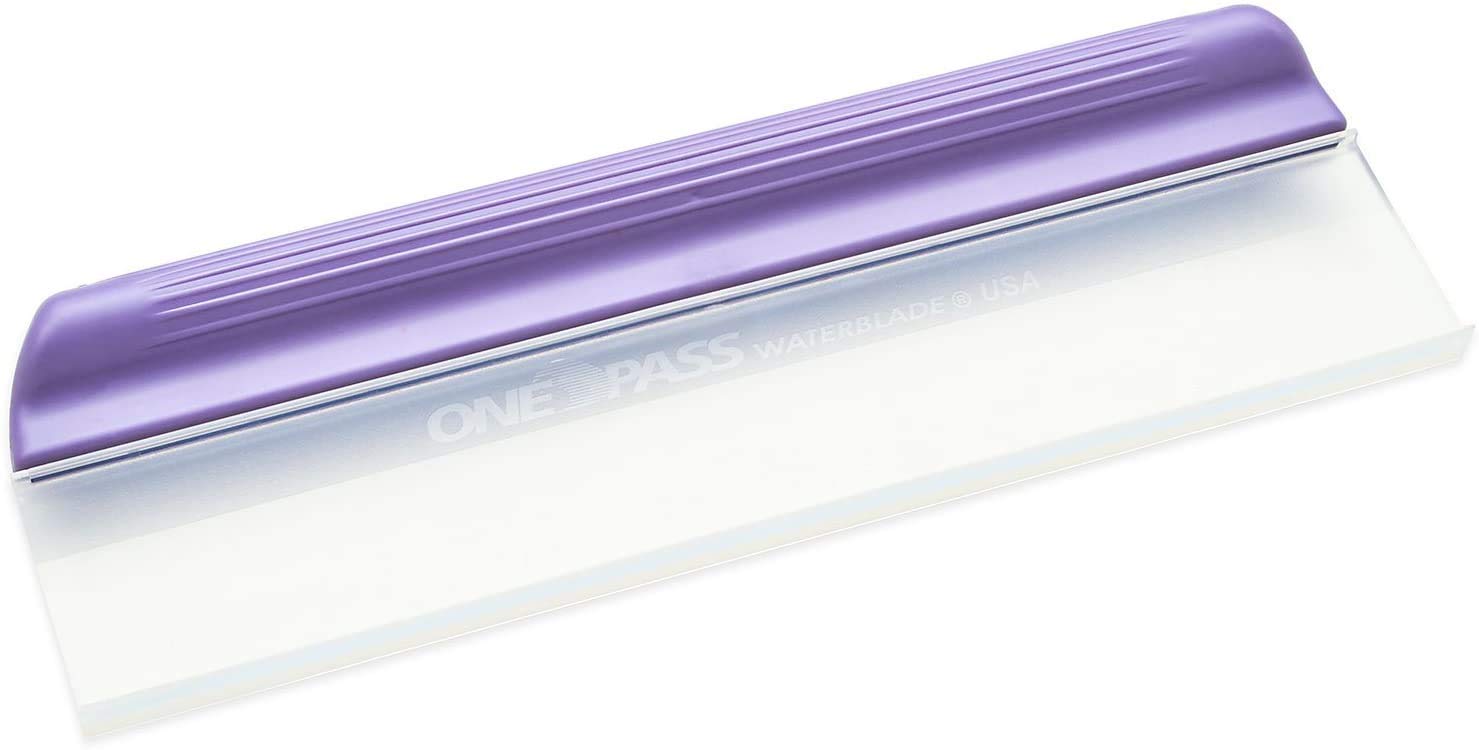
One Pass
Classic 12" Waterblade Silicone T-Bar Squeegee
Hi-Tech Industries
14-Inch Silicone Water Blade
Maxshine
Silicone Water Blade (Transparent)
CHANHOO
12 in Silicone Water Blade Squeegee
As an Amazon Associate I earn from qualifying purchases. Full disclosure

Community
0 postsShare how you use this product
Drop a quick comment or post a full review with photos and a star rating.
Sign in to postNew here? Create a free account.