CarCareTruth Score
Decent, but it's tough on the environment.
Opens Amazon in a new tab. No account needed to look.
Saved to your guest loadout. Sign up to also save to your Cabinet (consumables) or Kit (tools you own).
As an Amazon Associate I earn from qualifying purchases. Full disclosure
Prices may varyHealth score is for adult use as intended, per the manufacturer's SDS. It does not model child ingestion, accidental spill cleanup, or off-label use. See the safety panel below for full hazard classification, and /disclaimer for the full editorial scope.
GHS hazard codes are quoted from the manufacturer’s Safety Data Sheet. PPE tiers below translate those codes and the listed ingredient chemistry; they are not CarCareTruth recommendations.
Show details for all categories ▾Hide details ▴
Translated from the manufacturer’s Safety Data Sheet, Section 2
H319 (eye irritation Cat 2) confirmed in SDS §2 · driven by the propylheptyl poly(oxyethylene) surfactant at 1.4% (Eye Dam. 1 at neat concentration, dilutes to Eye Irrit. Cat 2 at product level). Pump-spray format generates mist inside the car cabin that routinely reaches eye level.
U.S. regulatory standard
29 CFR 1910.133(a)(1)
“The employer shall ensure that each affected employee uses appropriate eye or face protection when exposed to eye or face hazards from… liquid chemicals…”
ANSI Z87.1 (incorporated via §1910.6)
OSHA standards apply to workplaces. Cited here as the U.S. reference threshold for the underlying hazard class.
CarCareTruth publishes the cited sources verbatim and does not advise what action a user should take. Consult the full SDS before use.
Only when: prolonged use
Translated from the manufacturer’s Safety Data Sheet, Section 2
H315 (skin irritation Cat 2) confirmed in SDS §2. PDMS at 12% is a mild skin irritant per SDS §11. At typical brief application sessions (5-15 minutes), skin irritation risk is low · relevant during extended application or repeated daily use.
U.S. regulatory standard
29 CFR 1910.138(a)
“appropriate hand protection when employees' hands are exposed to hazards such as those from… chemicals which produce an adverse effect on the skin or eyes…”
OSHA standards apply to workplaces. Cited here as the U.S. reference threshold for the underlying hazard class.
CarCareTruth publishes the cited sources verbatim and does not advise what action a user should take. Consult the full SDS before use.
Only when: in enclosed space
Beyond SDS: translated from the ingredient chemistry
No H335, H336, H332, or H330/H331 in SDS §2. Formula is 85.5% water with non-volatile PDMS as the active · no volatile co-solvents. Pump-spray mist in the confined car cabin (~3 m³) is the only plausible inhalation pathway; chemistry does not support respiratory concern under normal ventilation.
CarCareTruth publishes the cited sources verbatim and does not advise what action a user should take. Consult the full SDS before use.
No PPE specified in published sources for ventilation. Absence does not imply “not needed” — consult the full Safety Data Sheet.
PPE tiers translate the manufacturer’s SDS and U.S. regulatory standards. Not professional safety advice. How we report safety.
Scope of these PPE tiers. The tiers on this page translate the product's Safety Data Sheet where one is published, plus its ingredient chemistry, into a comparable rating. They describe a formulation, not a situation: a tier is not a safety determination for any specific user, task, quantity, or environment. The manufacturer's label and use instructions govern how the product is handled. Where the product is used at work, the employer's PPE program and hazard assessment under 29 CFR 1910.132 decide what protection is selected, not this page.
No warranties. CarCareTruth makes no warranties, express or implied, and expressly disclaims the implied warranties of merchantability and fitness for a particular purpose.
This product ranks #7 of 12 in Dashboard Protectant.Three above it ↓
Last reviewed May 27, 2026
TL;DR Delivers a clean satin finish that community owners consistently describe as factory-fresh rather than dressed, with no windshield glare documented · UV protection is label-claimed from the brand's aerospace heritage but not backed by a disclosed absorber chemistry. Pump-spray format with mild eye-irritation and skin-irritation classifications and a Prop 65 listing for trace processing byproducts.
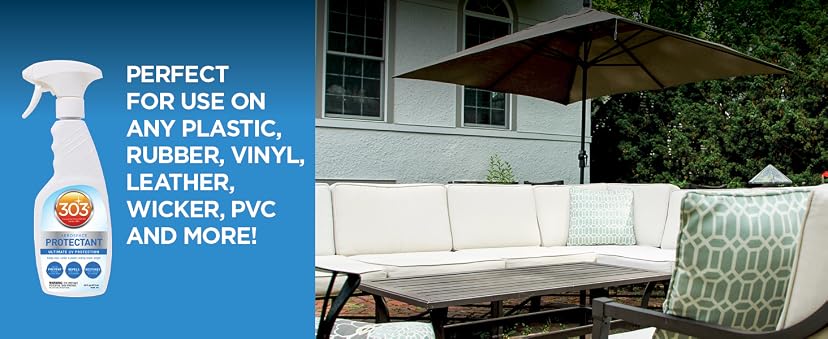
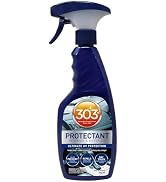
A water-based silicone protectant that leaves a satin, factory-fresh appearance on plastic, vinyl, and rubber trim · the community benchmark for "natural look" in this category. Spray onto a microfiber cloth first rather than directly onto surfaces to avoid pooling in vents and speaker grilles. Community-confirmed durability of four to six weeks on daily-driver interiors with noticeably lower dust attraction than silicone-oil alternatives. UV protection is the brand's founding claim, though the disclosed chemistry relies on a physical silicone film rather than a named absorber.
Best fit for owners doing regular light maintenance who want a satin, natural appearance rather than a high-gloss look · particularly in high-UV climates where interior plastics fade and crack. Skip it if dash or door panels have heavy buildup from older silicone-heavy protectants · strip with an all-purpose cleaner first for even adhesion. Buyers wanting maximum high-gloss wet shine should look elsewhere; this product deliberately avoids that finish.
WARNING signal word driven by eye irritation and mild skin irritation · standard for water-based silicone formulas. No respiratory hazard codes; the formula is 85.5% water with no volatile solvents or petroleum distillates. Prop 65 listed for trace processing byproducts from manufacturing, not from active ingredients. Leave-on product that stays on interior surfaces · not drain-destined. No cyclic siloxanes in the formula; the silicone is linear. Two surfactant ingredients carry aquatic toxicity flags; biodegradability is undetermined per the SDS.
No. Community reviews consistently describe the finish as matte, satin, or factory-fresh · the opposite of the high-gloss products that create glare. Across a large body of owner reviews and detailing forum threads, no windshield glare complaints were found. This is the product's primary competitive advantage over glossy alternatives.
The brand's heritage is aerospace UV protection (aircraft canopies and gel-coat finishes since 1980), and the PDMS film does provide a physical barrier against UV exposure. However, no named UV absorber (benzotriazole, benzophenone, HALS) appears in the SDS. The UV protection mechanism is the silicone film itself, not a dedicated UV-absorbing chemistry. Community evidence broadly supports that treated surfaces resist fading better than untreated ones, but no independent lab data confirms the mechanism.
Yes. Across a large body of owner reviews and detailing forum threads, the finish is consistently described as matte, satin, or factory-fresh on interior plastic, vinyl, and rubber, with no high-gloss shine and no windshield glare. The water-based silicone film also provides a physical UV barrier, which is the brand's original aerospace-heritage claim. Spray onto a microfiber cloth first, then wipe.
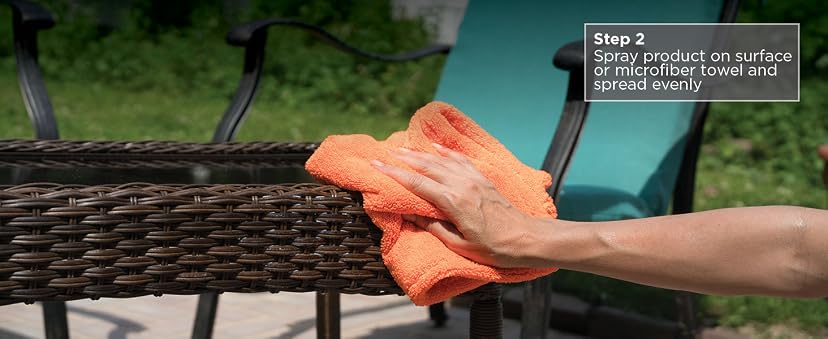
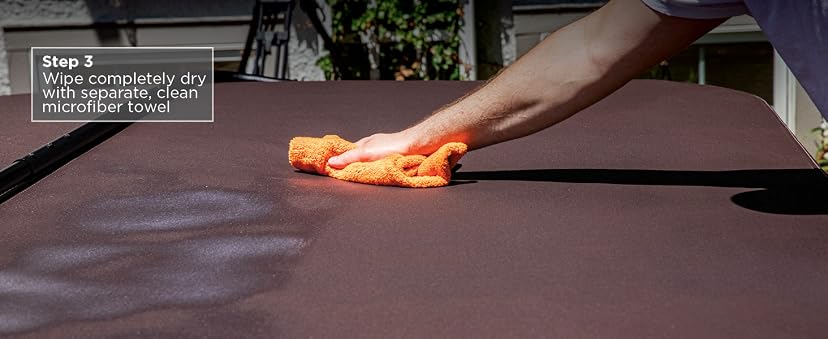
Best results come from spraying onto a microfiber cloth first, then wiping the surface. Direct spray risks pooling in vents, speaker grilles, and trim gaps. A second dry-buff with a clean cloth removes any excess and ensures an even finish.
The SDS lists ethylene oxide, ethylbenzene, and acetaldehyde as Prop 65 substances · these are trace processing byproducts from manufacturing, not active ingredients. They do not appear in the formula composition at named concentrations. The Prop 65 warning is triggered by any detectable presence, regardless of dose, and the health score carries the deduction the disclosed chemistry earns.
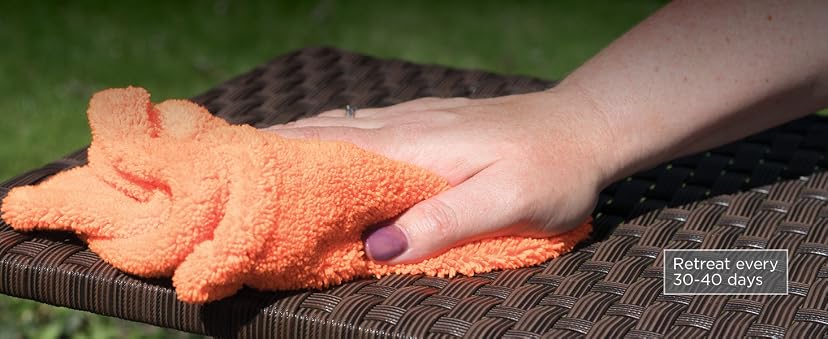
The label recommends every 30-40 days. Community feedback confirms 4-6 weeks of maintained finish on daily-driver interiors under normal use · consistent with the water-based PDMS chemistry. Reapplication frequency increases in high-UV climates or with frequent interior cleaning.
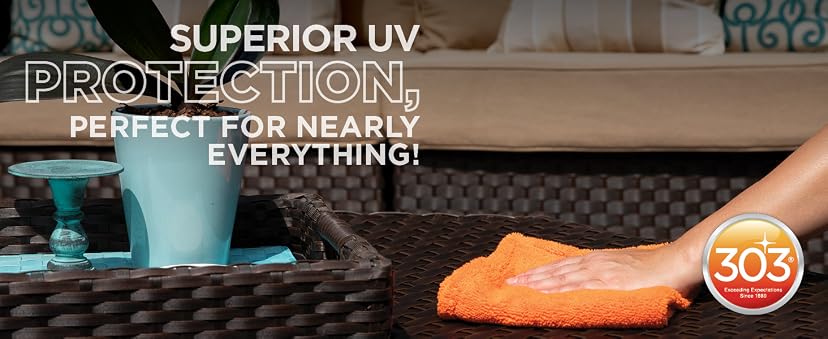
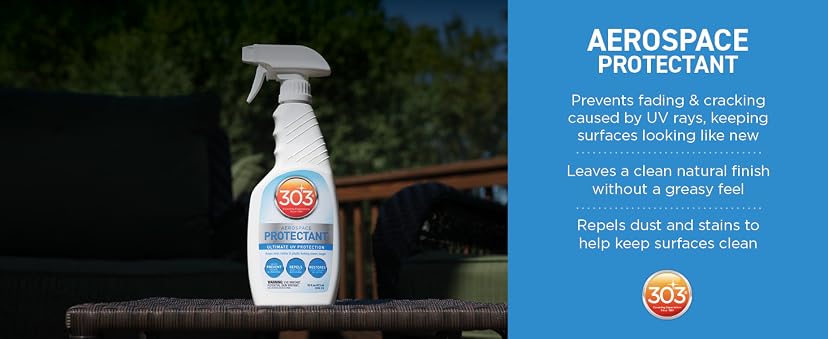
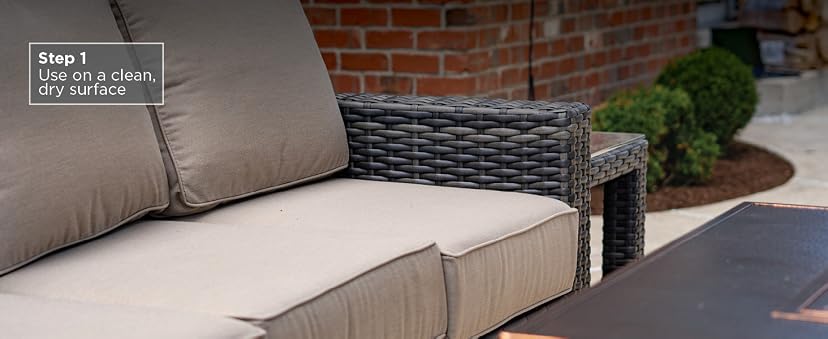
Marketing copy from 303 Products, via Amazon. Not editorial.
Weekly pick
One product, one safety verdict, every week. No spam.


SONAX
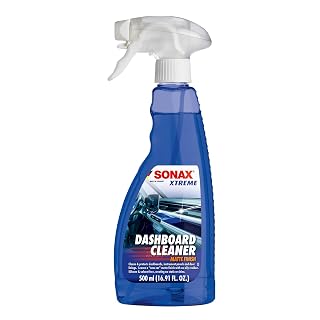
Dashboard Cleaner 283241 (500ml)
Meguiar's
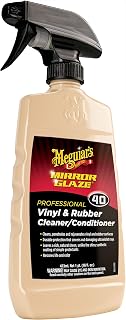
M40 Mirror Glaze Vinyl & Rubber Cleaner/Conditioner
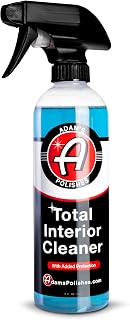
Adam's Polishes
Total Interior Cleaner & Protectant
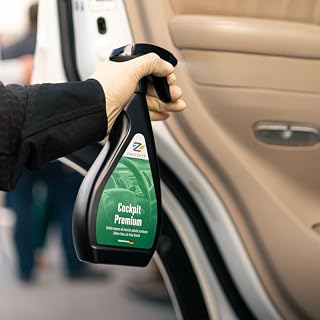
nextzett
Cockpit Premium Interior and Dashboard Cleaner
As an Amazon Associate I earn from qualifying purchases. Full disclosure

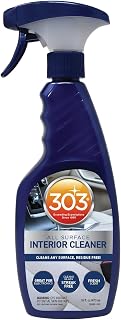
Community
0 postsShare how you use this product
Drop a quick comment or post a full review with photos and a star rating.
Sign in to postNew here? Create a free account.