
Natural Diatomaceous Earth
- Abrasives
- CAS 61790-53-2
- IUPAC: Diatomaceous earth, natural
Natural Diatomaceous Earth (CAS 61790-53-2) appears in 4 of the 2,122 car-care products CarCareTruth tracks (as of August 2026).
Naturally occurring silica mineral (amorphous, not crystalline quartz). Inert at polish-use concentrations in aqueous suspension. No systemic health hazard in liquid suspension. Respirable dust is an irritant, but not a realistic exposure scenario in wet-polish use.
Natural diatomaceous earth is the fossilized remains of diatoms — microscopic algae with silica-based cell walls. In polish formulas it functions as a fine secondary abrasive and polishing aid, contributing to gloss development after the primary cutting abrasive has done its work.
This is the naturally occurring amorphous form (CAS 61790-53-2), not the crystalline silica associated with silicosis risk (which is a different material, CAS 14808-60-7). In aqueous polish suspension the inhalation risk is negligible. Environmentally persistent (mineral) but non-toxic and non-bioaccumulative.
Health & environment profile
- VOC
- no
- Prop 65 listed
- no
- Asthmagen
- no
- EPA Safer Choice
- no
- Aquatic toxicity
- no
- Biodegradable
- no
- Bioaccumulative
- no
- Persistent
- yes
- Ozone depleting
- no
- Microplastic
- no
- PFAS
- no
- Env. score
- 5/5
Common questions about Natural Diatomaceous Earth
- What is Natural Diatomaceous Earth used for in car care?
- Silica-based secondary abrasive and polishing aid in polish formulations
- Is Natural Diatomaceous Earth a VOC?
- No. Natural Diatomaceous Earth is not classified as a volatile organic compound (VOC).
- Is Natural Diatomaceous Earth on California's Proposition 65 list?
- No. Natural Diatomaceous Earth is not on California's Proposition 65 list.
4 products contain this
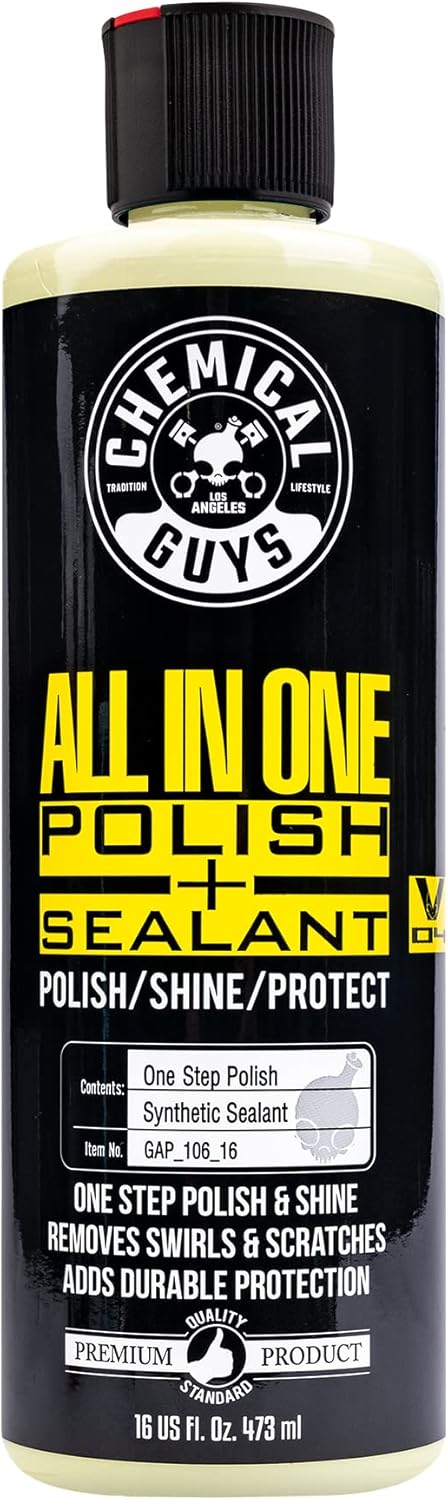 Chemical Guys V4 All-in-One Polish + Sealant
one-step-polish
 Chemical Guys Headlight Restore and Protect
headlight-restoration

 Chemical Guys V38 Optical Grade Final Polish
finishing-polish
Related
Health and environment notes translate the manufacturer Safety Data Sheet, the GHS classification, and authoritative regulatory listings (California Prop 65, EPA). Not medical advice. They describe the ingredient itself; whether a hazard applies to a finished product depends on its concentration and how it's used.