
Aminoethylaminopropyl Methyl Siloxane
- Silicones
- CAS 71750-79-3
- IUPAC: Siloxanes and Silicones, 3-[(2-aminoethyl)amino]propyl Me, di-Me
Aminoethylaminopropyl Methyl Siloxane (CAS 71750-79-3) appears in 6 of the 2,122 car-care products CarCareTruth tracks (as of August 2026).
Eye irritation (H319) at formulation strength is the primary hazard — driven by the reactive amino groups. No skin sensitization, no respiratory sensitization, no chronic-exposure H-codes. Eye protection during application is the relevant PPE; no inhalation concern at consumer use concentrations.
Aminoethylaminopropyl methyl siloxane (CAS 71750-79-3) is the reactive ceramic active in many spray sealants and SiO₂ boosters from coating brands. The aminoethylamino side chains bond covalently to hydroxyl groups on the paint and glass surface, anchoring the silicone polymer backbone in place. The result is a thin hydrophobic film that tightens water beading and adds gloss without requiring a separate ceramic coating underneath.
The chemistry is organosilicon, not fluoropolymer — no PFAS concerns. The amino-functional groups are mildly reactive, which is why the substance carries an H319 eye-irritation classification at neat strength. At the 3–7% concentration typical of consumer ready-to-use spray sealants, the amino reactivity is the only meaningful hazard pathway; no skin sensitization, no respiratory codes, no chronic-exposure codes apply.
Aquatic toxicity is not classified at the substance level. The siloxane backbone is persistent in environmental compartments but with low ecotoxicological impact at the consumer use concentrations.
Health & environment profile
- VOC
- no
- Prop 65 listed
- no
- Asthmagen
- no
- EPA Safer Choice
- no
- Aquatic toxicity
- no
- Biodegradable
- no
- Bioaccumulative
- no
- Persistent
- no
- Ozone depleting
- no
- Microplastic
- no
- PFAS
- no
- Env. score
- 4/5
Common questions about Aminoethylaminopropyl Methyl Siloxane
- What is Aminoethylaminopropyl Methyl Siloxane used for in car care?
- Reactive amino-functional siloxane polymer — the hydrophobic film-forming active in spray sealants and SiO₂ boosters. The aminoethylamino side chains bond covalently to hydroxyl groups on paint and glass surfaces, anchoring the silicone backbone in place to produce a durable water-repellent film.
- Is Aminoethylaminopropyl Methyl Siloxane a VOC?
- No. Aminoethylaminopropyl Methyl Siloxane is not classified as a volatile organic compound (VOC).
- Is Aminoethylaminopropyl Methyl Siloxane on California's Proposition 65 list?
- No. Aminoethylaminopropyl Methyl Siloxane is not on California's Proposition 65 list.
6 products contain this
 Adam's Polishes Glass Sealant 2.0
rain-repellent
 Armour Detail Supply Pro Ceramic Coating
ceramic-coating
 CarPro EliXir Quick Detailer
quick-detailer
 CarPro HydrO2 Lite Touchless Silica Sealant
ceramic-booster
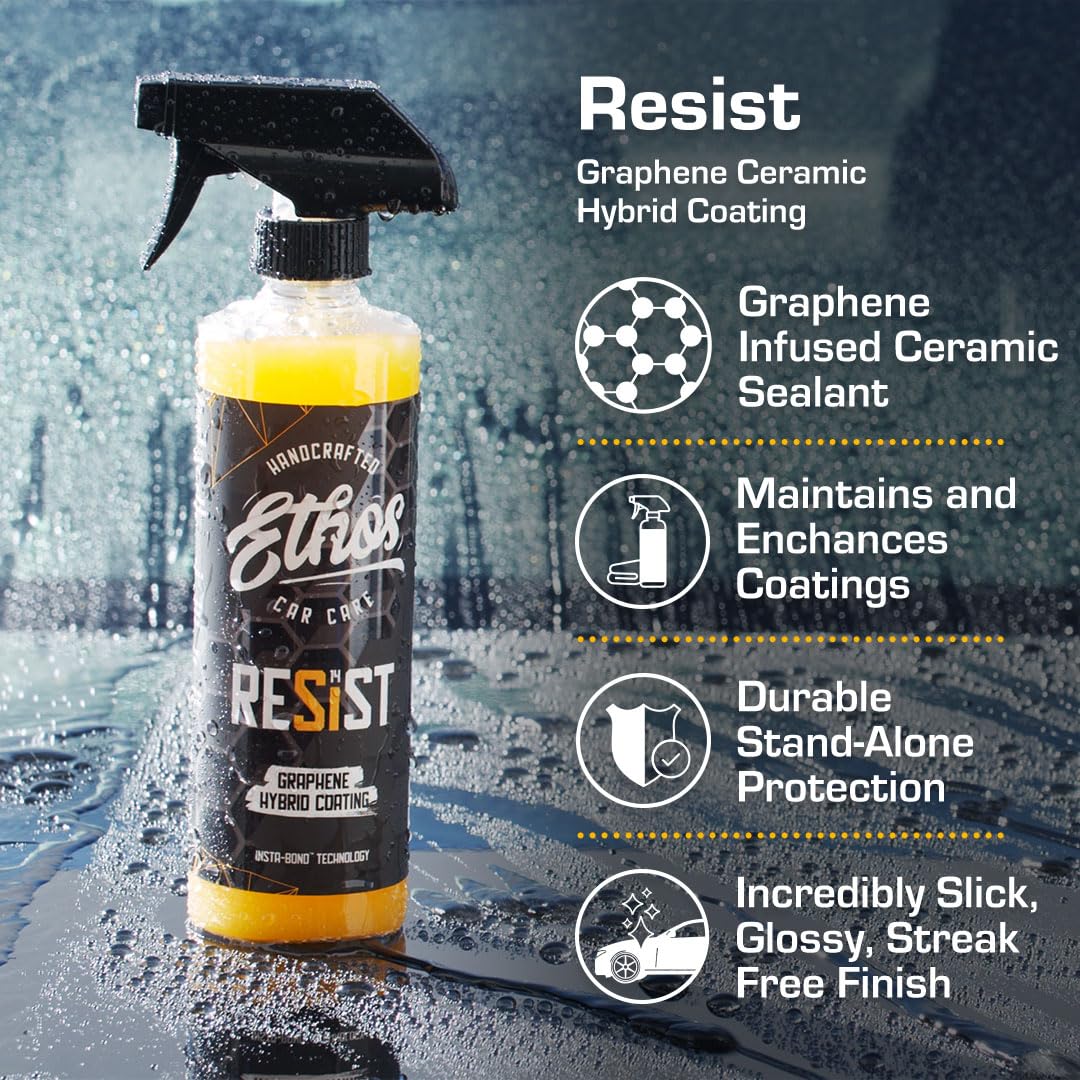 Ethos Car Care RESIST Graphene Spray Coating
ceramic-spray-coating
 Formula 1 Headlight Restorer & Sealant
headlight-restoration
Related
Health and environment notes translate the manufacturer Safety Data Sheet, the GHS classification, and authoritative regulatory listings (California Prop 65, EPA). Not medical advice. They describe the ingredient itself; whether a hazard applies to a finished product depends on its concentration and how it's used.