CarCareTruth Score
Decent.
Opens Amazon in a new tab. No account needed to look.
Saved to your guest loadout. Sign up to also save to your Cabinet (consumables) or Kit (tools you own).
As an Amazon Associate I earn from qualifying purchases. Full disclosure
Prices may varyThe manufacturer's Safety Data Sheet classifies this product with one or more GHS Category 1 health hazards — the most severe tier. The hazard statements in quotes below are the verbatim GHS language from the SDS, as required by OSHA's Hazard Communication Standard. The line under each statement translates the GHS classification into plain language.
GHS Category 1 aspiration toxicity — thin, oily liquids can slip into the lungs if swallowed, causing chemical pneumonia.
If swallowed, inhaled, or splashed in eyes:
Call Poison Control immediately at 1-800-222-1222 (US, 24/7, free) and have the product container with you. Poison Control's standing guidance is to not induce vomiting after chemical exposure; they will direct first-aid steps based on the specific product.
About this product's hazards. This product's Safety Data Sheet uses signal word danger. Read the manufacturer's SDS and follow all safety instructions before use. CarCareTruth ratings translate the manufacturer's safety sheet. They do not replace the SDS or substitute for a hazard assessment specific to your task.
Health score is for adult use as intended, per the manufacturer's SDS. It does not model child ingestion, accidental spill cleanup, or off-label use. See the safety panel below for full hazard classification, and /disclaimer for the full editorial scope.
GHS hazard codes are quoted from the manufacturer’s Safety Data Sheet. PPE tiers below translate those codes and the listed ingredient chemistry; they are not CarCareTruth recommendations.
Show details for all categories ▾Hide details ▴
Only when: splash risk · handling concentrate
Translated from the manufacturer’s Safety Data Sheet, Section 8
The accepted Calumet SDS Section 8 recommends safety eyewear (safety glasses with side-shields) 'when a risk assessment indicates this is necessary to avoid exposure to liquid splashes' - conditional/boilerplate language, not a mixture-level eye-hazard classification. SDS Section 2 carries no H318/H319, so per the H-code escalation table the tier is held at situational (the full-cautious floor for an SDS-named category), matching the genuine splash risk of direct hand/spout application to a fastener. The separately-surfaced, rejected Highside SDS independently names ANSI Z87.1 eyewear for its own (different) formulation, corroborating rather than conflicting with a situational-level caution.
CarCareTruth publishes the cited sources verbatim and does not advise what action a user should take. Consult the full SDS before use.
Only when: handling concentrate
Translated from the manufacturer’s Safety Data Sheet, Section 8
The accepted Calumet SDS Section 8 names hand protection ('chemical-resistant, impervious gloves... if a risk assessment indicates this is necessary') and Section 4/11 describe defatting/dryness/cracking symptoms from skin contact, but SDS Section 2 mixture classification carries no H314/H315/H317, so per the H-code table this does not escalate past situational. Per the 2026-07-17 full-cautious SDS-to-PPE policy, a category SDS Section 8 names (even as conditional boilerplate) is never omitted outright - held at situational. The rejected Highside SDS independently suggests nitrile gloves for its own formulation, corroborating rather than conflicting.
CarCareTruth publishes the cited sources verbatim and does not advise what action a user should take. Consult the full SDS before use.
Only when: in enclosed space
Translated from the manufacturer’s Safety Data Sheet, Section 8
The accepted Calumet SDS Section 8 names respiratory protection ('a properly fitted, air-purifying or air-fed respirator... if a risk assessment indicates this is necessary') as conditional boilerplate. SDS Section 2 carries no H330/H331/H334 and no confirmed asthmagen, so per the escalation table lungs cannot be pushed to recommended or required from this alone; this is a drip/direct-application liquid (not aerosol or pump-spray), so mist generation is minimal. Held at situational for enclosed-space ventilation per the SDS's own storage/handling guidance. The rejected Highside SDS independently gives an ACGIH TWA of 5 mg/m3 for oil mist 'if generated' and suggests a NIOSH R/P95 respirator under conditions - again corroborating, not conflicting with, a situational tier.
U.S. regulatory standard
29 CFR 1910.1200(f); 1910.132(d)
“The employer shall assess the workplace to determine if hazards are present, or are likely to be present, which necessitate the use of personal protective equipment.”
OSHA standards apply to workplaces. Cited here as the U.S. reference threshold for the underlying hazard class.
CarCareTruth publishes the cited sources verbatim and does not advise what action a user should take. Consult the full SDS before use.
No PPE specified in published sources for ventilation. Absence does not imply “not needed” — consult the full Safety Data Sheet.
PPE tiers translate the manufacturer’s SDS and U.S. regulatory standards. Not professional safety advice. How we report safety.
This product ranks #17 of 24 in Penetrating Oil / Multi-Purpose Lubricant.Three above it ↓
Last reviewed July 31, 2026
TL;DR This bottle's own label prints a real hazard warning: combustible liquid, may be fatal if swallowed and enters the airways. A matching safety sheet classifies it DANGER, so this scores Hazardous, not a neutral unknown. No California Prop 65 warning. Handled with basic care around flame and swallowing, it's a well-reviewed drip-on rust buster with a genuinely useful reach-in spout.
Supco is an HVAC and appliance-parts brand, not a car-care name, but MO44 is a genuine penetrating oil sold alongside familiar automotive brands. It's a squeeze bottle with a telescoping "Zoom Spout" for reaching tight spots: drip it on, let it sit, then work the fastener loose. Owners consistently report it frees typical rust, though nothing confirms how long the protection holds.
This fits one stuck bolt or fitting tucked somewhere a straight-shot spray can't reach - the spout's whole job. Skip it if you want a product you can store or use casually around open flame, a hot exhaust manifold, or kids - this is a combustible liquid with a swallowing hazard, not an inert lubricant.
Don't let the "Rust Buster" branding undersell this: the label itself prints a combustible-liquid and swallowing-hazard warning, and a matching safety sheet classifies it DANGER - a combustible liquid with an aspiration hazard that may be fatal if swallowed and enters the airways. Keep it from flame, heat, and children; if swallowed, don't induce vomiting - call poison control right away. That aspiration risk is about ingestion, not everyday fumes: the sheet finds no significant inhalation or eye hazard in normal use, though skin contact can dry and irritate like any petroleum oil. No Prop 65 warning; two independent safety sheets tied to this product both clear it of listed carcinogens or reproductive toxins (see the FAQ below on why two sheets exist and disagree). The base oil is toxic to aquatic life and not readily biodegradable, so keep excess product out of drains.
Supco is short for Sealed Unit Parts Co., an HVAC and appliance-parts manufacturer based in New Jersey, not a company built around cars. MO44 Rust Buster is one of its few genuinely automotive-adjacent items: a penetrating oil sold alongside familiar shop-brand rust busters at plumbing and refrigeration wholesalers.
Yes. The bottle's own label prints a real hazard warning: it reads as a combustible liquid that may be fatal if swallowed and enters the airways. Those two phrases are legible and match, word for word, the two hazard statements on a safety data sheet for the same base oil, which classifies the product DANGER, Category 4 flammable liquid (combustible) with a Category 1 aspiration hazard. (The single word that would normally read 'DANGER' on the label itself is too small and blurred in the available product photo to read directly; we're reporting the SDS's classification, not claiming to have read that specific word.) That aspiration risk is about swallowing the liquid, not about inhaling fumes during normal use - never siphon it by mouth, keep it away from children, and if it is swallowed, do not induce vomiting and call poison control immediately.
5.0 here is a calculated 'Hazardous' score, not a neutral no-data placeholder. The confirmed aspiration hazard pulls the starting score down through a real hazard-ceiling deduction, and no other confirmed hazard codes on this specific safety sheet push it lower or let it recover. The number reflects this product's actual, confirmed chemistry rather than an assumption in either direction.
No. Two independent safety data sheets tied to this product both state it is not known to contain any chemical currently listed as a carcinogen or reproductive toxin under Proposition 65 - agreement between documents that otherwise disagree on flammability. Its base oil is a severely hydrotreated (heavily refined) petroleum cut, which is processed specifically to fall outside the class of mineral oils that Prop 65 covers. An earlier version of this page leaned on a non-Amazon retailer's posted warning as a caution; the matched safety sheets supersede that ambiguous signal.
A generic reseller page links a Calumet Specialty Products sheet for a raw base oil, and a separate distributor record ties a Highside Chemicals 'Rust Buster' sheet to this same item by filename. The two disagree sharply: the Calumet document supports a combustible-liquid, swallowing-hazard classification, while the Highside document describes a much thicker, higher-flash-point oil it calls not hazardous at all. We went with the Calumet-based classification because it is chemically compatible with, and its hazard wording verbatim matches, what is actually printed on this exact bottle's own label - a liquid as thick and high-flashing as the Highside sheet describes could not legitimately carry that warning. The Highside sheet most likely describes a different or older formulation sold under the same 'Rust Buster' name. We're disclosing the conflict rather than picking silently, because we can't fully rule out that the wrong document governs.
The spout extends to reach fasteners tucked behind other parts or at awkward angles a straight nozzle can't reach. Extend it, position the tip against the rusted joint, and apply the oil directly by squeezing the bottle. It's a drip-and-wait design rather than an aerosol spray, so there's minimal mist and the applied oil stays where you aim it.
That's not independently confirmed either way. No long-term community follow-up data was found showing how well the residue protects a freed fastener from rusting shut again, and Supco doesn't publish a disclosed corrosion-inhibitor package to point to. Re-seizure protection is scored at the category average for that reason, not above or below it.
Marketing copy from Supco, via Amazon. Not editorial.
Weekly pick
One product, one safety verdict, every week. No spam.
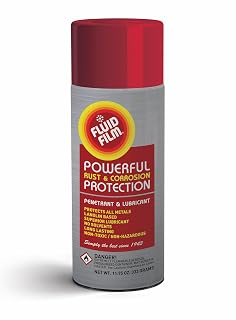
Fluid Film
NAS Aerosol Penetrant & Lubricant
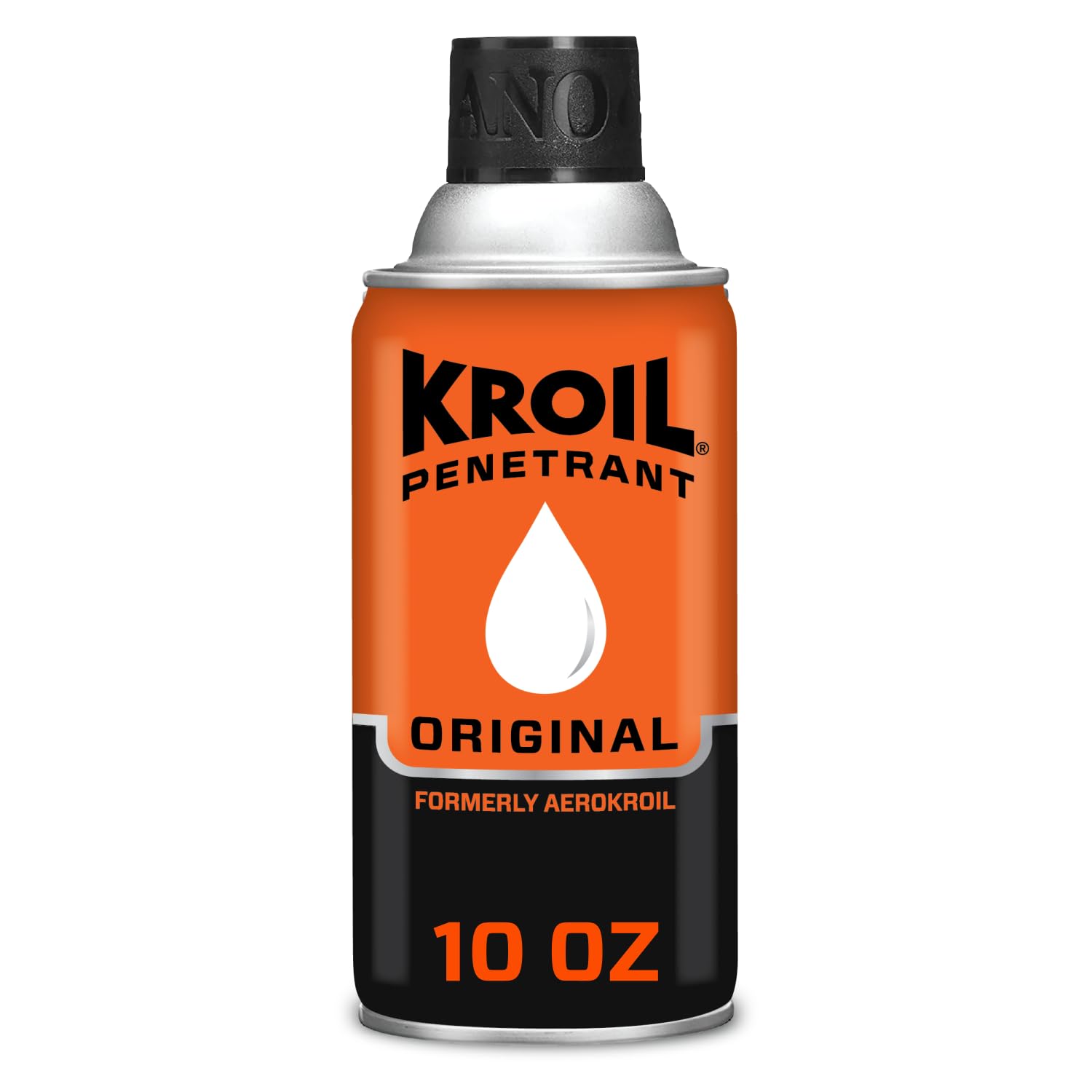
Kroil
Penetrant Original Aerosol
Made Here Co.
Multi-use Lubricating Penetrant Oil
Boeshield
T-9 Rust & Corrosion Protection
As an Amazon Associate I earn from qualifying purchases. Full disclosure

Community
0 postsShare how you use this product
Drop a quick comment or post a full review with photos and a star rating.
Sign in to postNew here? Create a free account.