CarCareTruth Score
Decent, but it's tough on the environment.
Opens Amazon in a new tab. No account needed to look.
Saved to your guest loadout. Sign up to also save to your Cabinet (consumables) or Kit (tools you own).
As an Amazon Associate I earn from qualifying purchases. Full disclosure
Prices may varyThis product ranks #20 of 21 in Windshield Wipers.Three above it ↓
Last reviewed August 13, 2026
TL;DR Conventional bracket wiper with a natural rubber blade element. Adequate in light-to-moderate rain; the bracket frame accumulates ice in freezing conditions. Community-reported replacement interval is 6-12 months before streak onset. J-hook pre-installed; multi-adapter set covers most common hook-arm types. <!-- TL;DR: 39 words (ceiling 60) -->
The WeatherBeater uses a conventional (bracket) frame with a natural rubber blade element. Owners report adequate streak-free performance in light and moderate rain; early owner feedback notes reduced clearing in heavy rain, consistent with the fixed-pressure-point design of conventional bracket wipers. Community-reported replacement interval is 6-12 months before streak onset, matching the natural rubber category median. The pre-installed J-hook and multi-adapter set cover the most common hook-arm types; buyers confirm fitment on Toyota and Ford vehicles without modification. The conventional bracket frame is susceptible to ice and snow accumulation in freezing conditions, which can reduce arc pressure and cause blade lifting; no cold-climate community evidence was found in the available review sample.
The right pick for daily drivers in mild-to-moderate climates who want a well-known budget conventional wiper and expect to replace it once a year. The price-per-year math works as a seasonal commodity replacement, and the blade is well-reviewed on Amazon across a large owner base. Skip it if you drive through freezing rain regularly; the conventional bracket design is structurally disadvantaged in ice accumulation compared to beam alternatives like the Rain-X Latitude or Bosch ICON at comparable or modestly higher price points. Skip it also if you want a longer replacement interval: synthetic rubber beam blades typically last 14-18 months in community-reported follow-up, which reduces cost-per-year despite the higher upfront price.
No chemical exposure pathway: this is a conventional bracket wiper with a natural rubber blade element; no SDS exists or is required for this accessory. The blade element is natural rubber, which contains latex proteins; the latex deduction in the health score reflects Type I allergen risk for sensitized individuals handling the blade during installation. Environmental profile reflects a shorter-than-median community-reported lifespan of 6-12 months, which means more frequent replacement cycles and more packaging waste per year compared to synthetic rubber or silicone alternatives. The product carries a California Prop 65 warning; the most likely listed substance is carbon black in the rubber compound.
Not sure which size this blade comes in for your car? Look up your exact wiper sizes in the CarCareTruth wiper-size finder · enter your year, make, and model and we'll show the driver, passenger, and rear blade sizes your vehicle takes, verified against multiple fitment sources.
The wiping element is a natural rubber squeegee mounted on a galvanized steel bracket frame. Rain-X describes it as resisting cracking, splitting, and tearing from weather, windshield wiper fluid, and road salt. The natural rubber compound carries a California Prop 65 warning; the most likely listed substance is carbon black in the rubber formulation.
Community evidence points to a 6-12 month replacement interval before streak onset. At least one owner explicitly plans for annual replacement as the expected cadence for this budget-tier conventional blade. Natural rubber degrades faster than synthetic rubber (EPDM) alternatives, which community reviews report lasting 12-18 months, and faster than silicone blades, which reach 24-36 months at the material-category level.
The conventional bracket design is structurally susceptible to ice accumulation in the frame in freezing conditions, which can add weight to the blade and cause it to lift off the glass. Beam (bracketless) wipers avoid this because there is no exposed bracket for ice to pack into. If you drive through regular freezing rain or snow, a beam-design wiper like the Rain-X Latitude or Bosch ICON is a better fit for cold climates.
The J-hook (also called standard hook) adapter is pre-installed, which covers the most common wiper arm on North American vehicles. The included multi-adapter set covers additional common arm types. Specific adapter types beyond J-hook are described as a multi-adapter set in the product listing but are not individually enumerated. For unusual arm types (such as some European vehicle pinch-tab or top-lock configurations), verify compatibility with the product's fitment guide before ordering.
The product listing confirms a California Proposition 65 warning. The most likely basis is carbon black in the natural rubber formulation, which is a standard Prop 65-listed substance for automotive rubber products. A wiper blade is not a chemical you handle, but the warning still takes the flat non-chemical health deduction, because that deduction covers exposure from the product and its packaging rather than from using it.
Marketing copy from Rain-X, via Amazon. Not editorial.
Weekly pick
One product, one safety verdict, every week. No spam.


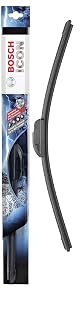
Bosch
ICON Wiper Blade
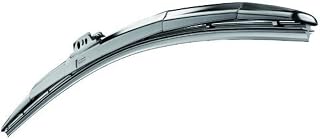
Michelin
Stealth Ultra Hybrid Wiper Blade with Smart Technology
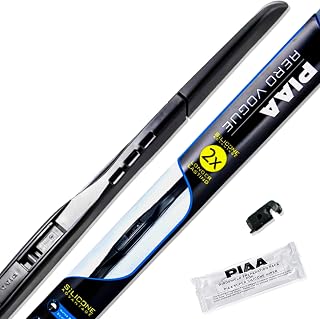
PIAA
Aero Vogue Silicone Wiper Blade
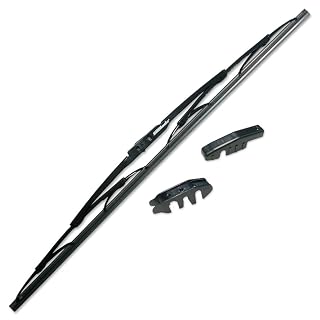
SilBlade
Premium Black Silicone Wiper Blade
As an Amazon Associate I earn from qualifying purchases. Full disclosure



Community
0 postsShare how you use this product
Drop a quick comment or post a full review with photos and a star rating.
Sign in to postNew here? Create a free account.