CarCareTruth Score
Decent, but it's tough on the environment.
Opens Amazon in a new tab. No account needed to look.
Saved to your guest loadout. Sign up to also save to your Cabinet (consumables) or Kit (tools you own).
As an Amazon Associate I earn from qualifying purchases. Full disclosure
Prices may varyThe manufacturer's Safety Data Sheet classifies this product with one or more GHS Category 1 health hazards — the most severe tier. The hazard statements in quotes below are the verbatim GHS language from the SDS, as required by OSHA's Hazard Communication Standard. The line under each statement translates the GHS classification into plain language.
GHS Category 1 reproductive toxicity — classified as suspected of damaging fertility or harming an unborn child.
GHS Category 1 aspiration toxicity — thin, oily liquids can slip into the lungs if swallowed, causing chemical pneumonia.
If swallowed:
The aspiration hazard (H304) is about the liquid being swallowed and reaching the airway, not about breathing fumes during normal use.
Call Poison Control immediately at 1-800-222-1222 (US, 24/7, free) and have the product container with you. Poison Control's standing guidance is to not induce vomiting after chemical exposure; they will direct first-aid steps based on the specific product.
About this product's hazards. This product's Safety Data Sheet uses signal word DANGER.Read the manufacturer's SDS and follow all safety instructions before use. CarCareTruth ratings translate the manufacturer's safety sheet. They do not replace the SDS or substitute for a hazard assessment specific to your task.
Health score is for adult use as intended, per the manufacturer's SDS. It does not model child ingestion, accidental spill cleanup, or off-label use. See the safety panel below for full hazard classification, and /disclaimer for the full editorial scope.
GHS hazard codes are quoted from the manufacturer’s Safety Data Sheet. PPE tiers below translate those codes and the listed ingredient chemistry; they are not CarCareTruth recommendations.
Show details for all categories ▾Hide details ▴
Translated from the manufacturer’s Safety Data Sheet, Section 2
SDS §2 classifies Eye Irritation Category 2 (H319) at the mixture level; aerosol mist is the primary exposure pathway.
U.S. regulatory standard
29 CFR 1910.133(a)(1)
“The employer shall ensure that each affected employee uses appropriate eye or face protection when exposed to eye or face hazards from… liquid chemicals…”
ANSI Z87.1 (incorporated via §1910.6)
OSHA standards apply to workplaces. Cited here as the U.S. reference threshold for the underlying hazard class.
CarCareTruth publishes the cited sources verbatim and does not advise what action a user should take. Consult the full SDS before use.
Only when: when spraying
Translated from the manufacturer’s Safety Data Sheet, Section 8
SDS §8 states 'Wear chemically resistant protective gloves' (Hand protection) and 'Wear suitable protective clothing' (Skin and body protection). No H315, H317, or H314 appears in §2 mixture classification · the aerosol mist and petroleum-distillate carrier reaching exposed skin during spray application is the exposure driver, not a classified skin hazard.
U.S. regulatory standard
29 CFR 1910.1000; 1910.1200
“Each employer shall assure that no employee is exposed [in excess of the PEL]…”
OSHA standards apply to workplaces. Cited here as the U.S. reference threshold for the underlying hazard class.
CarCareTruth publishes the cited sources verbatim and does not advise what action a user should take. Consult the full SDS before use.
Only when: when spraying · in enclosed space
Translated from the manufacturer’s Safety Data Sheet, Section 2
Aerosol form factor creates fine mist near face level. H335 is absent from §2 mixture classification; the aerosol mist itself is the inhalation exposure trigger in enclosed or poorly ventilated spaces.
U.S. regulatory standard
29 CFR 1910.1200(f); 1910.132(d)
“The employer shall assess the workplace to determine if hazards are present, or are likely to be present, which necessitate the use of personal protective equipment.”
OSHA standards apply to workplaces. Cited here as the U.S. reference threshold for the underlying hazard class.
CarCareTruth publishes the cited sources verbatim and does not advise what action a user should take. Consult the full SDS before use.
No PPE specified in published sources for ventilation. Absence does not imply “not needed” — consult the full Safety Data Sheet.
PPE tiers translate the manufacturer’s SDS and U.S. regulatory standards. Not professional safety advice. How we report safety.
Scope of these PPE tiers. The tiers on this page translate the product's Safety Data Sheet where one is published, plus its ingredient chemistry, into a comparable rating. They describe a formulation, not a situation: a tier is not a safety determination for any specific user, task, quantity, or environment. The manufacturer's label and use instructions govern how the product is handled. Where the product is used at work, the employer's PPE program and hazard assessment under 29 CFR 1910.132 decide what protection is selected, not this page.
No warranties. CarCareTruth makes no warranties, express or implied, and expressly disclaims the implied warranties of merchantability and fitness for a particular purpose.
This product ranks #16 of 24 in Penetrating Oil / Multi-Purpose Lubricant.Three above it ↓
Last reviewed July 31, 2026
TL;DR DANGER-rated aerosol with a Prop 65 warning: community-confirmed penetration on light-to-moderate rust in 5-15 minutes, but the aerosol carrier contains a California-listed carcinogen and a reproductive toxicant classification at the mixture level. Wear safety glasses; aerosol mist in enclosed spaces is the primary inhalation concern.
PB Blaster wicks a thin solvent into corroded threads to free seized fasteners. Apply with the aerosol straw, wait 5-15 minutes, and try turning. Community data from garage-mechanic forums confirms it outperforms WD-40 on moderate rust, and the straw nozzle reaches blind bores and undercar hardware that pump-spray products miss. Heavy rust may need a second application and a longer soak. The residue leaves a light oil film that prevents re-seizing for a few weeks, useful for staged work, but it is not a substitute for a dedicated corrosion inhibitor if long-term bolt protection matters.
A reliable option for a homeowner with an occasional stuck fastener or seasonal undercar work; the penetration performance on light-to-moderate rust is well-documented across independent shop communities. The H360 reproductive toxicant classification at the mixture level is a hazard anyone applying this product frequently indoors may want to weigh against the lower-VOC, non-aerosol alternatives in the category. The DANGER signal word reflects real chemistry: aspiration hazard if swallowed, confirmed carcinogen in the solvent fraction, and a reproductive toxicant at the mixture level.
DANGER driven by an aspiration hazard if swallowed and a reproductive toxicant classification in SDS §2. Prop 65: the aromatic solvent fraction contains naphthalene, a California-listed carcinogen, confirmed on the bottle label and SDS §15. SDS §2 classifies Eye Irritation Category 2 (H319); wear safety glasses when spraying. H335 is absent from §2, so the inhalation concern is aerosol mist in enclosed or unventilated spaces only, not a general ventilation requirement. Do not induce vomiting if swallowed; seek medical attention. Environmental footprint is significant: petroleum-distillate carrier with two aquatically toxic ingredients, not biodegradable, and estimated VOC above 550 g/L.
PB Blaster is safe on most bare metals and painted steel surfaces in typical fastener-freeing use. The SDS does not list compatibility data for specific plastics or rubber seals; the petroleum-distillate carrier can swell or degrade some elastomers with prolonged contact. Use sparingly around rubber boots or bushings and wipe away any excess. The SDS does not claim broad material compatibility.
Community data from garage-mechanic forums puts the realistic dwell window at 5-15 minutes on light-to-moderate surface rust under typical shop conditions. Heavily corroded fasteners may benefit from a second application and a longer soak. The label dwell claim is not independently verified by community sources as a universal guarantee; check resistance and soak again if the fastener still won't break free.
Yes. The SDS §15 and product label both confirm a California Prop 65 warning for naphthalene, a carcinogen present in the aromatic solvent fraction. The SDS also classifies a reproductive toxicant (H360) at the mixture level. The product carries a DANGER signal word driven by these health-tier hazard codes. These hazards compound with repeated aerosol use in enclosed spaces.
The formula contains a corrosion inhibitor (disclosed in SDS §3) that leaves a light oil film after the solvent carrier evaporates. Community follow-up posts document a few weeks of protection before re-seizing becomes a concern again under typical garage conditions. It is not a long-term corrosion inhibitor and does not substitute for a dedicated anti-seize or rust-preventive compound on fasteners that need multi-season protection.
The SDS §2 does not classify H335 (respiratory irritation) at the mixture level, so mandatory ventilation language does not apply from a GHS standpoint. However, the aerosol form factor generates fine mist near face level, and the product carries a DANGER signal word. Using it in a tightly enclosed space with no airflow concentrates aerosol exposure. The SDS identifies the aerosol mist in enclosed spaces as the primary inhalation exposure pathway.
Marketing copy from PB Blaster, via Amazon. Not editorial.
Weekly pick
One product, one safety verdict, every week. No spam.

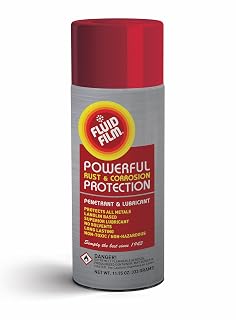
Fluid Film
NAS Aerosol Penetrant & Lubricant
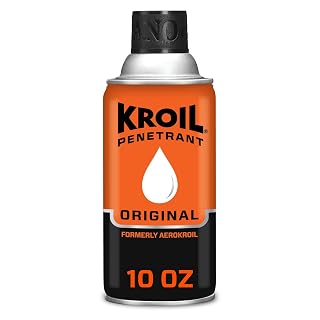
Kroil
Penetrant Original Aerosol
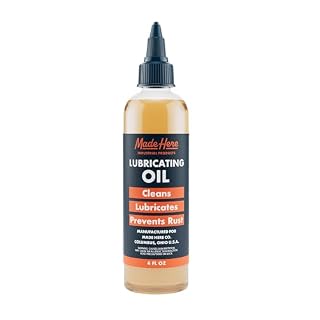
Made Here Co.
Multi-use Lubricating Penetrant Oil
Boeshield
T-9 Rust & Corrosion Protection
As an Amazon Associate I earn from qualifying purchases. Full disclosure

Community
0 postsShare how you use this product
Drop a quick comment or post a full review with photos and a star rating.
Sign in to postNew here? Create a free account.