CarCareTruth Score
Decent.
Opens Amazon in a new tab. No account needed to look.
Saved to your guest loadout. Sign up to also save to your Cabinet (consumables) or Kit (tools you own).
As an Amazon Associate I earn from qualifying purchases. Full disclosure
Prices may varyHealth score is for adult use as intended, per the manufacturer's SDS. It does not model child ingestion, accidental spill cleanup, or off-label use. See the safety panel below for full hazard classification, and /disclaimer for the full editorial scope.
GHS hazard codes are quoted from the manufacturer’s Safety Data Sheet. PPE tiers below translate those codes and the listed ingredient chemistry; they are not CarCareTruth recommendations.
Show details for all categories ▾Hide details ▴
Only when: splash risk · prolonged use
Beyond SDS: translated from the ingredient chemistry
SDS Section 8 states no eye or face protection is required, and Section 11 notes eye contact during normal use is not expected to cause significant irritation. Section 2 carries no eye-hazard GHS code (no H318 or H319) at the mixture level. Basic eye protection is a sensible precaution anyway when wiping a liquid clear coat near the face, especially across repeated applications.
CarCareTruth publishes the cited sources verbatim and does not advise what action a user should take. Consult the full SDS before use.
Translated from the manufacturer’s Safety Data Sheet, Section 2
SDS Section 2 classifies the Quick Headlight Clear Coat component Skin Sensitizer Category 1A (H317, may cause an allergic skin reaction). Section 8 recommends polymer-laminate gloves (nitrile gloves may be worn over them for dexterity).
U.S. regulatory standard
29 CFR 1910.138(a); 1910.132(d)
“appropriate hand protection when employees' hands are exposed to hazards such as those from skin absorption of harmful substances.”
OSHA standards apply to workplaces. Cited here as the U.S. reference threshold for the underlying hazard class.
CarCareTruth publishes the cited sources verbatim and does not advise what action a user should take. Consult the full SDS before use.
Only when: in enclosed space
Translated from the manufacturer’s Safety Data Sheet, Section 8
SDS Section 8 specifies a half or full facepiece organic-vapor/particulate respirator only where an exposure assessment shows it is needed; no H334, H335, or H336 is present at the mixture level, and VOC is disclosed at 48 g/L or below. The tier is situational, not recommended, for use in an enclosed or poorly ventilated space.
CarCareTruth publishes the cited sources verbatim and does not advise what action a user should take. Consult the full SDS before use.
No PPE specified in published sources for ventilation. Absence does not imply “not needed” — consult the full Safety Data Sheet.
PPE tiers translate the manufacturer’s SDS and U.S. regulatory standards. Not professional safety advice. How we report safety.
Scope of these PPE tiers. The tiers on this page translate the product's Safety Data Sheet where one is published, plus its ingredient chemistry, into a comparable rating. They describe a formulation, not a situation: a tier is not a safety determination for any specific user, task, quantity, or environment. The manufacturer's label and use instructions govern how the product is handled. Where the product is used at work, the employer's PPE program and hazard assessment under 29 CFR 1910.132 decide what protection is selected, not this page.
No warranties. CarCareTruth makes no warranties, express or implied, and expressly disclaims the implied warranties of merchantability and fitness for a particular purpose.
This product ranks #4 of 14 in Headlight Restoration Kit.Three above it ↓
Last reviewed July 8, 2026
TL;DR 3M's Ultra Headlight Restoration Kit takes cloudy, moderately oxidized lenses to noticeably clearer with a three-grit hand-sanding sequence, and the included UV clear coat wipes typically hold that result for a year or so before re-yellowing creeps back in. It is a genuinely hand-doable process, though early stages can look worse before the finishing disc catches up.
This kit pairs a three-grit sanding progression, coarse through a fine 3000-grit Trizact refining disc, with a wipe-on UV clear coat that seals the freshly sanded surface. The process runs coarse to fine by hand in roughly 20 to 30 minutes per lens, and it also works with a common household drill if preferred. Community reports describe noticeable clarity gains on moderately oxidized lenses, with the caveat that the surface can look hazier mid-process until the refining disc and clear coat step finish the job. The clear coat does the long-term work, and independent reports put its hold time around 12 to 19 months before yellowing returns.
Best for owners dealing with moderate haze who want a hand process with no drill required. The multi-grit progression and dedicated UV clear coat step put it a notch above single-stage polish-only kits. Skip it if lenses are severely pitted or physically cracked; no sanding kit fixes structural lens damage, and replacement or a professional reconditioning service is the right call there.
The kit's only chemically classified component is the clear coat wipe; the sanding discs are solid abrasive articles with no SDS hazard classification. The clear coat carries a WARNING signal word, and its current Safety Data Sheet (Version 3.00, June 2023) classifies it two ways: a skin sensitizer (H317, may cause an allergic skin reaction) and, importantly, a Category 2 reproductive toxicant (H361, suspected of damaging fertility or the unborn child), with Section 11 noting it "contains a chemical or chemicals which can cause birth defects or other reproductive harm." That reproductive-hazard classification is why the SDS carries the Health Hazard pictogram and why 3M's own label says to obtain special instructions before use, wear protective gloves, and keep it away from children. Anyone who is or may become pregnant should treat that warning seriously and, at minimum, use gloves, avoid breathing any mist, and apply the clear coat outdoors or with strong ventilation. No respiratory or eye protection is called out at the mixture level, and VOC is disclosed at a low 48 g/L. The kit uses a small volume of water-based, low-VOC chemistry split between a rinsed-off sanding slurry and a thin leave-on clear coat layer, with no PFAS and no confirmed aquatic toxicity.
Yes. The kit includes two 3M Quick Headlight Clear Coat wipes, a wipe-on UV clear coat applied after the sanding and refining steps. This is the component that determines how long the restored clarity holds before re-yellowing resumes, not the abrasive discs.
No. The kit is designed as a hand process, though 3M notes it can also be used with a common household drill if you prefer. Community reports confirm the hand process works when the full multi-stage sequence, coarse through the 3000-grit Trizact refining disc, is followed completely.
Community reports on the included wipe-on clear coat cluster around 12 to 19 months before re-yellowing resumes, depending on climate and sun exposure. That is typical for a wipe-on UV sealant in this category; a garaged vehicle in a milder climate will generally hold clarity longer than a daily driver parked outdoors in intense sun.
No, gloves are the sensible call. The clear coat component carries a skin sensitizer classification (H317) on its current Safety Data Sheet, and 3M's own guidance recommends nitrile or polymer-laminate gloves during that step. The sanding discs themselves are solid abrasive articles with no skin hazard classification.
Yes. The current Safety Data Sheet for the kit's Quick Headlight Clear Coat component (Version 3.00, June 2023) classifies it as a Category 2 reproductive toxicant with hazard statement H361, 'suspected of damaging fertility or the unborn child,' and Section 11 states it contains a chemical or chemicals that can cause birth defects or other reproductive harm. This is why the SDS carries the Health Hazard pictogram. Anyone who is or may become pregnant should take that warning seriously: wear gloves, avoid breathing any mist, and apply the clear coat outdoors or with strong ventilation.
No. Like every abrasive restoration kit, this process addresses surface oxidation and yellowing, not physical damage to the lens. Severely pitted or cracked lenses need replacement or a professional reconditioning service rather than a sanding-and-sealant kit.
Marketing copy from 3M, via Amazon. Not editorial.
Weekly pick
One product, one safety verdict, every week. No spam.
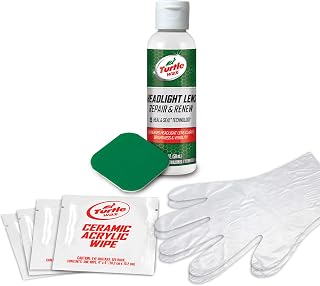
Turtle Wax
Speed Headlight Lens Restorer Kit (53435)
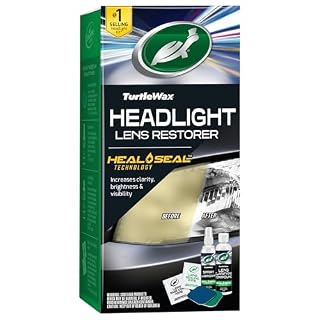
Turtle Wax
Headlight Lens Restorer Kit (T-240KT)
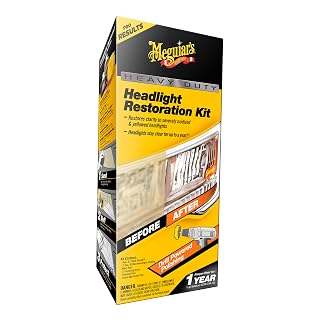
Meguiar's
Heavy Duty Headlight Restoration Kit
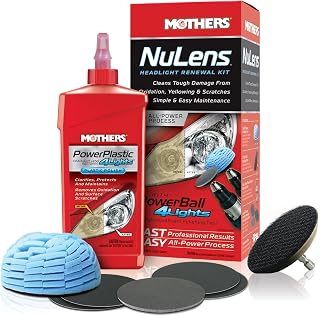
Mothers
NuLens Headlight Renewal Kit (07251)
As an Amazon Associate I earn from qualifying purchases. Full disclosure

Community
0 postsShare how you use this product
Drop a quick comment or post a full review with photos and a star rating.
Sign in to postNew here? Create a free account.