
Sodium Borate (Borax)
- Bases
- CAS 1303-96-4
- IUPAC: Disodium tetraborate decahydrate
Sodium Borate (Borax) (CAS 1303-96-4) appears in 2 of the 2,122 car-care products CarCareTruth tracks (as of August 2026).
Classified Repr. 1B (H360 — may damage fertility or the unborn child) at ingredient level; also H332 (harmful if inhaled) and H319 (eye irritation) at ingredient level. At <1% in the finished product mixture, these ingredient-level classifications do not trigger mixture-level classification per SDS §11 of products containing it. Used at low concentrations as a cleaning and pH-buffering agent.
Sodium borate (borax, CAS 1303-96-4) is an inorganic boron compound used as a cleaning agent, pH buffer, and water softener in cleaning formulations. It occurs naturally as a mineral deposit. At ingredient level it carries H360 (reproductive toxicant Cat 1B), H332 (harmful if inhaled), and H319 (eye irritation) classifications. These hazards are concentration-dependent and typically fall below mixture classification thresholds at <1% use concentrations in cleaning products. Not EPA Safer Choice listed. Not a Prop 65 chemical at this CAS number.
Health & environment profile
- VOC
- no
- Prop 65 listed
- no
- Asthmagen
- no
- EPA Safer Choice
- no
- Aquatic toxicity
- no
- Biodegradable
- no
- Bioaccumulative
- no
- Persistent
- no
- Ozone depleting
- no
- Microplastic
- no
- PFAS
- no
- Env. score
- 3/5
Common questions about Sodium Borate (Borax)
- What is Sodium Borate (Borax) used for in car care?
- Cleaning agent, pH buffer, and water softener in cleaning formulations
- Is Sodium Borate (Borax) a VOC?
- No. Sodium Borate (Borax) is not classified as a volatile organic compound (VOC).
- Is Sodium Borate (Borax) on California's Proposition 65 list?
- No. Sodium Borate (Borax) is not on California's Proposition 65 list.
2 products contain this
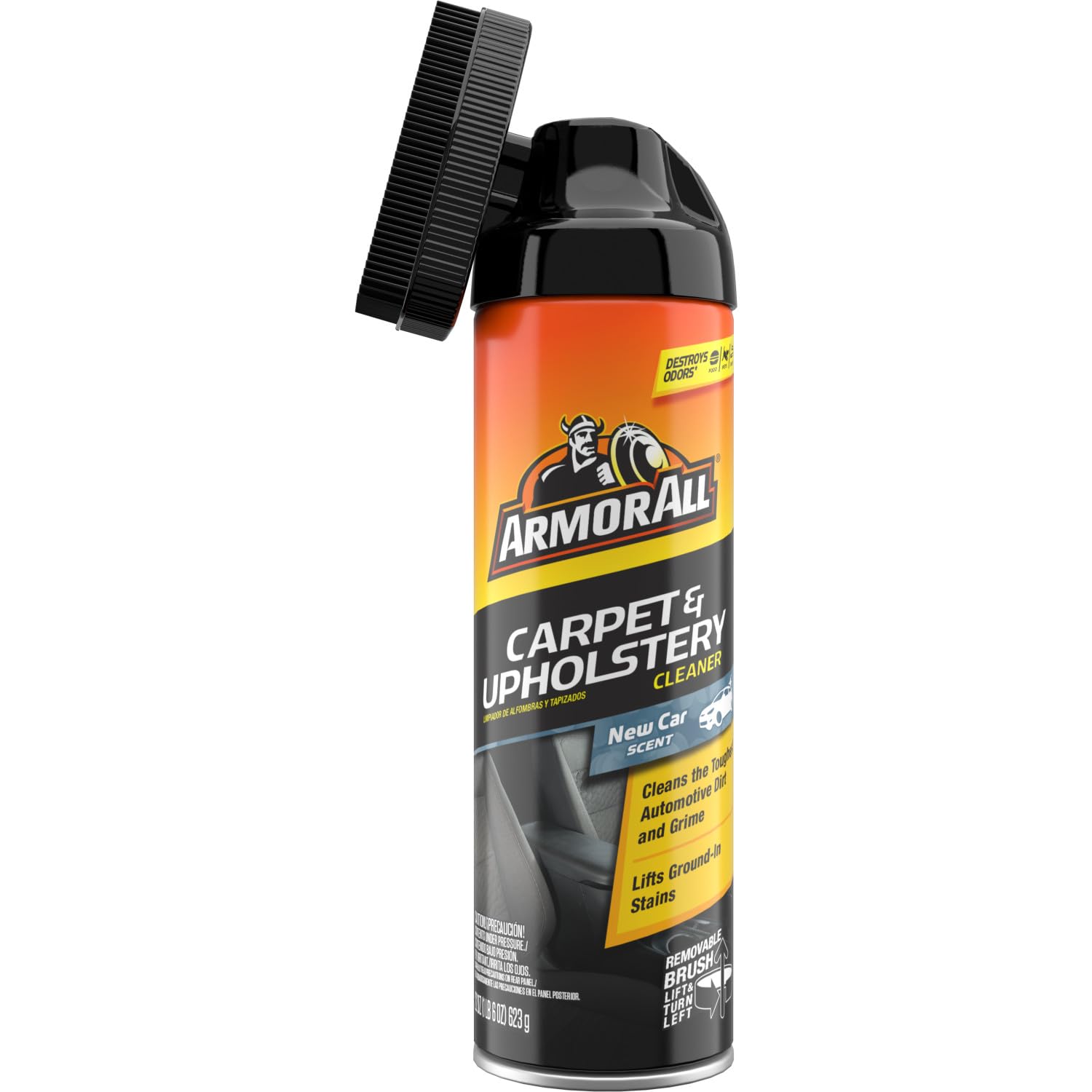 Armor All FRESH FX Carpet and Upholstery CleanerProp 65
carpet-cleaner
 Griot's Garage Leather 3-in-1 SprayProp 65
leather-care
Related
Health and environment notes translate the manufacturer Safety Data Sheet, the GHS classification, and authoritative regulatory listings (California Prop 65, EPA). Not medical advice. They describe the ingredient itself; whether a hazard applies to a finished product depends on its concentration and how it's used.