
Lactic Acid
- Acids
- CAS 50-21-5
- IUPAC: 2-hydroxypropanoic acid
Lactic Acid (CAS 50-21-5) appears in 2 of the 2,122 car-care products CarCareTruth tracks (as of August 2026). It is readily biodegradable.
At concentrations ≥3%, classified as Skin Irrit. 2 (H315) and Eye Dam. 1 (H318). At concentrations 1–<3%, classified as Skin Irrit. 2 (H315) and Eye Irrit. 2 (H319). Not carcinogenic, mutagenic, or a reproductive toxin per OECD studies.
Lactic acid is a naturally occurring alpha-hydroxy acid (AHA) produced by fermentation. In car care, it functions as a mild descaling acid effective against calcium carbonate and silica mineral deposits. At consumer-use concentrations it is significantly milder than hydrofluoric acid derivatives and most mineral acids, though it still carries skin irritation and eye damage classifications at concentrations ≥3%.
Health & environment profile
- VOC
- no
- Prop 65 listed
- no
- Asthmagen
- no
- EPA Safer Choice
- no
- Aquatic toxicity
- no
- Biodegradable
- yes
- Bioaccumulative
- no
- Persistent
- no
- Ozone depleting
- no
- Microplastic
- no
- PFAS
- no
- Env. score
- 4/5
Common questions about Lactic Acid
- What is Lactic Acid used for in car care?
- Mild organic acid used for pH adjustment, descaling, and mineral deposit removal
- Is Lactic Acid a VOC?
- No. Lactic Acid is not classified as a volatile organic compound (VOC).
- Is Lactic Acid on California's Proposition 65 list?
- No. Lactic Acid is not on California's Proposition 65 list.
- Is Lactic Acid biodegradable?
- Yes. Lactic Acid has a confirmed biodegradable profile.
2 products contain this
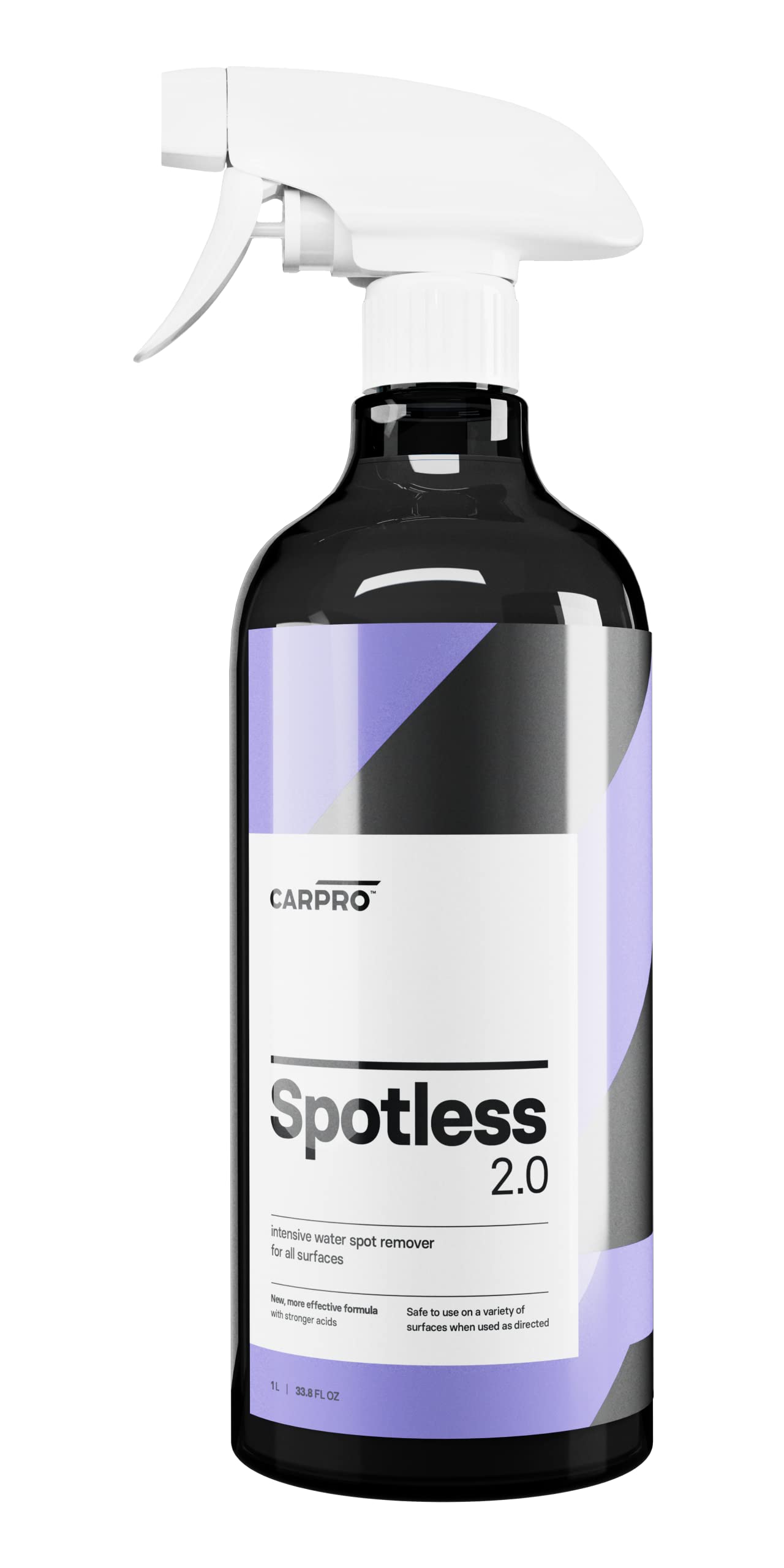 CarPro Spotless 2.0 Water Spot & Mineral Remover (1L)
water-spot-remover
 SONAX Upholstery & Alcantara CleanerProp 65
fabric-upholstery-cleaner
Related
Health and environment notes translate the manufacturer Safety Data Sheet, the GHS classification, and authoritative regulatory listings (California Prop 65, EPA). Not medical advice. They describe the ingredient itself; whether a hazard applies to a finished product depends on its concentration and how it's used.