CarCareTruth Score
Decent.
Opens Amazon in a new tab. No account needed to look.
Saved to your guest loadout. Sign up to also save to your Cabinet (consumables) or Kit (tools you own).
As an Amazon Associate I earn from qualifying purchases. Full disclosure
Prices may varyHealth score is for adult use as intended, per the manufacturer's SDS. It does not model child ingestion, accidental spill cleanup, or off-label use. See the safety panel below for full hazard classification, and /disclaimer for the full editorial scope.
GHS hazard codes are quoted from the manufacturer’s Safety Data Sheet. PPE tiers below translate those codes and the listed ingredient chemistry; they are not CarCareTruth recommendations.
Show details for all categories ▾Hide details ▴
Only when: splash risk
Translated from the manufacturer’s Safety Data Sheet, Section 2
No H318 or H319 in SDS §2 · no chemical eye irritation or serious eye damage classification. Applicator-cap splash during product application is a realistic incidental route.
CarCareTruth publishes the cited sources verbatim and does not advise what action a user should take. Consult the full SDS before use.
Only when: prolonged use
Translated from the manufacturer’s Safety Data Sheet, Section 2
H315 (Skin Corrosion/Irritation Cat 2) is classified in SDS §2 · the SDS calls for 'Wear protective gloves' as a precautionary statement. Brief wipe-on-wipe-off application in normal use does not create a sustained dermal exposure pathway; prolonged or repeated contact is the realistic trigger.
U.S. regulatory standard
29 CFR 1910.138(a)
“appropriate hand protection when employees' hands are exposed to hazards such as those from… chemicals which produce an adverse effect on the skin or eyes…”
OSHA standards apply to workplaces. Cited here as the U.S. reference threshold for the underlying hazard class.
CarCareTruth publishes the cited sources verbatim and does not advise what action a user should take. Consult the full SDS before use.
Only when: in enclosed space
Translated from the manufacturer’s Safety Data Sheet, Section 2
No inhalation H-codes (H331/H332/H335) in SDS §2 · product is applied by wiping, not pump spray, so airborne exposure is low. An enclosed garage still concentrates any vapor more than open-air use, so situational coverage applies rather than omitting the axis.
CarCareTruth publishes the cited sources verbatim and does not advise what action a user should take. Consult the full SDS before use.
No PPE specified in published sources for ventilation. Absence does not imply “not needed” — consult the full Safety Data Sheet.
PPE tiers translate the manufacturer’s SDS and U.S. regulatory standards. Not professional safety advice. How we report safety.
Scope of these PPE tiers. The tiers on this page translate the product's Safety Data Sheet where one is published, plus its ingredient chemistry, into a comparable rating. They describe a formulation, not a situation: a tier is not a safety determination for any specific user, task, quantity, or environment. The manufacturer's label and use instructions govern how the product is handled. Where the product is used at work, the employer's PPE program and hazard assessment under 29 CFR 1910.132 decide what protection is selected, not this page.
No warranties. CarCareTruth makes no warranties, express or implied, and expressly disclaims the implied warranties of merchantability and fitness for a particular purpose.
This product ranks #3 of 9 in Water Spot Remover (Paint).
Last reviewed July 5, 2026
TL;DR Removes mineral water spots from painted surfaces and glass via gentle abrasion, usually in one or two passes; heavily baked-on buildup may need a third. Unlike acid-based glass water spot removers, this alkaline formula doesn't etch clear coat, so it's genuinely safe on both surfaces per the manufacturer. WARNING chemistry on the SDS (H315 skin irritation); gloves are prudent for extended handling.
Apply to a dry panel, work in with a microfiber or DA polisher, dwell about a minute, and wipe off before it dries. The formula lifts mineral deposits through gentle abrasion and leaves a polished finish. Owners broadly confirm reliable clearance of fresh and moderate seasonal spots; baked-on deposits from extended outdoor parking may need two to three passes. Hand or DA both work; the DA covers large areas faster and handles stubborn buildup better.
Right for mineral rings on painted clear coat from sprinkler overspray or hard-water washing. Buyers whose main problem is etched glass or windshield spots may get faster results from a dedicated acid-chemistry glass water spot remover, which dissolves the mineral bond chemically rather than abrading it.
The 2016 SDS (Meguiar's South Africa) classifies at WARNING with H315 (skin irritation), and calls for protective gloves. No inhalation or eye-irritation H-codes appear in SDS §2; wipe application keeps airborne exposure low, though gloves help in an enclosed garage. The current bottle lists a reformulated carrier with Linalool, a skin sensitizer at ingredient level not reflected in the 2016 SDS. A Prop 65 warning appears on the product listing; the only SDS on file is silent on Prop 65 rather than clearing it, so the warning stands as active.
According to the manufacturer, the formula is safe on clear coat and glossy painted surfaces. Independent community reports on ceramic-coated panels are limited · there are no widespread reports of coating stripping, but community-confirmed ceramic-coating safety data comparable to what exists for dedicated coating-safe products is not yet established. Work in a cool, shaded area and don't let the product dry completely on the surface.
Yes. Meguiar's markets it for painted clear coat, glass, chrome, and hard plastics, and the pH 9 alkaline formula lifts hard-water mineral deposits through gentle abrasion rather than acid etching, so there is no clear coat etching risk. It is most thoroughly community-confirmed on painted surfaces; for severe etched glass, a dedicated acid-chemistry glass remover can work faster. The SDS classifies it WARNING for H315 skin irritation, so gloves are prudent for extended handling.
This product is formulated for painted surfaces and is also marketed for use on glass, chrome, hard plastics, and metal by Meguiar's. However, this category page covers its primary use case: removing water spots from painted clear coat. For severe glass-specific mineral etching, a dedicated acid-chemistry glass water spot remover may work faster since this product removes spots via gentle abrasion rather than acid dissolution.
Both work. Hand application with a folded microfiber towel works well for most panel spots · apply an even coat, dwell about one minute, then wipe off with a clean microfiber before it dries. A DA polisher speeds up the process and gives better results on very stubborn or baked-on deposits, according to multiple verified owners.
The product listing data for this product flags a Prop 65 warning. Bottle images (checked 2026-05-12) do not show visible Prop 65 text on either the old or new label. The 2016 SDS §15 is silent. The Prop 65 flag is likely based on trace compounds in the older petroleum distillate carrier or updated California requirements. The flag is maintained as a precaution.
Marketing copy from Meguiar's, via Amazon. Not editorial.
Guide
Detailing Chemicals That Damage Paint, Trim, or Your Lungs
Most paint, trim, and respiratory damage from car-care products traces to a short list of chemistries (fluoride wheel acids, strong solvents, high-pH degreasers, isocyanate sprays, methylene chloride). This guide names the H-codes, the failure modes, and the catalog pages that show which products carry them.
Guide
What Actually Causes Water Spots (and What Dissolves Them)
Water spots are mostly calcium carbonate left on the paint after tap water evaporates. Three tiers: surface mineral (acid dissolves it), shallow etch (polish fixes it), deep etch (a body shop fixes it). Pick the wrong tool for the tier and you cause more damage than the spot did.
Weekly pick
One product, one safety verdict, every week. No spam.





Gyeon
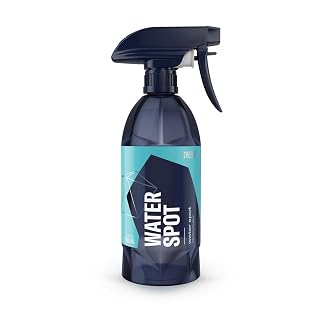
Q²M WaterSpot
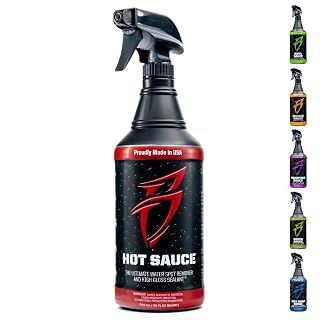
Boat Bling
Hot Sauce Premium Hard Water Spot Remover
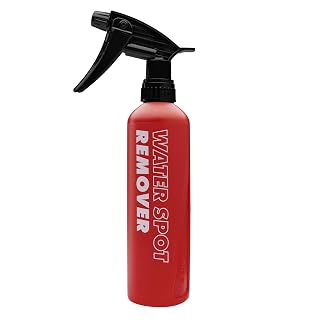
XPEL
Water Spot Remover
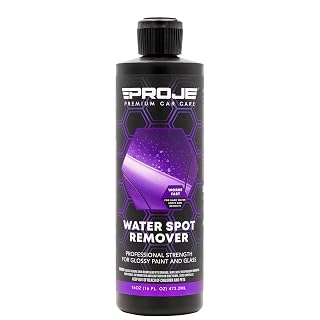
PROJE'
Water Spot Remover
As an Amazon Associate I earn from qualifying purchases. Full disclosure

Community
0 postsShare how you use this product
Drop a quick comment or post a full review with photos and a star rating.
Sign in to postNew here? Create a free account.