CarCareTruth Score
Decent, but wear gloves and ventilate.
Opens Amazon in a new tab. No account needed to look.
Saved to your guest loadout. Sign up to also save to your Cabinet (consumables) or Kit (tools you own).
As an Amazon Associate I earn from qualifying purchases. Full disclosure
Prices may varyThe manufacturer's Safety Data Sheet classifies this product with one or more GHS Category 1 health hazards — the most severe tier. The hazard statements in quotes below are the verbatim GHS language from the SDS, as required by OSHA's Hazard Communication Standard. The line under each statement translates the GHS classification into plain language.
GHS Category 1 eye damage — classified as causing irreversible eye damage on contact.
GHS Category 1 respiratory sensitizer — classified as capable of inducing asthma-like symptoms or sensitization on inhalation. Once sensitized, reactions can recur at much lower exposure levels.
If inhaled or splashed in eyes:
Call Poison Control immediately at 1-800-222-1222 (US, 24/7, free) and have the product container with you. Poison Control's standing guidance is to not induce vomiting after chemical exposure; they will direct first-aid steps based on the specific product.
About this product's hazards. This product's Safety Data Sheet uses signal word DANGER.Read the manufacturer's SDS and follow all safety instructions before use. CarCareTruth ratings translate the manufacturer's safety sheet. They do not replace the SDS or substitute for a hazard assessment specific to your task.
Health score is for adult use as intended, per the manufacturer's SDS. It does not model child ingestion, accidental spill cleanup, or off-label use. See the safety panel below for full hazard classification, and /disclaimer for the full editorial scope.
GHS hazard codes are quoted from the manufacturer’s Safety Data Sheet. PPE tiers below translate those codes and the listed ingredient chemistry; they are not CarCareTruth recommendations.
Show details for all categories ▾Hide details ▴
Translated from the manufacturer’s Safety Data Sheet, Section 2
H318 (serious eye damage Cat 1) from SDS §2; GHS05 corrosive pictogram. Irreversible eye damage possible from direct contact or pump-spray mist. Goggles required.
U.S. regulatory standard
29 CFR 1910.133(a)(1); 1910.151(c)
“The employer shall ensure that each affected employee uses appropriate eye or face protection when exposed to eye or face hazards from… liquid chemicals, acids or caustic liquids…”
ANSI Z87.1 (chemical splash protection — incorporated via §1910.6)
OSHA standards apply to workplaces. Cited here as the U.S. reference threshold for the underlying hazard class.
CarCareTruth publishes the cited sources verbatim and does not advise what action a user should take. Consult the full SDS before use.
Translated from the manufacturer’s Safety Data Sheet, Section 2
H317 (skin sensitizer Cat 1) confirmed at mixture level in SDS §2. Sensitization means repeated exposure can trigger a lasting allergic reaction. Nitrile gloves required when handling.
U.S. regulatory standard
29 CFR 1910.138(a); 1910.132(d)
“appropriate hand protection when employees' hands are exposed to hazards such as those from skin absorption of harmful substances.”
OSHA standards apply to workplaces. Cited here as the U.S. reference threshold for the underlying hazard class.
CarCareTruth publishes the cited sources verbatim and does not advise what action a user should take. Consult the full SDS before use.
Translated from the manufacturer’s Safety Data Sheet, Section 2
H334 (respiratory sensitizer Cat 1) confirmed at mixture level in SDS §2. Pump-spray application of an asthmagen requires respiratory protection. Use outdoors or with adequate ventilation and an appropriate respirator.
U.S. regulatory standard
29 CFR 1910.134(a)(1)–(2)
“In the control of those occupational diseases caused by breathing air contaminated with harmful dusts, fogs, fumes, mists, gases, smokes, sprays, or vapors, the primary objective shall be to prevent atmospheric contamination… When effective engineering controls are not feasible… appropriate respirators shall be used.”
OSHA standards apply to workplaces. Cited here as the U.S. reference threshold for the underlying hazard class.
UN GHS hazard statement
H334“May cause allergy or asthma symptoms or breathing difficulties if inhaled”
UN GHS Rev. 9 (2021)
CarCareTruth publishes the cited sources verbatim and does not advise what action a user should take. Consult the full SDS before use.
No PPE specified in published sources for ventilation. Absence does not imply “not needed” — consult the full Safety Data Sheet.
PPE tiers translate the manufacturer’s SDS and U.S. regulatory standards. Not professional safety advice. How we report safety.
Scope of these PPE tiers. The tiers on this page translate the product's Safety Data Sheet where one is published, plus its ingredient chemistry, into a comparable rating. They describe a formulation, not a situation: a tier is not a safety determination for any specific user, task, quantity, or environment. The manufacturer's label and use instructions govern how the product is handled. Where the product is used at work, the employer's PPE program and hazard assessment under 29 CFR 1910.132 decide what protection is selected, not this page.
No warranties. CarCareTruth makes no warranties, express or implied, and expressly disclaims the implied warranties of merchantability and fitness for a particular purpose.
This product ranks #8 of 8 in Water Spot Remover (Paint).Three above it ↓
Last reviewed July 31, 2026
TL;DR Removes mineral deposits from painted surfaces and chrome, but uses serious acid chemistry. DANGER signal word: serious eye damage and respiratory sensitizer on the SDS; wear goggles, nitrile gloves, and a respirator. For **painted surfaces only** -- not a glass water spot remover.
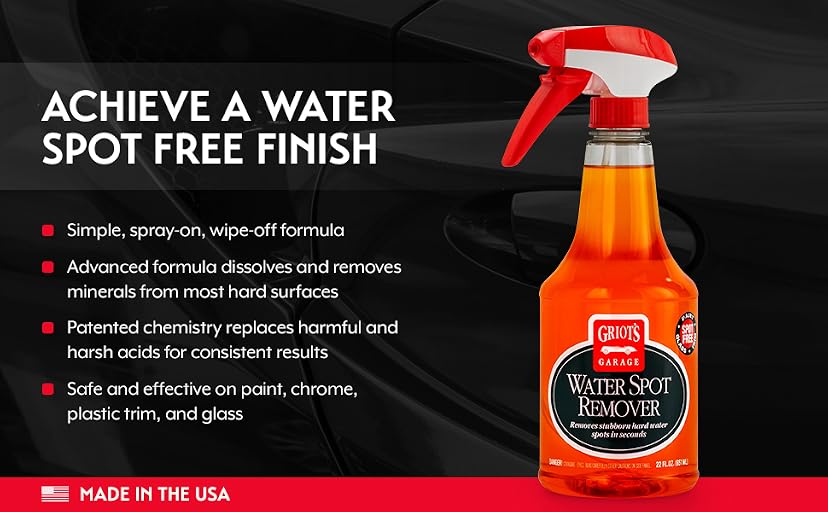
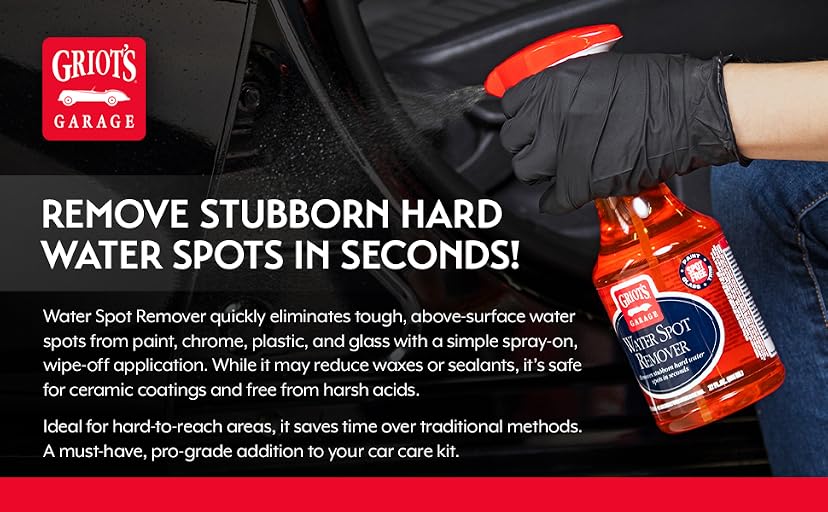
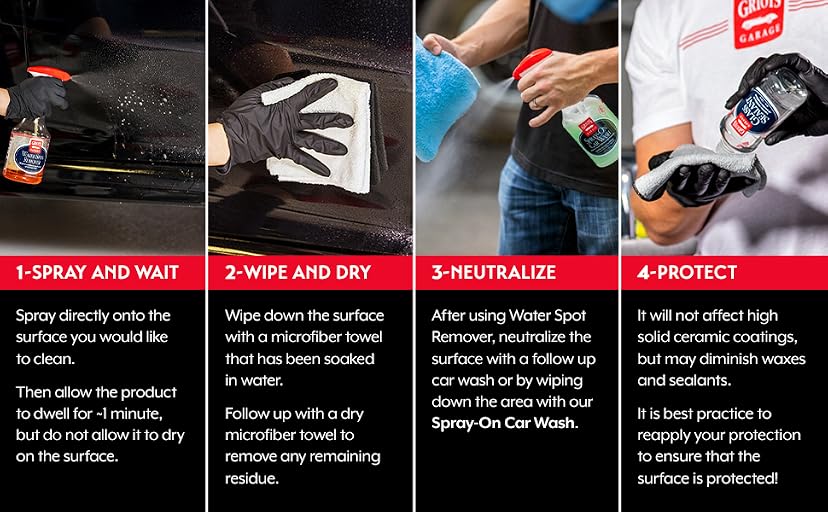
Spray on the panel, keep it wet for about a minute, wipe with a damp microfiber, and rinse. Owner reviews confirm it dissolves mineral deposits on painted panels and chrome when applied correctly; success often requires reapplying mid-dwell to keep the panel wet. Effective on uncoated paint and exterior trim. Documented failure on ceramic-coated surfaces where the acid cannot reach deposits beneath the coating.
The right buy for vehicles with mineral deposits on painted panels, chrome, or uncoated trim from sprinkler overspray or hard-water washing. Skip it if your paint has fresh wax or sealant -- the formula may strip it. Skip it on ceramic-coated surfaces. Buyers with primarily glass water spots should use a glass-specific remover instead.
SDS classifies DANGER: H318 (serious eye damage Cat 1), H334 (respiratory sensitizer Cat 1), H317 (skin sensitizer Cat 1). H334 means repeated inhalation can trigger a lasting asthmatic response; wear a fitted respirator. Goggles and nitrile gloves required per SDS chemistry. Rinse panel gaps; the acid reacts with concrete. Rinse-off product; SDS Section 12 does not classify the mixture as aquatically toxic.
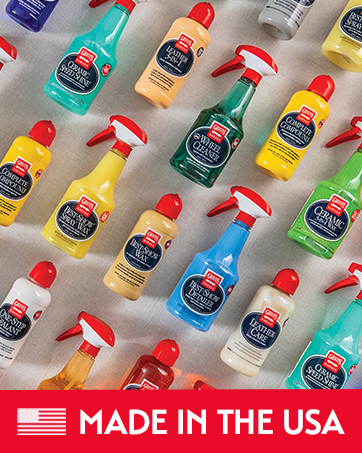
Griot's states the formula 'may diminish waxes and sealants but will not affect chemical resistant ceramic coatings.' That claim is narrow: the product leaves ceramic coatings intact but may not penetrate through the coating to reach mineral deposits beneath. Community reports include at least one documented failure on a ceramic-coated surface.
The disclosed active is urea monohydrochloride (CAS 506-89-8), an HCl-urea complex salt. The SDS lists three additional proprietary ingredients whose identities are not disclosed. The product carries DANGER classification with serious eye damage (H318) and respiratory sensitizer (H334) codes at the mixture level. pH is under 2.
Griot's markets this as safe for glass, paint, chrome, and plastic trim. This product page covers the paint water spot remover category; buyers with primarily glass spots should evaluate glass-specific water spot removers instead.
Both Amazon variants show 'Currently unavailable.' The product ships as DOT Class 8 corrosive liquid and may have temporary air-shipping restrictions. Check the manufacturer's site at griotsgarage.com for current availability.
The SDS (rev. August 12, 2022) is hosted on CarCareTruth's Supabase storage and was sourced from griotsgarage.com. It is also directly available at https://www.griotsgarage.com/content/safetydatasheet/Water%20Spot%20Remover%20Spray%20SDS%2008-12-2022.pdf
Marketing copy from Griot's Garage, via Amazon. Not editorial.
Weekly pick
One product, one safety verdict, every week. No spam.



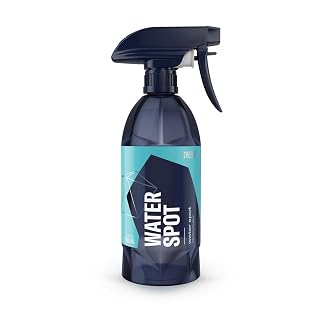
Gyeon
Q²M WaterSpot
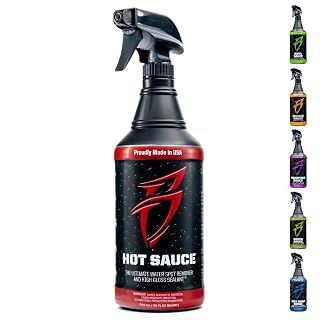
Boat Bling
Hot Sauce Premium Hard Water Spot Remover
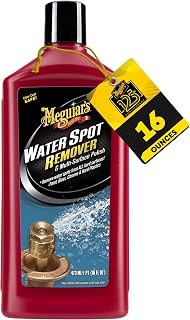
Meguiar's
Water Spot Remover A3714
XPEL
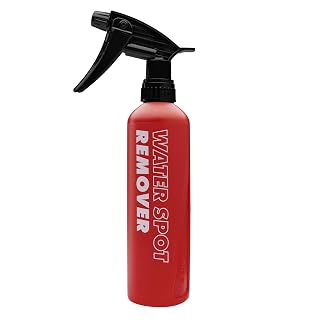
Water Spot Remover
As an Amazon Associate I earn from qualifying purchases. Full disclosure

Community
0 postsShare how you use this product
Drop a quick comment or post a full review with photos and a star rating.
Sign in to postNew here? Create a free account.