CarCareTruth Score
Decent.
Opens Amazon in a new tab. No account needed to look.
Saved to your guest loadout. Sign up to also save to your Cabinet (consumables) or Kit (tools you own).
As an Amazon Associate I earn from qualifying purchases. Full disclosure
Prices may varyHealth score is for adult use as intended. No manufacturer SDS is on file, so it is translated from the ingredient chemistry. It does not model child ingestion, accidental spill cleanup, or off-label use. See the safety panel below for full hazard classification, and /disclaimer for the full editorial scope.
No Safety Data Sheet on file.
CarCareTruth has not received a Safety Data Sheet from the manufacturer for this product, so no GHS hazard classification can be cited. The tiers below are cautious defaults — “Beyond SDS” — translated from the product’s ingredient chemistry and how comparable formulations classify, not from a manufacturer hazard classification. Request an SDS from the manufacturer before use.
Show details for all categories ▾Hide details ▴
Only when: when spraying
Beyond SDS: translated from the ingredient chemistry
No published SDS, so chemistry cannot be verified. The dedicated-clay-lube format involves pump-spray application at panel height, which can produce incidental mist contact with the eye area at close range. Tier situational captures that realistic exposure pathway; the classification will be revised when an SDS is published.
No Safety Data Sheet is on file for this product. The tier above is a cautious default translated from the ingredient chemistry, not a cited manufacturer classification. Request an SDS from the manufacturer before use.
Only when: prolonged use
Beyond SDS: translated from the ingredient chemistry
No published SDS, so chemistry cannot be verified. Brief incidental hand contact with residual lube on the panel surface is the typical exposure during a clay session. Tier situational reflects that contact pattern without inferring an H315/H317 classification the SDS does not exist to confirm.
No Safety Data Sheet is on file for this product. The tier above is a cautious default translated from the ingredient chemistry, not a cited manufacturer classification. Request an SDS from the manufacturer before use.
No PPE specified in published sources for lungs. Absence does not imply “not needed” — no Safety Data Sheet is on file, so request one from the manufacturer before use.
No PPE specified in published sources for ventilation. Absence does not imply “not needed” — no Safety Data Sheet is on file, so request one from the manufacturer before use.
PPE tiers here are cautious defaults translated from the product’s ingredient chemistry — no manufacturer SDS is on file to cite. Not professional safety advice. How we report safety.
Scope of these PPE tiers. The tiers on this page translate the product's Safety Data Sheet where one is published, plus its ingredient chemistry, into a comparable rating. They describe a formulation, not a situation: a tier is not a safety determination for any specific user, task, quantity, or environment. The manufacturer's label and use instructions govern how the product is handled. Where the product is used at work, the employer's PPE program and hazard assessment under 29 CFR 1910.132 decide what protection is selected, not this page.
No warranties. CarCareTruth makes no warranties, express or implied, and expressly disclaims the implied warranties of merchantability and fitness for a particular purpose.
This product ranks #7 of 9 in Clay Lubricant.Three above it ↓
Last reviewed July 5, 2026
TL;DR A dedicated clay lubricant with viscosity to spare; community evidence rates it among the top picks for glide and residue-free wipe-off. No published SDS, so chemistry cannot be verified; health is held at 5.0 until it is.
A dedicated clay-bar lubricant (formerly Immolube) in 1 Liter and 500 ml ready-to-use bottles. CarPro positions it explicitly: no gloss agents, no protective polymers, built for clay sessions and wet sanding rather than as a multi-use quick detailer. Community evidence across Detailing World, AutoGeek, and r/AutoDetailing describes the formula as thicker than a diluted rinseless wash; glide stays consistent longer between sprays, and CQUARTZ-installer YouTube tutorials use it as the clay step before coating.
Right pick for enthusiasts and pro detailers who clay regularly, especially anyone in the CarPro CQUARTZ ecosystem where the no-polymer formulation aligns with the prep workflow. Skip it if a 1:16 dilution of a rinseless wash already covers your clay sessions, or if a published SDS is a hard requirement before purchase.
No published SDS, so chemistry cannot be verified; health is held at 5.0 until it is. Other CarPro products (IronX, Eraser, Reload 2.0) have manufacturer-direct SDSs on file, so ClayLube's absence is unusual for the brand. PPE tiers are situational defaults based on the pump-spray format. The neutral exposure pathway (wiped onto the clay rather than rinsed or left on) bounds environmental impact at the 7.0 base.
Yes. The Amazon feature bullet on both the 500 ml and 1 Liter listings states 'Formerly known as Immolube.' The rename from Immolube to ClayLube appears to be a brand-strategy decision rather than a reformulation. Community discussion across Detailing World and r/AutoDetailing treats the two names as interchangeable, and the SKU continuity in the CarPro catalog supports that. No reformulation cutoff has been documented in community sources.
CarPro does not publish an SDS for ClayLube in any channel the page author could locate: not the in-repo CarPro SDS archive maintained on this project (98 PDFs covering roughly 60 other CarPro products), not the annual CARPRO_SDS_2026.zip bundle from the Canadian distributor Carzilla, not the carpro.global manufacturer site, and not the carpro-us.com US distributor site. A direct request to Carzilla for the ClayLube SDS as a separate document is the pending follow-up. Until an SDS is published the safety panel above shows conservative situational PPE tiers for the dedicated-clay-lube format itself, not chemistry-derived tiers, and the health score is held at 5.0 under the no-SDS policy. The score will be revised when the SDS is available.
CarPro markets ClayLube as having 'no gloss agents or protective polymers,' explicitly positioned as safe to use before CQUARTZ application. Community evidence from CQUARTZ-installer YouTube channels (Pan The Organizer, ESOTERIC, and others) corroborates clean coating bonding after ClayLube-based clay sessions, with no reports of contamination or coating fisheye failure attributable to ClayLube residue. The typical pro-detailer workflow also follows the clay session with a panel wipe such as CarPro Eraser before the coating step; that step exists to remove polish oils, not ClayLube residue.
The CarPro product copy claims compatibility across painted surfaces, glass, plastic, and rubber, including paint protection film and vinyl. No named third-party PPF or vinyl manufacturer endorsement and no 4+ week wrapped-vehicle community test has been located, so the surface-safety score here is held at the brand-claim ceiling (Score 6) rather than the independently-validated tier. No damage reports on PPF or vinyl have surfaced in mainstream community sources, but absence of complaint is not the same as named third-party confirmation. Use the brand claim as a hypothesis and test on an inconspicuous area first on wrapped vehicles.
A diluted rinseless wash (Optimum No Rinse at roughly 1:16, for example) does work as a clay lubricant and is the well-documented home-detailer alternative; community evidence supports both paths. Where ClayLube earns its enthusiast-tier reputation is the viscosity profile: the dedicated formula is thicker than a rinseless-wash dilution, which means clay glide is maintained longer between sprays and the product covers more area per pump. For a once-or-twice-a-year clay session on a single vehicle, the dedicated product is a convenience choice. For someone already using a rinseless wash regularly, the diluted-rinseless route reaches similar functional results at lower per-session cost. The two are not equivalent in coverage per ounce, but the safety outcome on paint is comparable when either is used with correct technique.
Weekly pick
One product, one safety verdict, every week. No spam.
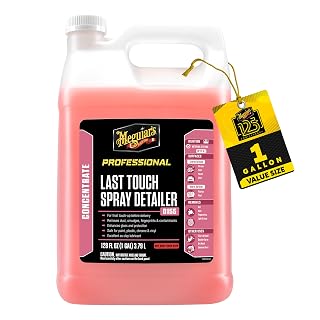
Meguiar's
Last Touch Spray Detailer (D155)
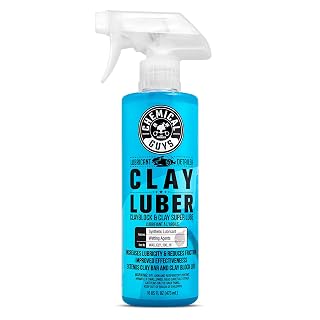
Chemical Guys
Clay Luber Synthetic Lubricant
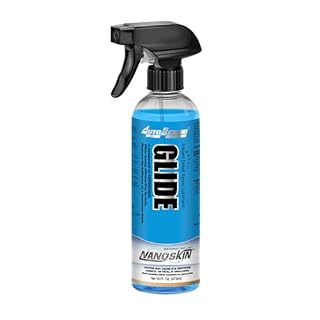
Nanoskin
GLIDE Silicone Free Spray Detailer
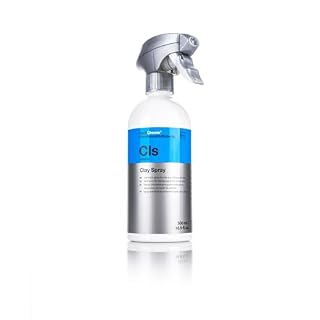
Koch-Chemie
Clay Spray
As an Amazon Associate I earn from qualifying purchases. Full disclosure

Community
0 postsShare how you use this product
Drop a quick comment or post a full review with photos and a star rating.
Sign in to postNew here? Create a free account.