
Alkyl Dimethyl Benzyl Ammonium Chloride (ADBAC / Benzalkonium Chloride)
- Biocides
- CAS 68424-85-1
- IUPAC: Benzyl-(C12-C16)-alkyl-dimethyl-ammonium chloride
Alkyl Dimethyl Benzyl Ammonium Chloride (ADBAC / Benzalkonium Chloride) (CAS 68424-85-1) appears in 1 of the 2,122 car-care products CarCareTruth tracks (as of August 2026). It is classified as a respiratory sensitizer (asthmagen).
At concentrate strength this quaternary ammonium compound is classified H314 (causes severe skin burns and eye damage); at use dilution the classification drops to skin/eye irritation (H315/H319). Quaternary ammonium compounds including ADBAC are documented occupational asthmagens in the peer-reviewed literature for cleaning workers, which is why the asthmagen flag is set; the risk is dose- and frequency-dependent. It is not on California's Prop 65 list.
Alkyl dimethyl benzyl ammonium chloride (ADBAC) — commonly called benzalkonium chloride or "quat ammonium" — is the most widely used quaternary ammonium disinfectant active in EPA-registered cleaners. The molecule has a positively charged nitrogen with a benzyl group and a long alkyl tail (C12-C16 mix); it disrupts bacterial cell membranes by inserting the alkyl tail into the lipid bilayer.
Health classifications:
- H314 (skin corrosion) at concentrate strengths (>5%); H315 (skin irritation) at use dilution (0.1-0.5%)
- H318 (serious eye damage) at concentrate; H319 or H320 (eye irritation) at use dilution
- Asthmagen flag: yes — quaternary ammonium compounds including ADBAC are documented occupational asthmagens for cleaning workers in healthcare and food-service settings (peer-reviewed evidence base spanning 2000s-2020s). The asthmagen risk is dose- and frequency-dependent; consumer use at RTU dilution with brief exposure is a different exposure pattern from chronic occupational use, but the molecule is an asthmagen by class.
- Not on Prop 65 list
Environmental:
- Aquatic toxicity at concentrate strength (H400/H410) — significant fish/Daphnia toxicity
- Biodegradable (OECD 301B confirmed) — quats degrade in wastewater treatment plants
- Not bioaccumulative; not PFAS
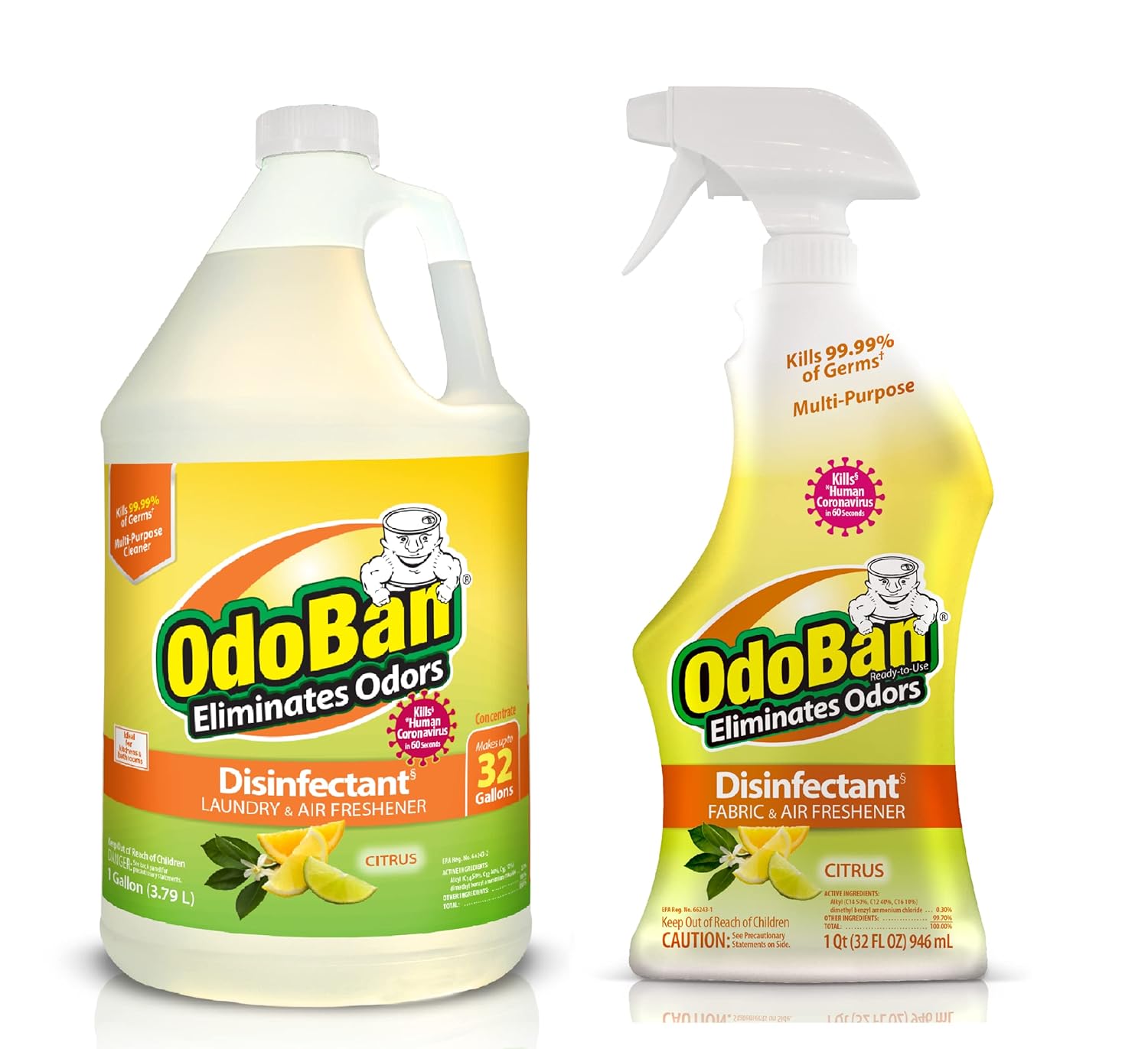
In OdoBan-style RTU products, ADBAC is at 0.3% — the working antimicrobial concentration. The 1-gallon concentrate strength is ~2% ADBAC, where corrosion and serious eye damage classifications apply.
Health & environment profile
- VOC
- no
- Prop 65 listed
- no
- Asthmagen
- yes
- EPA Safer Choice
- no
- Aquatic toxicity
- yes
- Biodegradable
- yes
- Bioaccumulative
- no
- Persistent
- no
- Ozone depleting
- no
- Microplastic
- no
- PFAS
- no
- Env. score
- 3/5
Common questions about Alkyl Dimethyl Benzyl Ammonium Chloride (ADBAC / Benzalkonium Chloride)
- What is Alkyl Dimethyl Benzyl Ammonium Chloride (ADBAC / Benzalkonium Chloride) used for in car care?
- Quaternary ammonium antimicrobial active — EPA-registered disinfectant ingredient that kills bacteria by disrupting microbial cell membranes; used in cleaners, disinfectants, and odor eliminators to reduce bacterial counts and the biological odors they produce
- Is Alkyl Dimethyl Benzyl Ammonium Chloride (ADBAC / Benzalkonium Chloride) a VOC?
- No. Alkyl Dimethyl Benzyl Ammonium Chloride (ADBAC / Benzalkonium Chloride) is not classified as a volatile organic compound (VOC).
- Is Alkyl Dimethyl Benzyl Ammonium Chloride (ADBAC / Benzalkonium Chloride) on California's Proposition 65 list?
- No. Alkyl Dimethyl Benzyl Ammonium Chloride (ADBAC / Benzalkonium Chloride) is not on California's Proposition 65 list.
- Is Alkyl Dimethyl Benzyl Ammonium Chloride (ADBAC / Benzalkonium Chloride) a respiratory sensitizer?
- Yes. Alkyl Dimethyl Benzyl Ammonium Chloride (ADBAC / Benzalkonium Chloride) is classified as a respiratory sensitizer (asthmagen).
- Is Alkyl Dimethyl Benzyl Ammonium Chloride (ADBAC / Benzalkonium Chloride) biodegradable?
- Yes. Alkyl Dimethyl Benzyl Ammonium Chloride (ADBAC / Benzalkonium Chloride) has a confirmed biodegradable profile.
1 product contain this
Related
Health and environment notes translate the manufacturer Safety Data Sheet, the GHS classification, and authoritative regulatory listings (California Prop 65, EPA). Not medical advice. They describe the ingredient itself; whether a hazard applies to a finished product depends on its concentration and how it's used.