CarCareTruth Score
Decent.
Saved to your guest loadout. Sign up to also save to your Cabinet (consumables) or Kit (tools you own).
As an Amazon Associate I earn from qualifying purchases. Full disclosure
The manufacturer's Safety Data Sheet classifies this product with one or more GHS Category 1 health hazards — the most severe tier. The hazard statements in quotes below are the verbatim GHS language from the SDS, as required by OSHA's Hazard Communication Standard. The line under each statement translates the GHS classification into plain language.
GHS Category 1 aspiration toxicity — thin, oily liquids can slip into the lungs if swallowed, causing chemical pneumonia.
If swallowed:
The aspiration hazard (H304) is about the liquid being swallowed and reaching the airway, not about breathing fumes during normal use.
Call Poison Control immediately at 1-800-222-1222 (US, 24/7, free) and have the product container with you. Poison Control's standing guidance is to not induce vomiting after chemical exposure; they will direct first-aid steps based on the specific product.
About this product's hazards. This product's Safety Data Sheet uses signal word DANGER.Read the manufacturer's SDS and follow all safety instructions before use. CarCareTruth ratings translate the manufacturer's safety sheet. They do not replace the SDS or substitute for a hazard assessment specific to your task.
Health score is for adult use as intended, per the manufacturer's SDS. It does not model child ingestion, accidental spill cleanup, or off-label use. See the safety panel below for full hazard classification, and /disclaimer for the full editorial scope.
GHS hazard codes are quoted from the manufacturer’s Safety Data Sheet. PPE tiers below translate those codes and the listed ingredient chemistry; they are not CarCareTruth recommendations.
Show details for all categories ▾Hide details ▴
Only when: when spraying · misting overhead
Beyond SDS: translated from the ingredient chemistry
No H318 or H319 at SDS §2 mixture level. Aerosol mist near face during overhead application is the specific trigger · escalation does not extend to required because the chemistry has no eye-irritation classification.
CarCareTruth publishes the cited sources verbatim and does not advise what action a user should take. Consult the full SDS before use.
Only when: prolonged use
Beyond SDS: translated from the ingredient chemistry
No H314, H315, or H317 at SDS §2 mixture level. SDS §11 notes prolonged or repeated contact can produce mild defatting and dermatitis from the petroleum carrier. Brief incidental contact during home use is low-risk; the situational trigger is repeated application or extended manual spreading.
CarCareTruth publishes the cited sources verbatim and does not advise what action a user should take. Consult the full SDS before use.
Only when: when spraying · in enclosed space
Beyond SDS: translated from the ingredient chemistry
No H335, H331, H334, or H330 at SDS §2 mixture level. Per the multi-purpose-lubricant rubric override, every aerosol product carries a minimum lungs tier of situational because the form factor itself creates a mist inhalation pathway that does not exist for a drip lubricant. SDS §8.3 calls for adequate ventilation; respiratory protection is 'None required if ventilation is adequate.' The triggers are the spray delivery method and enclosed-space use.
U.S. regulatory standard
29 CFR 1910.1200(f); 1910.132(d)
“The employer shall assess the workplace to determine if hazards are present, or are likely to be present, which necessitate the use of personal protective equipment.”
OSHA standards apply to workplaces. Cited here as the U.S. reference threshold for the underlying hazard class.
CarCareTruth publishes the cited sources verbatim and does not advise what action a user should take. Consult the full SDS before use.
No PPE specified in published sources for ventilation. Absence does not imply “not needed” — consult the full Safety Data Sheet.
PPE tiers translate the manufacturer’s SDS and U.S. regulatory standards. Not professional safety advice. How we report safety.
California Prop 65 warning
This product's Amazon listing carries a California Prop 65 warning. The manufacturer's Safety Data Sheet (§15) does not list a Prop 65 substance for this product — we show the warning for transparency and flag the discrepancy rather than silently picking a side.
Scope of these PPE tiers. The tiers on this page translate the product's Safety Data Sheet where one is published, plus its ingredient chemistry, into a comparable rating. They describe a formulation, not a situation: a tier is not a safety determination for any specific user, task, quantity, or environment. The manufacturer's label and use instructions govern how the product is handled. Where the product is used at work, the employer's PPE program and hazard assessment under 29 CFR 1910.132 decide what protection is selected, not this page.
No warranties. CarCareTruth makes no warranties, express or implied, and expressly disclaims the implied warranties of merchantability and fitness for a particular purpose.
Last reviewed June 12, 2026
TL;DR Good at displacing moisture and freeing stuck mechanisms, but community follow-up documents reapplication within days to a couple of weeks on hinges and chains · a short-duration penetrant more than a durable lubricant. DANGER signal word from H304 plus flammable-aerosol physical hazards; no Prop 65, but 412 g/L VOC.
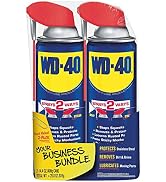
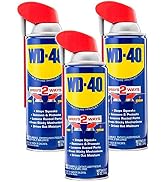
The blue-and-yellow aerosol in nearly every household garage. Aim the Smart Straw at a squeaky hinge or wet tool · fan-spray for coverage, stream for precision. It displaces water, loosens lightly stuck mechanisms, and leaves a thin film that briefly slows oxidation. Where label and community part ways is duration: GarageJournal, BikeForums, and home-repair threads consistently show hinges go quiet for days or weeks, not months. On bike chains, grit attaches faster than the residue lubricates.
A solid reach for one-off household and light-mechanical tasks. Skip it for long-term lubrication on high-cycle mechanisms · silicone spray, white lithium grease, or a chain lube hold up for months where WD-40 holds for weeks. Frequent users in enclosed shops should consider a low-VOC pump-spray.
PPE tiers are translated from the SDS codes · not generic Section 8 boilerplate. DANGER comes from H222 (flammable aerosol), H229 (gas under pressure), and H304 (aspiration if swallowed). The first two are physical hazards · ignition-source avoidance, not PPE. H304 is the swallowing route: do not induce vomiting if ingested; seek medical attention. SDS §11 classifies the product as not toxic by acute oral, dermal, or inhalation criteria; no H335, H315, H318, or H319 at §2. No Prop 65; 412 g/L VOC; not CARB-compliant; no §2 aquatic toxicity codes.
Yes and no. The label and the brand call it a multi-use lubricant, but community consensus across home-repair and bike forums for the better part of a decade has been that WD-40 Original is much better as a water displacer and short-term penetrant than as a durable lubricant. The light aliphatic-hydrocarbon carrier evaporates quickly; the residual petroleum film keeps a hinge quiet for days to a couple of weeks under typical cycling, not months. For garage door tracks, bike chains, and high-cycle mechanisms, a dedicated lubricant (silicone spray, white lithium grease, or a wet/dry chain lube) holds up longer.
The DANGER signal word on the label is driven by three GHS hazard classifications in SDS Section 2: H222 (extremely flammable aerosol), H229 (gas under pressure, may explode if heated), and H304 (aspiration hazard · may be fatal if swallowed and enters airways). The first two are physical hazards · they address fire and pressure risk, which is why the can warns against open flames and storage above 120°F. H304 is specifically about the swallowing route: light hydrocarbon liquid entering the lungs during vomiting can cause chemical pneumonitis. Per SDS Section 11, the product is not classified as toxic by acute oral, dermal, or inhalation criteria. Do not induce vomiting if swallowed · seek medical attention.
It depends on which can you actually receive. The 11 oz Smart Straw formula whose Safety Data Sheet we score against (412 g/L VOC, not CARB-compliant) carries no Prop 65 warning · SDS Section 15 states verbatim: 'This product does not contain chemicals regulated under California Proposition 65,' and the SDS title page reads 'NOT FOR SALE IN CALIFORNIA.' That is the formula sold to most of the country. The product listing for this ASIN, however, flags `proposition_65_warning: true` at the parent-listing level because the listing also covers California shipping addresses, where WD-40 substitutes a separate California-compliant low-VOC reformulation that carries a Prop 65 sticker on the can. So: California buyers may see a Prop 65 warning on the back of their actual can (different formula, different SDS), while buyers everywhere else receive the no-Prop-65 formula our health and environment scores are built on. Check the back of your specific can if it matters for your use case.
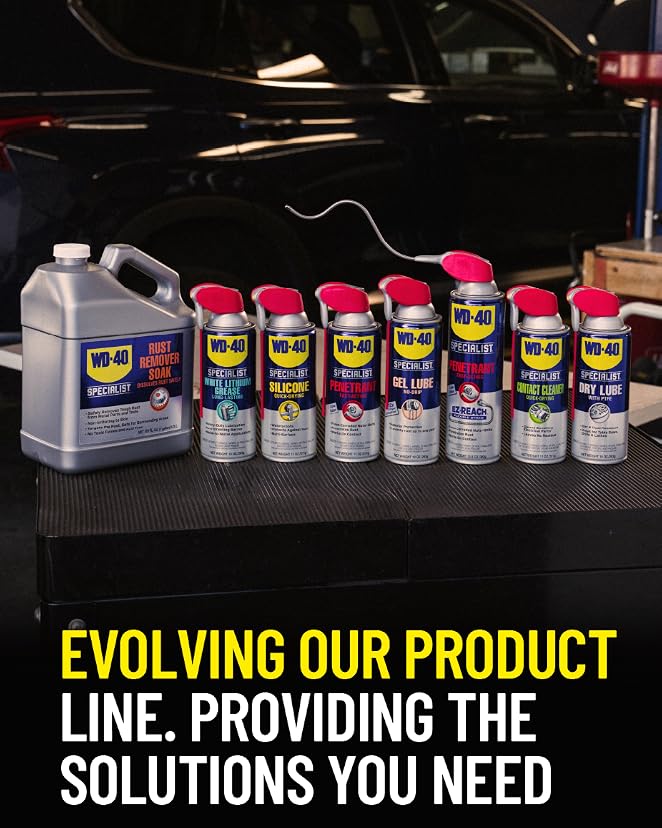
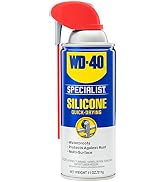
No. The Original formula is petroleum-only chemistry: aliphatic hydrocarbons, a petroleum base oil fraction, and carbon dioxide propellant. SDS Section 3 lists no fluorinated compounds and no PTFE particles. WD-40 keeps its PTFE and silicone variants in the Specialist line (WD-40 Specialist PTFE Lubricant, WD-40 Specialist Silicone Lubricant) rather than reformulating the Original.
The SDS does not document specific material incompatibilities, and the brand's literature claims broad surface compatibility. Community experience over decades is generally consistent with this for typical plastics (ABS, polypropylene, polyethylene) and most automotive rubber. There are scattered reports of prolonged contact swelling certain natural-rubber gaskets; if you are spraying onto a sealed assembly with rubber o-rings, check the manufacturer's compatibility guidance for that specific seal rather than assuming. For weatherstripping and EPDM, a dedicated silicone lubricant is a better choice · it is specifically formulated for rubber-safe use.
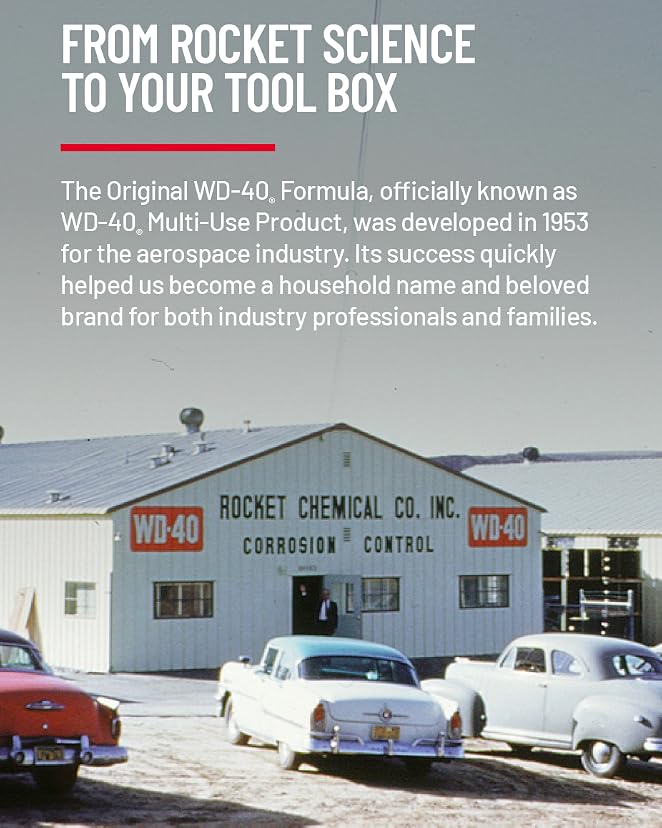
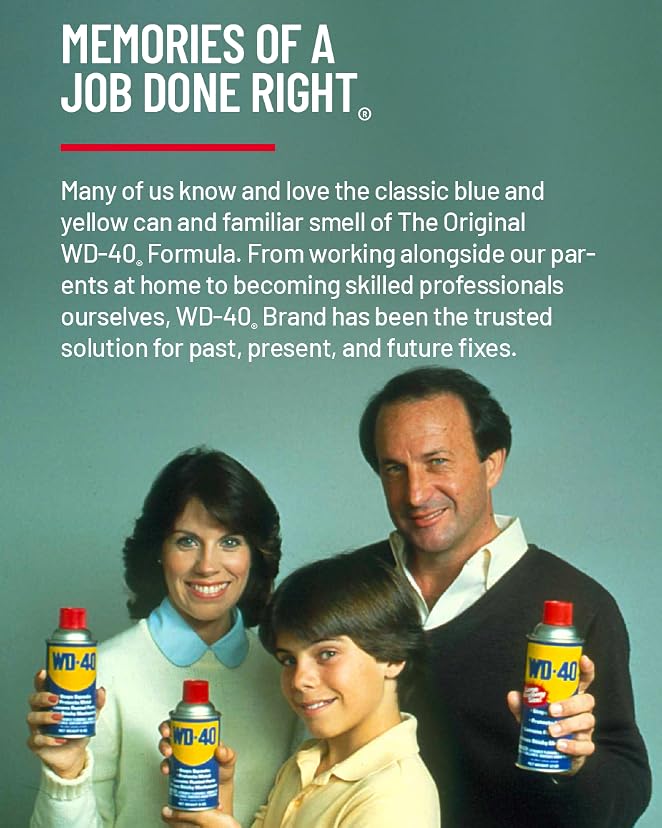
Marketing copy from WD-40, via Amazon. Not editorial.
Weekly pick
One product, one safety verdict, every week. No spam.



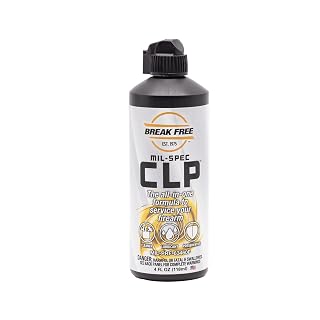
Break-Free
CLP Cleaner Lubricant Preservative
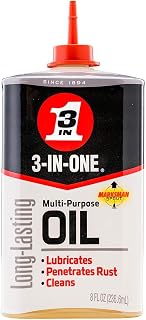
3-IN-ONE
Multi-Purpose Oil (8 oz drip bottle with Marksman Twist Spout)
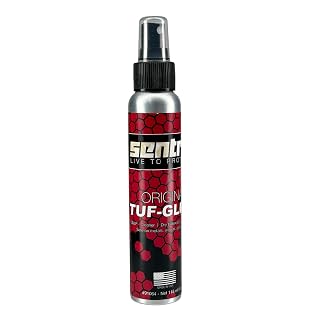
Sentry Solutions
TUF-GLIDE Dry Lube Pump Spray
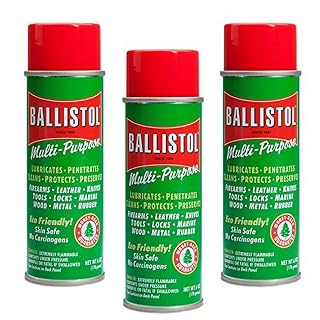
Ballistol
Multi-Purpose Oil Aerosol
As an Amazon Associate I earn from qualifying purchases. Full disclosure

Community
0 postsShare how you use this product
Drop a quick comment or post a full review with photos and a star rating.
Sign in to postNew here? Create a free account.