CarCareTruth Score
Decent.
Saved to your guest loadout. Sign up to also save to your Cabinet (consumables) or Kit (tools you own).
As an Amazon Associate I earn from qualifying purchases. Full disclosure
The manufacturer's Safety Data Sheet classifies this product with one or more GHS Category 1 health hazards — the most severe tier. The hazard statements in quotes below are the verbatim GHS language from the SDS, as required by OSHA's Hazard Communication Standard. The line under each statement translates the GHS classification into plain language.
GHS Category 1 aspiration toxicity — thin, oily liquids can slip into the lungs if swallowed, causing chemical pneumonia.
If swallowed:
The aspiration hazard (H304) is about the liquid being swallowed and reaching the airway, not about breathing fumes during normal use.
Call Poison Control immediately at 1-800-222-1222 (US, 24/7, free) and have the product container with you. Poison Control's standing guidance is to not induce vomiting after chemical exposure; they will direct first-aid steps based on the specific product.
About this product's hazards. This product's Safety Data Sheet uses signal word DANGER.Read the manufacturer's SDS and follow all safety instructions before use. CarCareTruth ratings translate the manufacturer's safety sheet. They do not replace the SDS or substitute for a hazard assessment specific to your task.
Health score is for adult use as intended, per the manufacturer's SDS. It does not model child ingestion, accidental spill cleanup, or off-label use. See the safety panel below for full hazard classification, and /disclaimer for the full editorial scope.
GHS hazard codes are quoted from the manufacturer’s Safety Data Sheet. PPE tiers below translate those codes and the listed ingredient chemistry; they are not CarCareTruth recommendations.
Show details for all categories ▾Hide details ▴
Only when: when spraying · misting overhead
Beyond SDS: translated from the ingredient chemistry
No H318 or H319 at SDS §2 mixture level. SDS §8 calls for safety glasses or goggles using the softener 'are recommended' rather than imperative · the aerosol mist near face during overhead application is the specific trigger. No eye-irritation classification means escalation does not extend to required.
CarCareTruth publishes the cited sources verbatim and does not advise what action a user should take. Consult the full SDS before use.
Only when: prolonged use
Beyond SDS: translated from the ingredient chemistry
No H314, H315, or H317 at SDS §2 mixture level. SDS §8 calls for chemically resistant gloves as a category baseline, but the SDS §11 toxicology row shows no skin-irritation or sensitization classification. Brief incidental contact during home use is low-risk; the situational trigger is prolonged or repeated handling where the petroleum carrier can defat skin.
CarCareTruth publishes the cited sources verbatim and does not advise what action a user should take. Consult the full SDS before use.
Only when: when spraying · in enclosed space
Beyond SDS: translated from the ingredient chemistry
No H335, H331, H334, or H330 at SDS §2 mixture level. Per the multi-purpose-lubricant rubric override, every aerosol product carries a minimum lungs tier of situational because the form factor itself creates a mist inhalation pathway that does not exist for a drip lubricant. SDS §8 calls for respiratory protection only 'in case of insufficient ventilation' · engineering-control-gated boilerplate, not an imperative respiratory PPE escalation.
U.S. regulatory standard
29 CFR 1910.1200(f); 1910.132(d)
“The employer shall assess the workplace to determine if hazards are present, or are likely to be present, which necessitate the use of personal protective equipment.”
OSHA standards apply to workplaces. Cited here as the U.S. reference threshold for the underlying hazard class.
CarCareTruth publishes the cited sources verbatim and does not advise what action a user should take. Consult the full SDS before use.
No PPE specified in published sources for ventilation. Absence does not imply “not needed” — consult the full Safety Data Sheet.
PPE tiers translate the manufacturer’s SDS and U.S. regulatory standards. Not professional safety advice. How we report safety.
Scope of these PPE tiers. The tiers on this page translate the product's Safety Data Sheet where one is published, plus its ingredient chemistry, into a comparable rating. They describe a formulation, not a situation: a tier is not a safety determination for any specific user, task, quantity, or environment. The manufacturer's label and use instructions govern how the product is handled. Where the product is used at work, the employer's PPE program and hazard assessment under 29 CFR 1910.132 decide what protection is selected, not this page.
No warranties. CarCareTruth makes no warranties, express or implied, and expressly disclaims the implied warranties of merchantability and fitness for a particular purpose.
Last reviewed June 12, 2026
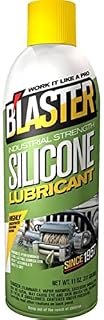
TL;DR PTFE-enhanced petroleum lubricant for hinges, cables, and household mechanisms · drier film than plain petroleum sprays, with less grit attraction. No California Prop 65 (the differentiator from PB Blaster penetrating catalyst), but DANGER label from H304 (aspiration) plus flammable-aerosol physical hazards; high VOC.
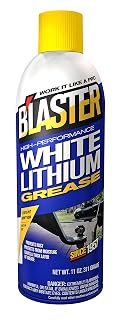
A workshop spray from Cleveland-based Blaster, distinct from the maker's penetrating catalyst. Aim the 8 oz can at a hinge, drawer, window track, or bike pivot; a short burst covers the joint and a wipe removes excess. The PTFE solid additive sets it apart from plain petroleum sprays · residue dries to a less tacky film, so grit attaches more slowly. Lubrication duration sits around commodity-median: multi-month independent forum follow-up on PB-50 is thin, so longevity is provisional. No disclosed corrosion-inhibitor beyond the PTFE film and base oil.
A reasonable reach for a drier-residue lubricant that attracts less grit than the WD-40 archetype. Skip it for high-cycle mechanisms where months of documented lubrication matter · a chain lube or silicone spray holds up longer. Skip it for seized rusted fasteners, too: that is penetrating-oil territory, and the maker's PB Blaster catalyst is built for that.
DANGER comes from H223 (flammable aerosol), H280 (gas under pressure), and H304 (aspiration if swallowed). The first two are physical hazards · ignition-source avoidance, not PPE. H304 is the swallowing route: do not induce vomiting if ingested; seek medical attention. SDS §11 lists no acute toxicity and no skin or eye irritation · eye and skin tiers stay situational. SDS §15.3 explicitly disavows California Prop 65. VOC not disclosed in §9, estimated above 550 g/L from the petroleum-distillate carrier; not CARB-compliant. §12 flags long-term aquatic concern in prose, no H4xx at §2.
No · same maker (Blaster, LLC of Valley View, Ohio), different product line, different chemistry. PB-50 is a multi-purpose lubricant: two hydrotreated petroleum-distillate fractions plus a PTFE solid additive, used to lubricate hinges, cables, and household mechanisms. PB Blaster Penetrating Catalyst is a penetrating oil: an aromatic-distillate carrier targeted at freeing rusted and seized fasteners, with a different hazard profile (it carries naphthalene and a California Prop 65 warning, neither of which is present in PB-50). Treat them as separate products with separate decisions.
PB-50 contains polytetrafluoroethylene (PTFE) · the same fluoropolymer commonly marketed as Teflon. PTFE is confirmed in SDS §15 under Pennsylvania Right-to-Know reporting; the exact concentration is withheld as a trade secret in §3. PTFE itself is a solid, inert fluoropolymer that is excluded from common PFAS classifications used by the OECD and EPA TSCA PFAS reporting framework. SDS §3 does not list any fluorinated solvents, surfactants, or PFAS precursors. health_bar.contains_pfas is false on that basis.
No. SDS §15.3 states verbatim: 'This product does not contain any substances known to the state of California to cause cancer, developmental and/or reproductive harm.' Amazon also reports proposition_65_warning: false. This is sourced confirmation, not absence-of-evidence. It is the main health-profile difference between PB-50 and the PB Blaster penetrating catalyst from the same maker · the penetrating catalyst contains naphthalene and does carry a Prop 65 warning.
The DANGER signal word on the label is driven by three classifications in SDS §2: H223 (flammable aerosol Cat 2), H280 (gas under pressure, dissolved), and H304 (aspiration hazard · may be fatal if swallowed and enters airways). The first two are physical hazards · they address fire and pressure risk, which is why the can warns against open flames and storage above 120°F. H304 is specifically about the swallowing route: light hydrocarbon liquid entering the lungs during vomiting can cause chemical pneumonitis. SDS §11 lists no acute oral, dermal, or inhalation toxicity classification, and no skin or eye irritation, sensitization, or carcinogenicity classification.
Both are aerosol petroleum-distillate sprays with similar core chemistry; PB-50 adds a PTFE solid-additive package that leaves a drier, lower-friction film and tends to attract less grit on chains and cables · a documented advantage of PTFE-enhanced formulas in this category. Community follow-up on PB-50 lubrication longevity vs. WD-40 is thinner than on WD-40 itself, so the duration advantage is provisional rather than verified. PB-50 has no California Prop 65 warning (WD-40's national formula also has none, but California Prop 65 status varies by formula); both are high VOC, not CARB-compliant, and carry DANGER for flammable-aerosol plus aspiration reasons.
Marketing copy from B'laster, via Amazon. Not editorial.
Weekly pick
One product, one safety verdict, every week. No spam.

Break-Free
CLP Cleaner Lubricant Preservative
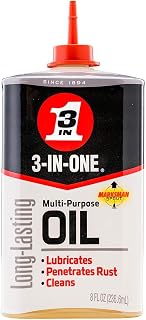
3-IN-ONE
Multi-Purpose Oil (8 oz drip bottle with Marksman Twist Spout)
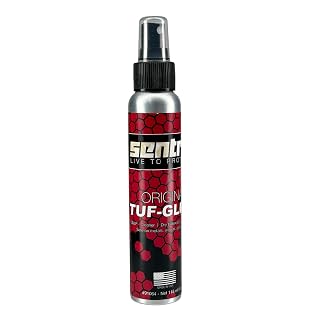
Sentry Solutions
TUF-GLIDE Dry Lube Pump Spray
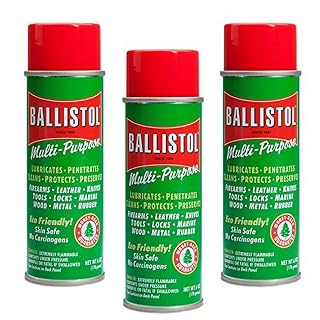
Ballistol
Multi-Purpose Oil Aerosol
As an Amazon Associate I earn from qualifying purchases. Full disclosure

Community
0 postsShare how you use this product
Drop a quick comment or post a full review with photos and a star rating.
Sign in to postNew here? Create a free account.