CarCareTruth Score
Decent, but it's tough on the environment.
Opens Amazon in a new tab. No account needed to look.
Saved to your guest loadout. Sign up to also save to your Cabinet (consumables) or Kit (tools you own).
As an Amazon Associate I earn from qualifying purchases. Full disclosure
Prices may varyAbout this rating. This rating translates the product's published Safety Data Sheet (where applicable), the manufacturer's stated certifications (such as NIOSH approval or ANSI markings), and patterns across verified-purchase user reviews flagged by the retailer. It is informational — not a safety determination for any user, task, or environment. Before using this product, check the certification markings on the manufacturer's label and follow the manufacturer's fit, use, and care instructions. For workplace use, the employer's PPE program and OSHA hazard assessment under 29 CFR 1910.132 govern selection, not this page.
No warranties. CarCareTruth makes no warranties, express or implied, and expressly disclaims the implied warranties of merchantability and fitness for a particular purpose.
This product ranks #8 of 8 in Hearing Protection.Three above it ↓
Last reviewed August 13, 2026
TL;DR The Howard Leight MAX-1 carries NRR 33 on the label · the highest certified rating from any single-use foam plug in the US market. After OSHA derating ((33−7)÷2 = 13 dB), an 85 dB orbital polisher drops to roughly 72 dB at the ear; a 100 dB force-air dryer drops to approximately 87 dB · adequate for typical detailing sessions. These are single-use disposable plugs, 200 pairs per box; they block conversation entirely and are best suited to shop tasks where communication is not a factor.
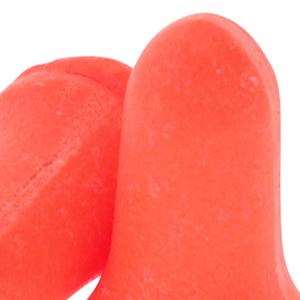
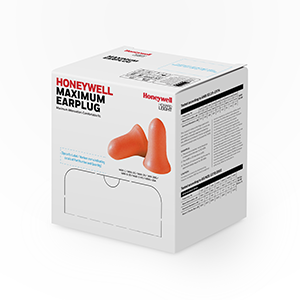
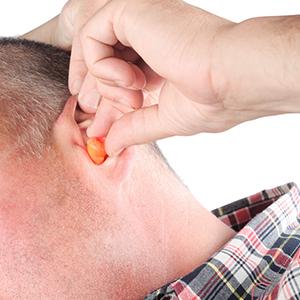
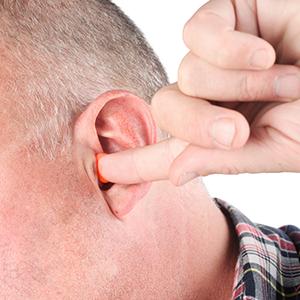
The MAX-1 is a single-use polyurethane foam plug with NRR 33, ANSI S3.19 certified, and manufactured by Honeywell's Howard Leight division. The OSHA derating formula · (33−7)÷2 = 13 dB · puts real-world protection at the top of the single-use foam category. A 90 dB air compressor derates to approximately 77 dB at the ear; a force-air dryer running 100 dB derates to roughly 87 dB, above the action level but within the 90 dB permissible exposure limit for the durations typical in car care. For sustained grinder work at 105 dB, the derated 92 dB at the ear approaches the OSHA limit for extended exposure. The pre-shaped bell contour and closed-cell outer skin reduce insertion-technique sensitivity relative to plain cylindrical foam plugs, and the low-pressure foam profile extends wear comfort across multi-hour sessions. Each pair is single-use: the 200-count dispenser box is the practical format for regular shop work.
Best for car-care owners who run loud equipment · compressors, force-air dryers, impact wrenches · and want maximum passive protection without a recurring hardware expense. NRR 33 is more protection than polisher-only work requires, but it is not overkill for mixed-tool shop environments. Skip it for tasks where hearing conversation or equipment signals matters; the NRR 33 passive plug blocks all ambient sound and there is no fast-removal convenience feature. Skip it if single-use plastic waste is a concern · reusable silicone flanged plugs at similar NRR generate far less disposal volume. For sleep, travel, or concert use, lower-NRR plugs tuned for different frequency profiles are the better fit.
The MAX-1 is a polyurethane foam plug · no SDS, no chemical exposure in normal use, no inhalation pathway. Health lands in the Minimal Risk band; no natural latex is disclosed in the PU foam construction, and no PFAS surface treatment is claimed or documented. On the environmental side, this is the highest-waste sub-type in the category: single-use PU foam is not recyclable in any consumer-accessible stream, and a 200-pair box represents 200 pieces of plastic waste. There is no manufacturer take-back program and no recycled-content claim. Regular shop use at several sessions per week can consume hundreds of pairs per year; buyers for whom waste matters should evaluate reusable silicone or multi-use foam alternatives.
Yes · NRR 33 is the highest certified rating available from a single-use foam earplug in the US market. The NRR is established through ANSI S3.19 1974 standardized testing. Under the standard OSHA derating formula ((33−7)÷2), the real-world effective protection at the ear is approximately 13 dB · bringing a 90 dB air compressor down to roughly 77 dB and a 100 dB force-air dryer down to approximately 87 dB.
The MAX-1 is designated as a single-use disposable earplug. the product listing spec table lists reusability as 'Disposable,' and Honeywell's product description references it as a single-use product. PU foam plugs accumulate ear wax and sweat in use; even when the foam still recovers, the manufacturer's hygiene and protection guidance treats each pair as one use. The 200-pair box format reflects this intended use pattern.
An orbital DA polisher runs roughly 80-85 dB at the operator's ear. The MAX-1's NRR 33 derates to approximately 13 dB of real-world reduction under the OSHA formula ((33−7)÷2), bringing 85 dB exposure to around 72 dB · well below the OSHA 85 dB action level. For force-air dryers running 100 dB, the derated protection brings exposure to approximately 87 dB, above the action level but below the 90 dB permissible exposure limit for 8-hour exposure · adequate for typical detailing session durations.
No natural latex is disclosed in the Howard Leight MAX-1. The plug material is polyurethane (PU) foam, confirmed from the product spec table and Honeywell product description. The product carries a hypoallergenic claim consistent with latex-free PU foam construction.
The MAX-1 is the uncorded version; the MAX-30 (ASIN B000E2609Y) is an identical foam plug body with a polyurethane cord connecting the pair. Both carry NRR 33. The corded version allows the plugs to hang around the neck when removed · a convenience for environments where plugs go on and off repeatedly. Both are single-use disposable products.
The Amazon listing for Howard Leight MAX-1 Disposable Foam Earplugs (200-Pair Box) carries a California Prop 65 warning. California requires this warning on a very wide range of manufactured goods — including rubber, vinyl, plastic, and metal automotive parts — whenever trace exposure to any of roughly 900 listed substances (commonly phthalates or heavy metals) is possible, regardless of whether the specific product poses a meaningful health risk. As a passive tool, Howard Leight MAX-1 Disposable Foam Earplugs (200-Pair Box) has no Safety Data Sheet, so there's no chemistry breakdown to translate beyond that.
Marketing copy from Howard Leight, via Amazon. Not editorial.
Weekly pick
One product, one safety verdict, every week. No spam.

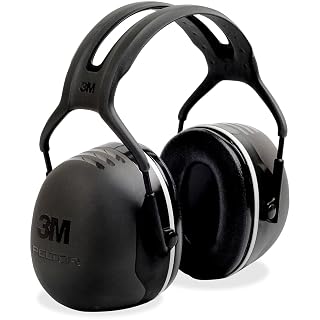
3M
PELTOR X5A Over-the-Head Earmuffs
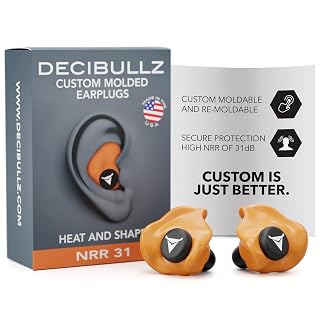
Decibullz
Custom Molded Earplugs
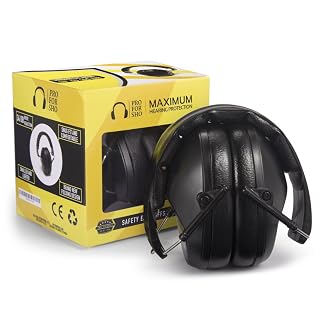
Pro For Sho
34dB NRR Hearing Protection Ear Muffs
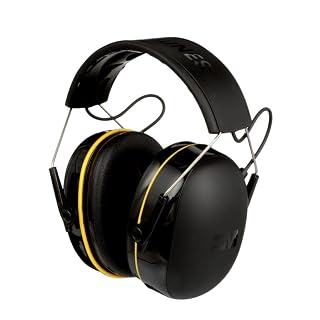
3M
WorkTunes Connect Wireless Hearing Protector
As an Amazon Associate I earn from qualifying purchases. Full disclosure

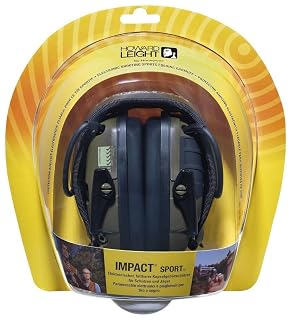
Community
0 postsShare how you use this product
Drop a quick comment or post a full review with photos and a star rating.
Sign in to postNew here? Create a free account.